For decades, the European story on LGBTQ+ rights appeared to be moving in one direction.
Forward.
Marriage equality expanded.
Anti-discrimination protections strengthened.
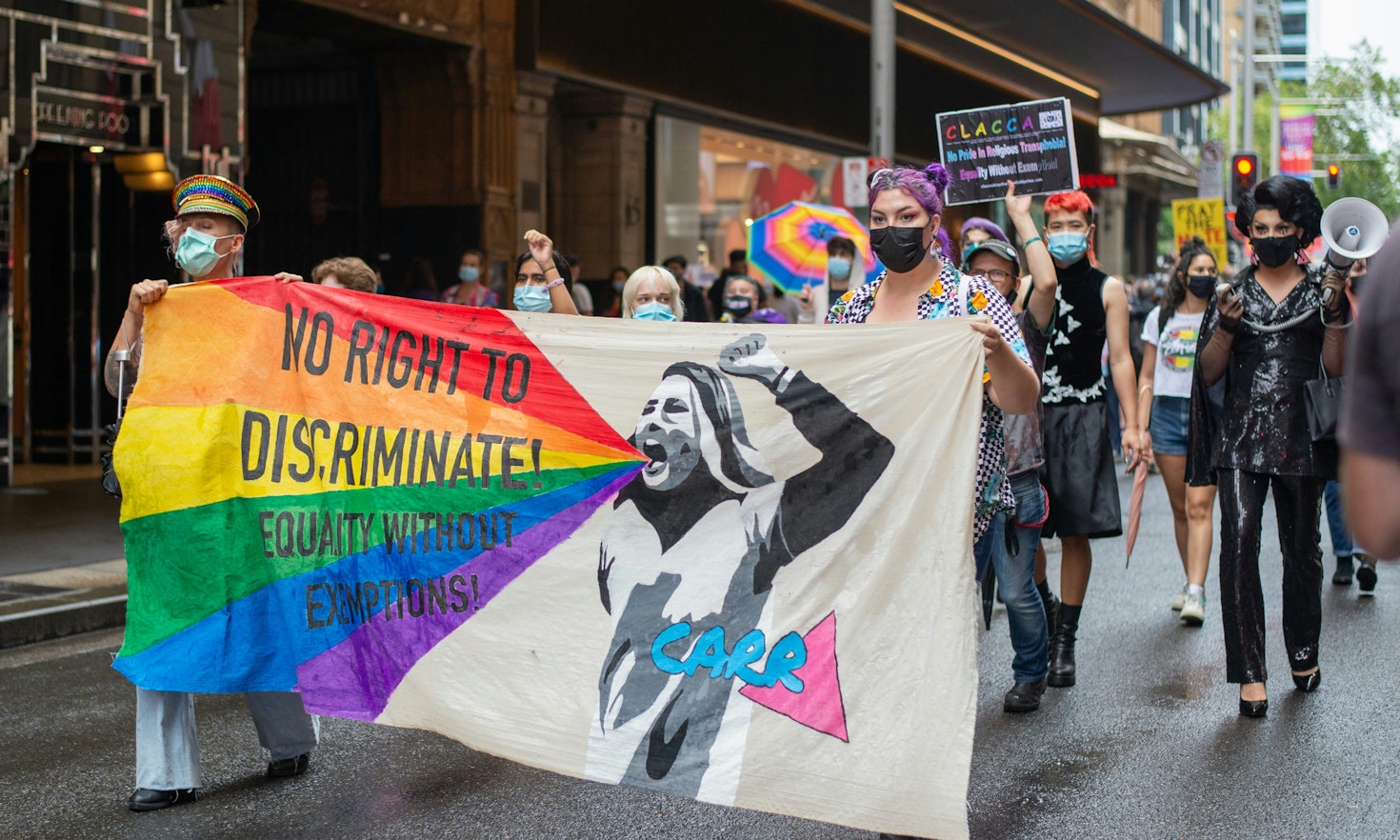
Pride marches moved from the margins into the centre of major cities.
Queer people became increasingly visible in politics, culture and everyday life.
But something is changing.
And the Council of Europe Commissioner for Human Rights is now warning that attacks on LGBTQ+ people may represent something much bigger than hostility towards one minority.
They may be a warning sign of a wider democratic retreat.
Pride Under Pressure
Recent events make the warning difficult to dismiss.
In Berlin, a violent attack connected to Pride left one person dead and 29 others injured.
Municipal authorities in Romania banned Oradea Pride and fined organisers and participants.
Istanbul Pride has faced systematic police crackdowns after years of bans.
And threats of violence have surrounded Pride events in Serbia.
Taken individually, these incidents happened in very different political and social environments.
Taken together, however, they raise an uncomfortable question.
Is the space available to LGBTQ+ people in Europe beginning to shrink?
The Laws Improved. Reality Did Not Always Follow.
Europe has achieved extraordinary progress.
Twenty-one European countries followed the Netherlands in opening civil marriage to same-sex couples, while anti-discrimination protections and recognition of LGBTQ+ families have expanded substantially.
Yet the Council of Europe Commissioner points to a growing gap between legal protections and lived experience.
According to European survey data cited by the Commissioner, one in seven LGBTI respondents reported experiencing physical or sexual attacks during the previous five years, while more than half reported hate-motivated harassment.
A law can say you are equal.
That does not necessarily mean you feel safe walking home.
Visibility Is Being Restricted Again
Some of the clearest warning signs concern visibility itself.
Georgia, Hungary and Slovakia have introduced measures restricting LGBTQ+ visibility or civil society.
Across other countries, freedom of assembly, expression and association for LGBTQ+ organisations has come under increasing pressure.
This matters because Pride has never simply been a party.
It exists precisely because visibility was once denied.
Removing LGBTQ+ people from public life does not make them disappear.
It simply makes them easier to marginalise.
Why This Is About More Than LGBTQ+ People
Perhaps the most important part of the Council of Europe’s warning is this:
the attack on LGBTQ+ rights rarely happens in isolation.
Similar political movements frequently target women’s rights, migrants, independent media, civil society organisations, courts and human-rights institutions.
Marginalised groups can become convenient political targets during periods of economic uncertainty, war or social anxiety.
Complex problems acquire simple villains.
And minorities become useful distractions.
That is why LGBTQ+ rights can function as a kind of democratic early-warning system.
When governments decide some people’s freedoms are negotiable, the question eventually becomes:
whose rights are negotiable next?
Pride Was Never Meant to Be Comfortable
There is a temptation, particularly in countries where LGBTQ+ equality has advanced significantly, to believe the struggle is essentially finished.
We have Pride sponsorships.
Rainbow logos.
Queer celebrities.
Same-sex weddings.
Representation on television.
Progress is real.
But progress is not necessarily permanent.
Pride began as protest because LGBTQ+ people were denied the freedom to exist openly.
The Council of Europe Commissioner argues that it remains an essential exercise in resilience and solidarity today.
Perhaps that is something worth remembering when Pride becomes too easily reduced to a colourful summer festival.
Europe Is Not One LGBTQ+ Experience
There is also no single European LGBTQ+ reality.
Being gay in Amsterdam is not the same experience as being gay in Istanbul.
Being trans in London is not the same as being trans in Tbilisi.
Legal protection, social attitudes and personal safety vary enormously.
Europe can simultaneously be home to some of the strongest LGBTQ+ protections in the world and some deeply worrying attempts to reverse them.
Both things can be true.
So, Is Europe Going Backwards?
In some places, clearly yes.
In others, progress continues.
The more important point may be that nothing guarantees the direction of travel.
Rights gained can be challenged.
Visibility achieved can be restricted.
Tolerance can deteriorate.
Democracy does not operate on autopilot.
Neither does equality.
And perhaps that is the warning we should pay attention to most.
To provide the best experiences, we use technologies like cookies to store and/or access device information. Consenting to these technologies will allow us to process data such as browsing behavior or unique IDs on this site. Not consenting or withdrawing consent, may adversely affect certain features and functions.
Functional
Always active
The technical storage or access is strictly necessary for the legitimate purpose of enabling the use of a specific service explicitly requested by the subscriber or user, or for the sole purpose of carrying out the transmission of a communication over an electronic communications network.
Preferences
The technical storage or access is necessary for the legitimate purpose of storing preferences that are not requested by the subscriber or user.
Statistics
The technical storage or access that is used exclusively for statistical purposes.The technical storage or access that is used exclusively for anonymous statistical purposes. Without a subpoena, voluntary compliance on the part of your Internet Service Provider, or additional records from a third party, information stored or retrieved for this purpose alone cannot usually be used to identify you.
Marketing
The technical storage or access is required to create user profiles to send advertising, or to track the user on a website or across several websites for similar marketing purposes.
 Skip to content