 Skip to content


The Celebrity Traitors star has revisited one of Coronation Street’s most beloved love stories, reflecting on Hayley and Roy Cropper’s extraordinary impact and why she remains concerned about transgender rights in Britain.
Julie Hesmondhalgh reflects on Hayley Cropper’s legacy
More than a decade after leaving Coronation Street, Julie Hesmondhalgh is reflecting on the extraordinary legacy of Hayley Cropper, one of British television’s most significant transgender characters.
And her comments feel particularly relevant in 2026.
In a new interview with Good Housekeeping UK, the actress discussed her sixteen years portraying Hayley, the character whose relationship with Roy Cropper became one of the most beloved love stories in British soap history.
Hesmondhalgh, who recently appeared on BBC One’s The Celebrity Traitors, explained that Hayley’s relationship with Roy was never originally intended to become such an important part of the programme.
Instead, it developed into a storyline that challenged expectations and encouraged conversations about transgender identity at a time when positive mainstream representation was limited.
But alongside her affection for the character, the actress also expressed concern about the current situation facing transgender people in Britain.
Her reflections come during a period of significant legal and political debate surrounding transgender rights, making Hayley’s television legacy feel more relevant than ever.
How Hayley and Roy became Coronation Street icons
When Hayley Patterson first appeared in Coronation Street in 1998, transgender representation on British television looked very different.
Trans characters were relatively rare, and their stories were frequently shaped by stereotypes, sensationalism or narratives that presented their identities as something shocking.
Hayley’s introduction initially appeared to follow a familiar pattern.
As Hesmondhalgh explained in her latest interview, the original plan was for Roy Cropper, played by David Neilson, to fall for Hayley before discovering that she was transgender.
The expectation was that Roy would struggle with the revelation and that the relationship might end.
But something unexpected happened.
Audiences fell in love with the couple.
Rather than treating Hayley as a temporary storyline, the writers developed her into a fully established character with friendships, relationships, ambitions and a life in Weatherfield.
Her romance with Roy became one of the programme’s emotional centres.
They were not glamorous, fashionable or particularly interested in making a spectacle of themselves.
They were simply two people who loved one another.
And in the world of British soap opera, that proved remarkably powerful.
Why Hayley Cropper changed transgender representation
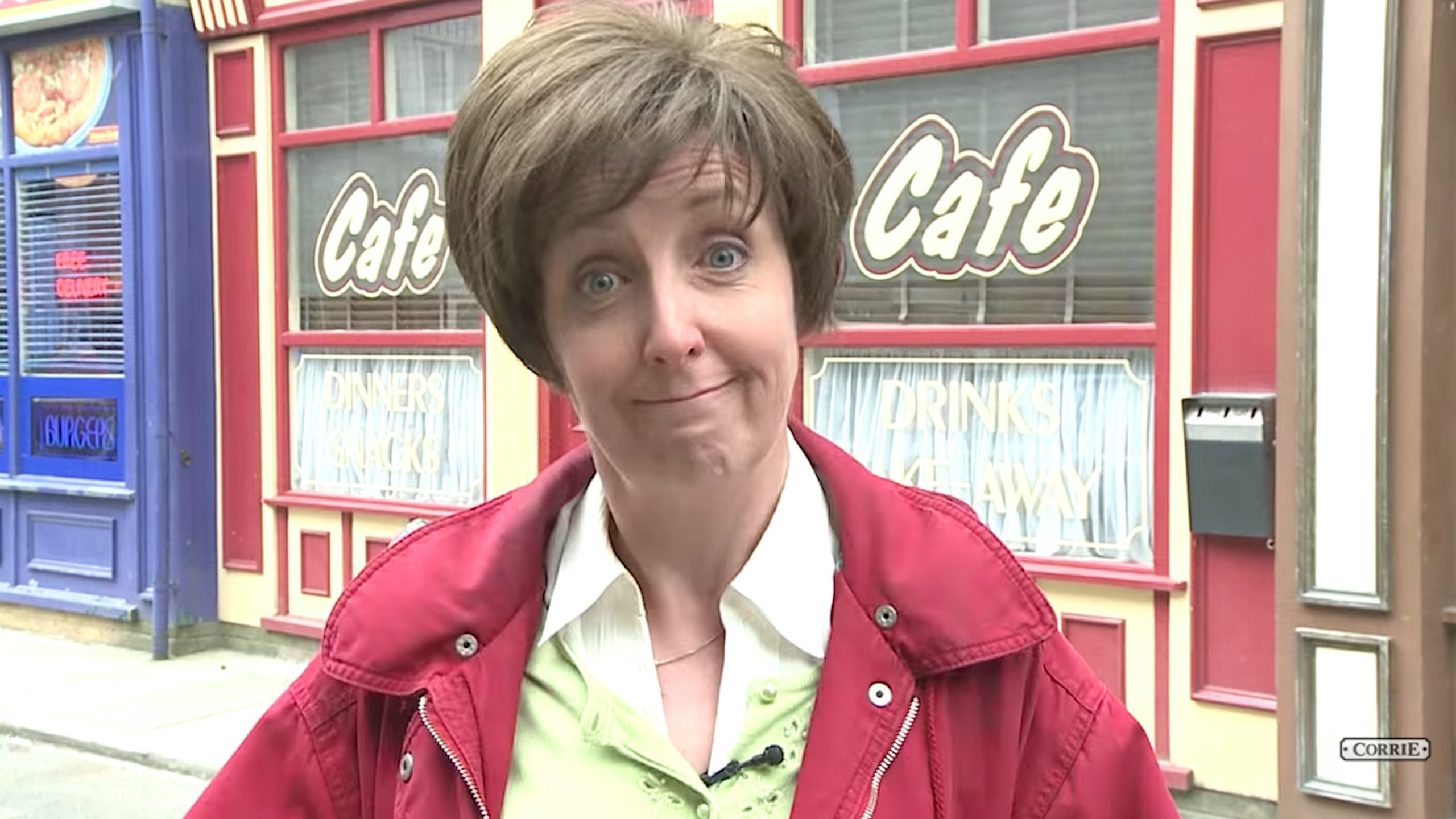
Hayley became one of the most recognisable transgender characters in British television history.
Over sixteen years, viewers watched her build a life with Roy, navigate difficult experiences, form friendships and become an integral part of the community.
Her gender identity remained important, but it did not define every aspect of her personality or every storyline.
That distinction was particularly significant.
For many viewers who had little direct experience of transgender people, Hayley provided a familiar character whose everyday life unfolded on their television screens.
Her warmth, humour and relationship with Roy encouraged audiences to see beyond stereotypes.
The storyline also contributed to wider discussions about the legal recognition of transgender people.
When Hayley and Roy wanted to marry, the legal restrictions of the period became part of their story.
The introduction of the Gender Recognition Act 2004 helped change the legal landscape, and the characters eventually married in 2010.
Their wedding was more than a romantic milestone for the programme.
It reflected broader changes in how transgender relationships were recognised and discussed within British society.
Although television dramas cannot create legal equality on their own, they can influence public understanding by making unfamiliar experiences more visible.
Hayley’s popularity helped demonstrate the cultural power of that representation.
Julie Hesmondhalgh expresses concern over UK trans rights
In her new interview, Hesmondhalgh spoke warmly about the impact of Hayley and Roy’s relationship.
She described the storyline as important because it encouraged audiences to discuss transgender identity, even though its significance had developed almost unexpectedly.
But she also expressed disappointment about the current situation facing transgender people in Britain.
“It’s so upsetting that trans rights have now gone backwards,” the actress said.
Her comments reflect her concern about recent legal and policy changes affecting transgender people in the UK.
In April 2025, the UK Supreme Court ruled that the terms woman, man and sex in the Equality Act 2010 refer to biological sex.
The ruling has influenced debates and policy reviews concerning single-sex facilities and the responsibilities of public institutions.
In October 2026, NHS England introduced updated guidance affecting how transgender patients are accommodated in single-sex hospital wards.
Several government departments have also reportedly reviewed workplace policies covering toilets and changing facilities.
Supporters of sex-based restrictions argue that clearer arrangements are needed to protect privacy and ensure compliance with the law.
Transgender rights organisations, however, have raised concerns about the possible consequences for access to services, workplace dignity and everyday life.
Against that backdrop, Hesmondhalgh’s reflections highlight the contrast she perceives between the cultural progress represented by Hayley and the challenges transgender people continue to experience.
Would Hayley Cropper be played by a transgender actress today?
One of the most interesting questions surrounding Hayley’s legacy concerns how the character would be cast today.
Julie Hesmondhalgh is a cisgender actress who portrayed a transgender woman at a time when openly transgender performers faced substantial barriers to mainstream television roles.
Her performance became widely admired, but the casting also generated criticism from transgender campaigners.
Over the years, expectations surrounding representation have changed significantly.
Television series such as Pose and Veneno have demonstrated the value of placing transgender performers and creatives at the centre of stories about their communities.
Hesmondhalgh has previously acknowledged this development herself.
In a 2020 interview with The Guardian, she explained that she would not accept the role of Hayley if it were offered to her today, expressing the view that it should go to a transgender performer.
That does not diminish the affection audiences continue to feel for Hayley or the importance of the original storyline.
Instead, it illustrates how representation can evolve.
A character can have been groundbreaking in one era while also highlighting creative decisions that would be approached differently in another.
Recognising that complexity is an important part of understanding LGBTQ+ television history.
The Celebrity Traitors brings Julie to a new audience
Hesmondhalgh has recently enjoyed renewed attention following her appearance on the BBC’s The Celebrity Traitors.
The actress entered the competition as a Faithful, quickly winning over viewers with her enthusiasm, warmth and obvious enjoyment of the experience.
Although she was banished during the fourth episode, her time on the programme introduced her personality to audiences who may be less familiar with her dramatic television career.
In her interview with Good Housekeeping, Hesmondhalgh described the friendships she formed during filming and the unusual experience of sharing the competition with such a varied group of celebrities.
She spoke particularly warmly about Romesh Ranganathan and Ross Kemp, with whom she developed a close friendship.
Her appearance also created an interesting connection between different generations of queer television.
While Hesmondhalgh helped bring transgender representation into British homes through Coronation Street, younger performers including Sebastian Croft and Bella Ramsey have become familiar faces in a very different entertainment landscape.
For audiences who remember Hayley and Roy, seeing Julie back on screen has offered a welcome opportunity to revisit the character’s legacy.
And for viewers discovering her for the first time, it provides a reason to explore one of British television’s most influential LGBTQ+ storylines.
Why Hayley and Roy’s relationship still matters
Hayley and Roy were never a conventional television couple.
They were awkward, gentle, sometimes stubborn and deeply devoted to one another.
Their relationship was built on affection, loyalty and the ordinary experiences that make long-term partnerships meaningful.
That simplicity became its greatest strength.
Rather than constantly treating Hayley’s identity as a problem, the programme increasingly allowed viewers to experience her life through the same emotional storytelling given to other characters.
Audiences saw her happiness, disappointments, friendships and family relationships.
They watched her and Roy build a life together.
And when Hayley’s story came to an end in January 2014, the emotional response from viewers demonstrated just how deeply the character had become part of British television culture.
Her legacy remains significant not because the programme handled every aspect of transgender representation perfectly, but because it helped create space for conversations that were far less common when she first appeared.
A love story that outlasted the screen
There is a reason why Hayley and Roy Cropper remain one of the most beloved couples in Coronation Street history.
Their relationship was never defined by extravagant romantic gestures or perfect fairy-tale moments.
Instead, it was a story about two people who found love, created a home and supported each other through life’s difficulties.
At a time when transgender identities were often sensationalised on television, their romance offered audiences something different: familiarity, tenderness and humanity.
The way transgender characters are written and portrayed has evolved since Hayley’s debut, and there is still considerable room for improvement.
But the cultural importance of her story cannot be separated from the affection viewers developed for her over sixteen years.
For some audiences, Hayley provided an early opportunity to understand a transgender character as a complete person rather than a stereotype.
For others, she offered recognition at a time when positive representation was difficult to find.
And for millions of Coronation Street viewers, she was simply Hayley: a kind, complicated and unforgettable part of Weatherfield.
Sometimes television changes attitudes not through grand speeches, but by allowing audiences to fall in love with people they might never previously have understood. Hayley Cropper proved just how powerful that can be.


