 Skip to content


Twenty-five years after Serbia’s first Pride became synonymous with violence, LGBTQ+ people have returned to the streets of Belgrade with almost the same message: there is room for all of us.
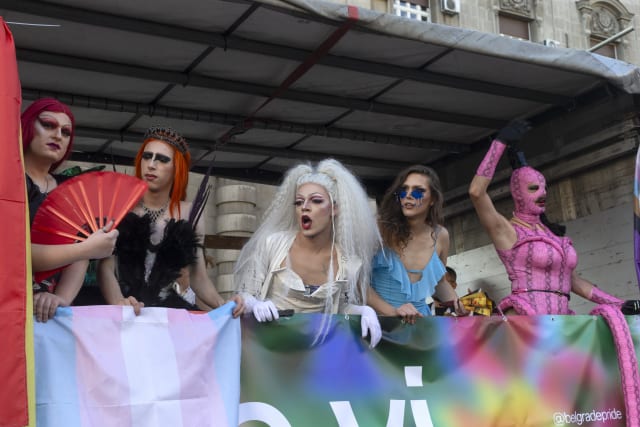
Belgrade Pride took place on 5 September, marking a quarter of a century since the country’s first Pride march in 2001. Participants walked from Manjež Park towards Serbia’s National Assembly before returning to the park, in a procession that passed largely without major incidents.
There were hostile counter-protesters and verbal confrontations along the route, but police kept opposing groups apart.
For anyone familiar with the history of Pride in Serbia, even that relatively peaceful sentence represents change.
But peaceful visibility is not the same thing as legal equality.
From Serbia’s first Pride to Belgrade Pride 2026
Serbia’s first Pride in 2001 was violently attacked by far-right groups and football hooligans, becoming one of the most disturbing early images of LGBTQ+ visibility in post-Milošević Serbia.

Twenty-five years later, queer people can march through central Belgrade with far greater visibility.
That deserves recognition.
Yet activists attending Belgrade Pride 2026 were also clear about how much remains unresolved. Among their demands are legal recognition for same-sex partnerships and improvements to the framework governing gender identity and legal gender recognition.
In other words, the streets have moved forward faster than the law.
Serbia remains behind much of Europe on LGBTQ+ rights
The latest ILGA-Europe Rainbow Map places Serbia 29th out of 49 European countries, with a score of just 34% for its laws and policies affecting LGBTQ+ people. Serbia fell two places in the 2026 ranking.
ILGA-Europe says the country has passed no major affirmative LGBTQ+ legislation since 2021 and highlights stalled reforms around both same-sex partnerships and legal gender recognition.
Legal gender recognition exists in Serbia, but the existing procedure still includes medical requirements and falls considerably short of a model based on self-determination. ILGA-Europe specifically recommends reforming the system to make it fairer, more transparent and free from abusive requirements.
Same-sex couples, meanwhile, continue to wait for formal legal recognition.
That contrast is one of the most striking things about Belgrade Pride today.
Rainbow flags can fill the city centre. LGBTQ+ people can stand openly outside national institutions. A Pride march can finish without the violence that defined the event 25 years ago.
And yet couples can return home from that march without the same legal recognition afforded to heterosexual couples.
Pride can be both celebration and protest
It is tempting to view a peaceful Pride parade as evidence that equality has already been achieved.
Serbia shows why that assumption can be misleading.
Being able to march safely is progress. Being visible without facing organised violence is progress. A younger generation growing up with a public Pride movement is progress too.
But Pride was never intended to be the finish line.
Equality also means being recognised as a family. It means having laws that protect people from discrimination and violence. It means transgender people being able to navigate legal recognition without unnecessary barriers.
And it means being able to live openly throughout the rest of the year — not only while police barriers separate Pride marchers from people shouting abuse.
Twenty-five years and still here
There is something simultaneously frustrating and beautiful about repeating the spirit of the same slogan after 25 years.
Frustrating because LGBTQ+ people should not still need to explain that there is room for them in their own society.
Beautiful because they never stopped making that room.
People who marched in 2001 faced violence simply for publicly existing as LGBTQ+.
Twenty-five years later, another generation walked many of the same streets demanding something more ambitious than tolerance: equality.
That is progress.
The fact that the work remains unfinished does not erase how far the community has travelled.
It simply tells us where the march needs to go next.


