 Skip to content


The Philippines have won the first-ever Eurovision Song Contest Asia, but between South Korea’s disappointing result, some questionable vocals, a wonderfully overexcited Cindy Bishop and a passionate LGBTQI+ fanbase, Bangkok has given us plenty to talk about.
The Philippines Win as Eurovision Enters Its Asian Era
Well, darling, Eurovision has officially gone Asian, and what a fabulous piece of music history we’ve just witnessed!
On 14 November 2026, Bangkok hosted the inaugural Eurovision Song Contest Asia, bringing together eleven countries for a historic celebration of music, culture and creativity. After years of speculation and attempts to bring the iconic European competition to another continent, the dream finally became reality. And the first country to lift the trophy? The Philippines.
CARMELLE won Eurovision Asia 2026 with “Sobra-Sobra”, collecting 211 points, ahead of Thailand’s MANG x DAOU with 170 and Vietnam’s Tóc Tiên with 164. Malaysia’s Aina Abdul finished fourth, while Laos completed the top five. The results combined professional jury scores and public voting, giving audiences across the region and beyond the opportunity to participate in this historic first edition.
But while the Philippines can celebrate a thoroughly deserved place in the history books, the evening also delivered a few surprises, some divisive performances and enough fan debates to make this feel like a proper Eurovision night.
CARMELLE Won the Crown, But Was She the Strongest Vocalist?

First of all, congratulations to CARMELLE. Whatever anyone thinks of the performance, becoming the first winner of Eurovision Asia is an extraordinary achievement, particularly for an artist still at the beginning of her international career.
“Sobra-Sobra”, an energetic anthem of female empowerment, certainly had the ingredients of a Eurovision winner. There was attitude, choreography, colourful staging and the kind of unapologetic confidence that makes an audience pay attention. The song brought Filipino pop to an international stage with a distinctive personality, and CARMELLE knew how to sell the moment.
However, I have to admit that I wasn’t entirely convinced by the vocals. There were moments when the delivery felt a little shaky and the overall performance lacked some of the vocal precision I would normally expect from a winning entry. It wasn’t disastrous, far from it, but it certainly wasn’t flawless either.
And apparently, I’m not the only one with mixed feelings.
In the post-show discussion on Reddit, some fans celebrated CARMELLE as an obvious and deserving winner, praising her staging and charisma. Others argued that Thailand delivered a stronger performance, while some questioned the Philippine entry’s vocal consistency. Interestingly, CARMELLE had already been the favourite among LGBTQIA+ respondents in an Aussievision fan poll conducted before the final.
Ultimately, Eurovision has never been just a singing competition. Sometimes a performance wins because of its energy, its message or the way it makes people feel. CARMELLE clearly connected with the voters, and her historic victory deserves to be celebrated, even by those of us who might have chosen someone else. One thing is for sure: CARMELLE really knew how to put up a proper Eurovision Performance, Philippino style!! Congrats, babes!
South Korea Seventh? JUNHEE, You Deserved Better!

Now, excuse me, but can we talk about South Korea?
Because JUNHEE finishing seventh with 113 points was probably my biggest disappointment of the evening. His entry, “DEEP DIVE”, brought a contemporary pop sound, confident performance style and polished stage presence that, in my opinion, deserved a much stronger result.
There was something effortlessly cool about the Korean entry. It felt modern, internationally appealing and visually compelling without needing to rely on excessive gimmicks. I genuinely expected JUNHEE to challenge for the top positions, and watching him finish behind six other countries left me rather unimpressed with the scoreboard.
And judging by some of the early international reactions, I’m certainly not alone.
Several fans on Reddit expressed surprise at South Korea’s relatively low placement, with some describing JUNHEE as one of the night’s most underrated performers. A few went as far as suggesting he had been robbed, although others felt the song simply lacked the emotional impact of some competing entries.
Interestingly, the pre-show ESCplus fan poll placed South Korea fourth, although its small sample of 31 voters means the result should be treated cautiously. Meanwhile, Aussievision’s LGBTQIA+ respondents ranked JUNHEE sixth, suggesting that his appeal wasn’t quite as universal as some of us might have imagined.
Still, seventh place? Darling, I’m not having it. “DEEP DIVE” deserved more love, and that’s a Eurovision hill I’m perfectly happy to die on.
The Internet Reacts: Thailand, Malaysia and a Few Robbed Favourites

If the first Eurovision Asia proved anything, it’s that the continent has already mastered one of Eurovision’s oldest traditions: disagreeing about the results.
Thailand’s second place was welcomed by many viewers who praised the emotional quality of MANG x DAOU’s “Aroma”, while Malaysia’s Aina Abdul attracted considerable discussion after finishing fourth. Before the contest, “Bluest Sky” had topped Aussievision’s wider public poll, making its final position particularly disappointing for some supporters.
Vietnam also had its defenders, with fans praising Tóc Tiên’s theatrical performance and arguing that “EM TIÊN” deserved the trophy. Elsewhere, Bangladesh’s Beatmosphere became the subject of sympathetic reactions after finishing last, with some viewers feeling that their distinctive a cappella approach deserved considerably more appreciation.
Beyond the voting, social media discussions revealed a mixture of excitement and frustration about the production itself. Some fans reported sound and microphone issues, while the interruption of the winner’s reprise on the YouTube broadcast provoked particularly strong reactions. After all, cutting away from the winning song during a song competition is hardly the most fabulous way to end a historic evening.
Nevertheless, the overall sentiment in many of the fan discussions was encouraging. Viewers praised the ambition of the first edition, celebrated the diversity of the performances and expressed hope that Eurovision Asia would become an annual tradition.
For a brand-new contest, that’s a promising beginning. The production may need some polishing, but the passion is already there.
The Queer Heart of Eurovision Has Found a New Audience
One of the most encouraging aspects of Eurovision Asia was the enthusiasm surrounding the event among LGBTQI+ audiences. Eurovision’s connection with queer culture has always extended far beyond glitter, dramatic costumes and camp performances. For many of us, it represents something deeper: the freedom to celebrate individuality, artistic expression and the joy of being different.
That connection was visible in the audience response even before the first note was sung. According to Aussievision’s survey of 821 Eurovision Asia fans, 30% of respondents identified as LGBTQIA+, with the Philippines topping the preferences of that group. Meanwhile, AFP spoke to Malaysian fan Fauzan, who recalled how Conchita Wurst’s historic Eurovision victory in 2014 had helped change perceptions of LGBTQ+ acceptance.
The host country also brings particular significance to this new chapter. Thailand legalised same-sex marriage in January 2025, becoming the first country in Southeast Asia to do so. And among the competing artists was Thailand’s DAOU, whose career in boys’ love television dramas has connected him with audiences familiar with LGBTQ+-themed storytelling. That cultural connection does not establish anything about his personal identity, but it is part of the wider queer cultural landscape surrounding the competition.
Of course, Eurovision Asia’s first edition was not quite the unapologetically queer spectacle that European audiences have come to expect. As The Guardian observed, differing attitudes towards homosexuality across the participating countries may have influenced the level of overt LGBTQ+ representation on stage.
But perhaps that is precisely why this new platform matters. Eurovision Asia has an opportunity to develop its own identity while making space for greater visibility, acceptance and freedom of expression. For LGBTQI+ fans across a continent where rights and social attitudes vary enormously, the possibility of building such a space is worth celebrating, and protecting.
Cindy Bishop, Darling, We Can Hear You!

And then there was Cindy Bishop. Oh, Cindy!
Beautiful, glamorous, charismatic and apparently determined to make sure every single person across Asia could hear her without a television.
Sharing hosting duties with Woody Milintachinda, Cindy certainly brought enthusiasm to the occasion. Perhaps a little too much enthusiasm, if you ask me. There were moments when her presenting felt unnecessarily loud, as though every announcement required the same level of excitement as revealing the winner.
Darling, we love the energy, but the microphone is already switched on!
To be fair, hosting an entirely new international competition is hardly a walk in the park. The presenters had to navigate unfamiliar voting procedures, multilingual audiences and a production making its debut on the global stage. Some viewers praised their warmth and spontaneity, and there is certainly something rather endearing about a host who appears genuinely thrilled to be there.
Cindy may have been a little too shouty for my taste, but she looked wonderful, embraced the occasion and gave the evening plenty of personality.
A bit of theatrical excess at Eurovision? Well, we can hardly complain too much, can we?
Eleven Countries, Eleven Stories and a New Musical Beginning
Beyond the winner, the voting controversies and the occasional technical hiccup, Eurovision Asia 2026 represents something genuinely important for the international music industry.
For the first time, eleven Asian countries came together under the Eurovision banner, showcasing an extraordinary range of languages, musical traditions and contemporary styles. From the modern pop sounds of South Korea and the Philippines to the cultural influences brought by Bhutan, Laos and Mongolia, the competition offered international audiences an opportunity to discover artists and traditions that rarely share the same global platform.
That cultural diversity is arguably Eurovision Asia’s greatest strength. The continent already possesses enormously successful music industries, but its musical identity extends far beyond the internationally dominant markets. Artists from smaller countries now have an additional opportunity to present their work to audiences who might otherwise never encounter it.
The inaugural contest also demonstrated that musical tastes cannot necessarily be reduced to familiar international expectations. Some pre-contest favourites underperformed, while other entries connected more strongly with juries and voters than many fans had anticipated. That unpredictability is part of what makes the format exciting.
Eurovision Asia shouldn’t aspire to become an imitation of the European competition. It deserves to develop its own traditions, its own musical identity and, hopefully, its own particular brand of fabulous chaos.
And if this first edition is anything to go by, there’s plenty of potential.
Tonight, Every Artist Made History
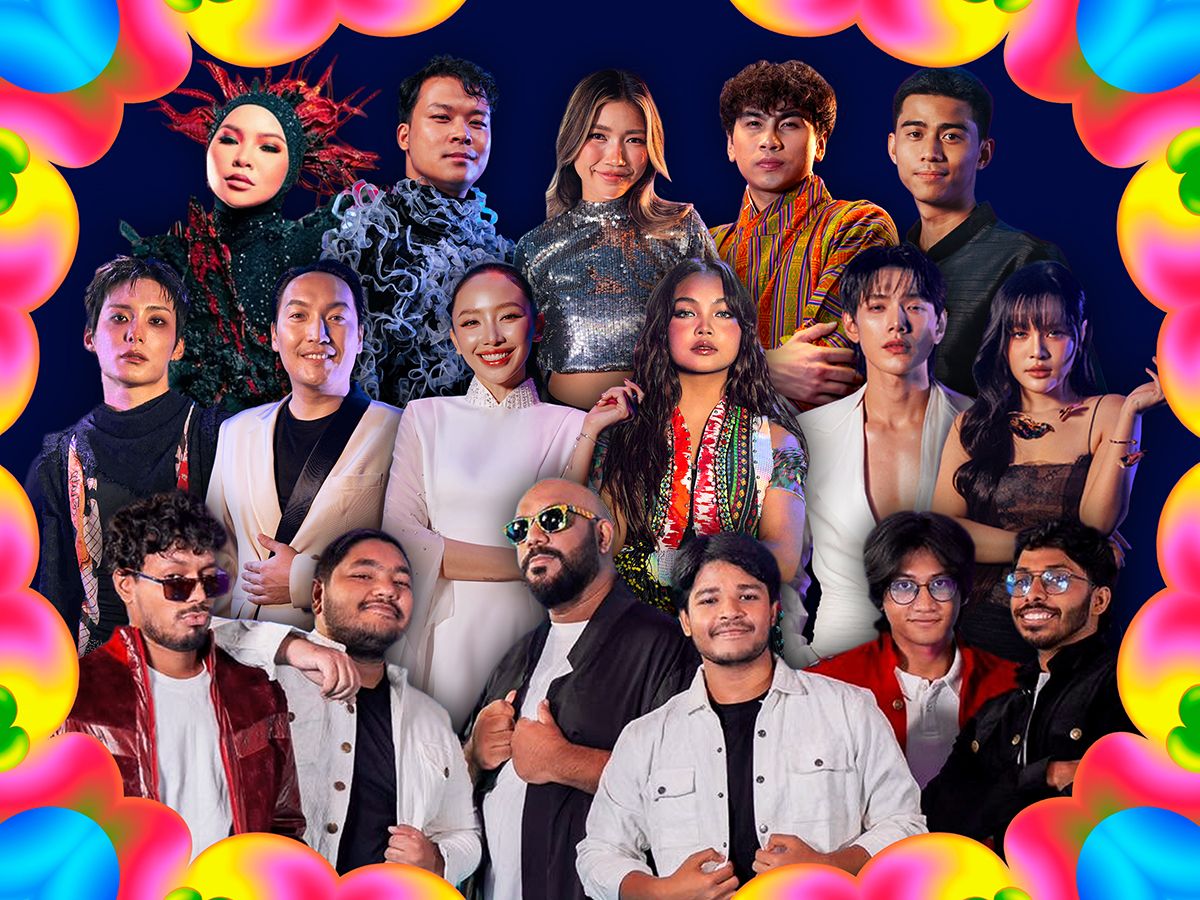
The Philippines have won the first trophy, Thailand delivered a memorable second-place performance, and South Korea will remain my personal heartbreak of the evening. But the real significance of Eurovision Asia 2026 goes far beyond the final scoreboard.
To CARMELLE, JUNHEE, MANG x DAOU, Tóc Tiên, Aina Abdul, Thinla, Nyendra, Beck, Monetrey, Beatmosphere and Pratik Himal Rai: congratulations. You were brave enough to take part in something completely new, representing your countries on a stage that had never existed before.
There will undoubtedly be stronger productions, more ambitious performances, unexpected winners and controversial voting results in future editions, provided the competition continues. There may even be a few more iconic divas, a little more queer fabulousness and, if we’re lucky, a slightly quieter Cindy.
But there will only ever be one first Eurovision Song Contest Asia.
And to all eleven participating countries: you didn’t just perform tonight. You helped write the very first chapter of a new story in world music history.
That, darling, deserves a standing ovation.


