 Skip to content


Kerr Smith helped make television history when Jack McPhee kissed another man on Dawson’s Creek in 2000. Twenty-six years later, the actor is revealing the fear, protests and homophobic harassment behind a moment that changed queer representation on American television.
There was a time when two men kissing on a mainstream television series was considered so controversial that it could provoke demonstrations, threaten careers and send television executives into a panic.
I know, darling. Imagine being that frightened of a kiss.
But that was the reality in May 2000, when Dawson’s Creek broadcast one of the most significant moments in American queer television history: Jack McPhee, played by Kerr Smith, kissing Ethan, played by Adam Kaufman, in the third-season finale, True Love.
Today, that scene might appear almost unremarkable. Two young men, an emotional confession, a romantic kiss. The sort of moment straight characters had enjoyed on television for decades without anyone questioning whether civilisation might collapse.
Yet for gay viewers growing up at the turn of the millennium, it represented something much bigger: the possibility of seeing themselves in a love story that television finally considered worth telling.
Now, with the publication of his memoir I Don’t Want to Wait: My Life on Dawson’s Creek, Smith is revisiting the experience, including a disturbing incident of homophobic harassment he had never previously discussed publicly.
And his recollections offer a reminder of just how much queer visibility once cost.
Kerr Smith and the Dawson’s Creek Gay Kiss That Made Television History
When Jack McPhee joined Dawson’s Creek in its second series in 1998, he was initially introduced as a potential romantic complication for Joey Potter and Dawson Leery.
But creator Kevin Williamson had something more interesting in mind.
As Smith explains in a new interview with The Guardian, Williamson approached him about developing Jack into a gay character, creating a storyline that would reflect experiences rarely explored with such prominence on American teen television.
The decision was not without risk. At the time, openly gay leading characters remained relatively unusual in mainstream drama, particularly in programmes aimed at younger audiences.
When Jack finally kissed Ethan on 24 May 2000, the moment became a milestone in US primetime network television, widely recognised as its first passionate romantic kiss between two male characters.
And, according to Smith, filming it was hardly effortless.
The actors were nervous, the significance of the scene was impossible to ignore, and it took ten takes to capture the moment.
What strikes me most about the story is the advice they received from their director: approach the scene as a kiss between two people who are attracted to one another, rather than treating their gender as something extraordinary.
It sounds ridiculously simple now.
But perhaps that simplicity was exactly what made the moment revolutionary.
The Homophobic Backlash Behind Jack McPhee’s Storyline

While the kiss eventually became a celebrated milestone in LGBTQ+ television history, not everyone was ready to accept it.
Smith remembers demonstrators gathering outside the show’s studios in Wilmington, North Carolina, protesting the storyline and expressing their anger at its inclusion.
Imagine being a young actor arriving at work, knowing that strangers have gathered outside because they object to the idea of your character falling in love with another man.
Not because the performance is bad. Not because the writing is weak. Simply because the relationship is gay.
The hostility extended beyond the studio.
In his new memoir, Smith recalls returning to his car while working on the film The Forsaken in Arizona, around 2001, and discovering that it had been vandalised with red graffiti, including homophobic insults.
He does not claim to know who was responsible, and the incident cannot definitively be attributed to the Dawson’s Creek protests. Nevertheless, it illustrates the kind of hostility surrounding gay representation during that period.
Smith says he had never publicly discussed the vandalism before writing his book.
What should have been an ordinary acting assignment had become an experience shaped by fear, public scrutiny and the uncomfortable reality that portraying a gay character could attract abuse even when the actor was simply doing his job.
And that tells us something rather depressing about the society in which the scene was filmed.
Why Jack McPhee Mattered to a Generation of Gay Teenagers
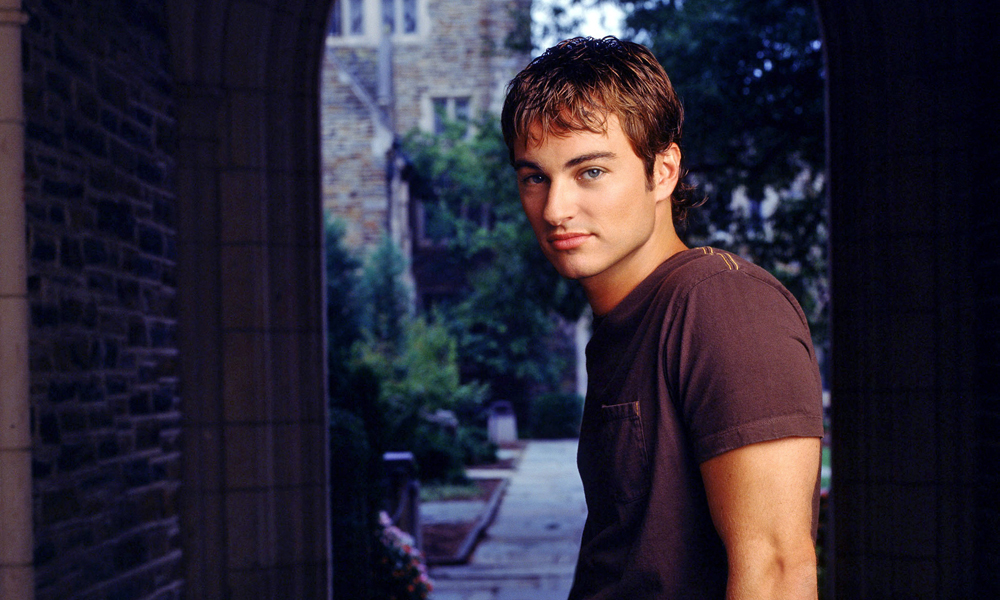
For people who grew up with Dawson’s Creek, Jack wasn’t simply another character introduced to create romantic complications.
He was one of the few gay teenagers on mainstream television whose story unfolded over several years, allowing audiences to see the complicated process of understanding sexuality, navigating friendships and imagining a future beyond secrecy.
Before streaming platforms and an expanding catalogue of LGBTQ+ television, representation was much more limited. Gay characters were frequently reduced to comic relief, tragic figures or temporary additions whose storylines revolved entirely around being different.
Jack was not perfect, and neither was the show’s treatment of sexuality. But he was allowed to develop, fall in love, make mistakes and exist as part of a wider group of friends.
That mattered.
When the people around you constantly imply that being gay is something unusual or shameful, seeing a character whose experiences resemble your own can offer something incredibly valuable: reassurance that your life belongs in the world too.
Smith says viewers still approach him to explain how Jack’s storyline influenced their lives, sometimes describing its impact in deeply personal terms.
And I think that is one of the most beautiful aspects of television.
An actor films a scene, a production team edits an episode, a broadcaster schedules a programme. Somewhere, perhaps thousands of miles away, a teenager watches and feels a little less alone.
That connection is why stories like Jack’s deserve to be remembered, not simply as television trivia but as part of LGBTQ+ cultural history.
It is a theme we have explored elsewhere at The Gayly Mirror, including in our article on Troye Sivan’s experiences of growing up gay and struggling with masculinity.
Different generations and different experiences, but the same fundamental need to be accepted without having to pretend.
From Dawson’s Creek to Today’s Queer Television
A great deal has changed since 2000.
LGBTQ+ characters are now more visible across international television, with stories exploring queer relationships, gender identity and sexuality in ways that would once have been difficult to imagine on mainstream networks.
Audiences have embraced programmes such as Heartstopper, Young Royals and It’s a Sin, while queer cinema continues to explore relationships that go well beyond traditional coming-out narratives.
As TGM recently discussed in our coverage of Rami Malek’s new queer film The Man I Love, LGBTQ+ storytelling increasingly has room for romance, desire, humour, grief and the complexity of ordinary lives.
Yet greater visibility does not mean that discrimination has disappeared.
Queer representation continues to provoke political controversy, and even seemingly small symbols of identity can become subjects of debate. Just recently, the BBC faced criticism over the removal of Pride badges from University Challenge.
The circumstances are very different, of course. But both stories raise questions about how comfortable mainstream institutions really are with visible LGBTQ+ identities.
And perhaps that is the uncomfortable truth behind all our progress: visibility has increased enormously, but acceptance is not always guaranteed.
Kerr Smith’s New Memoir Revisits the Dawson’s Creek Legacy
Smith’s book, I Don’t Want to Wait: My Life on Dawson’s Creek, looks back at his years on the series through personal recollections and conversations with former castmates, writers and production colleagues.
The memoir is released on 10 November 2026 in the United States and Australia, with its UK publication scheduled for 26 November.
It also pays tribute to James Van Der Beek, whose death earlier this year brought renewed attention to the cast and the lasting cultural impact of the programme.
For Smith, revisiting the series is clearly about more than nostalgia.
It is an opportunity to recognise the friendships, creative decisions and unexpected consequences of a television show that helped define an era.
And for LGBTQ+ audiences, it is a chance to remember that some of the moments we now consider perfectly ordinary were once extraordinary acts of visibility.
Twenty-Six Years Later, That Kiss Still Matters
I sometimes wonder whether younger LGBTQ+ audiences can fully appreciate how different mainstream television felt at the beginning of the millennium.
And perhaps that’s a good thing. Progress should mean that the next generation doesn’t have to experience the same fear, shame or absence of representation that previous generations endured.
But we should never confuse progress with inevitability.
Jack and Ethan’s kiss did not single-handedly transform television, and Kerr Smith was certainly not the only person responsible for advancing queer representation. Writers, directors, activists and performers had been challenging boundaries long before that episode aired.
Nevertheless, the scene became one of those cultural moments that made it a little easier for others to follow.
Twenty-six years later, the most extraordinary thing about Jack’s kiss is how ordinary it should always have been.
Two people. One moment of affection. Nothing to apologise for.
And if we ever forget why that mattered, Kerr Smith’s story is here to remind us.


