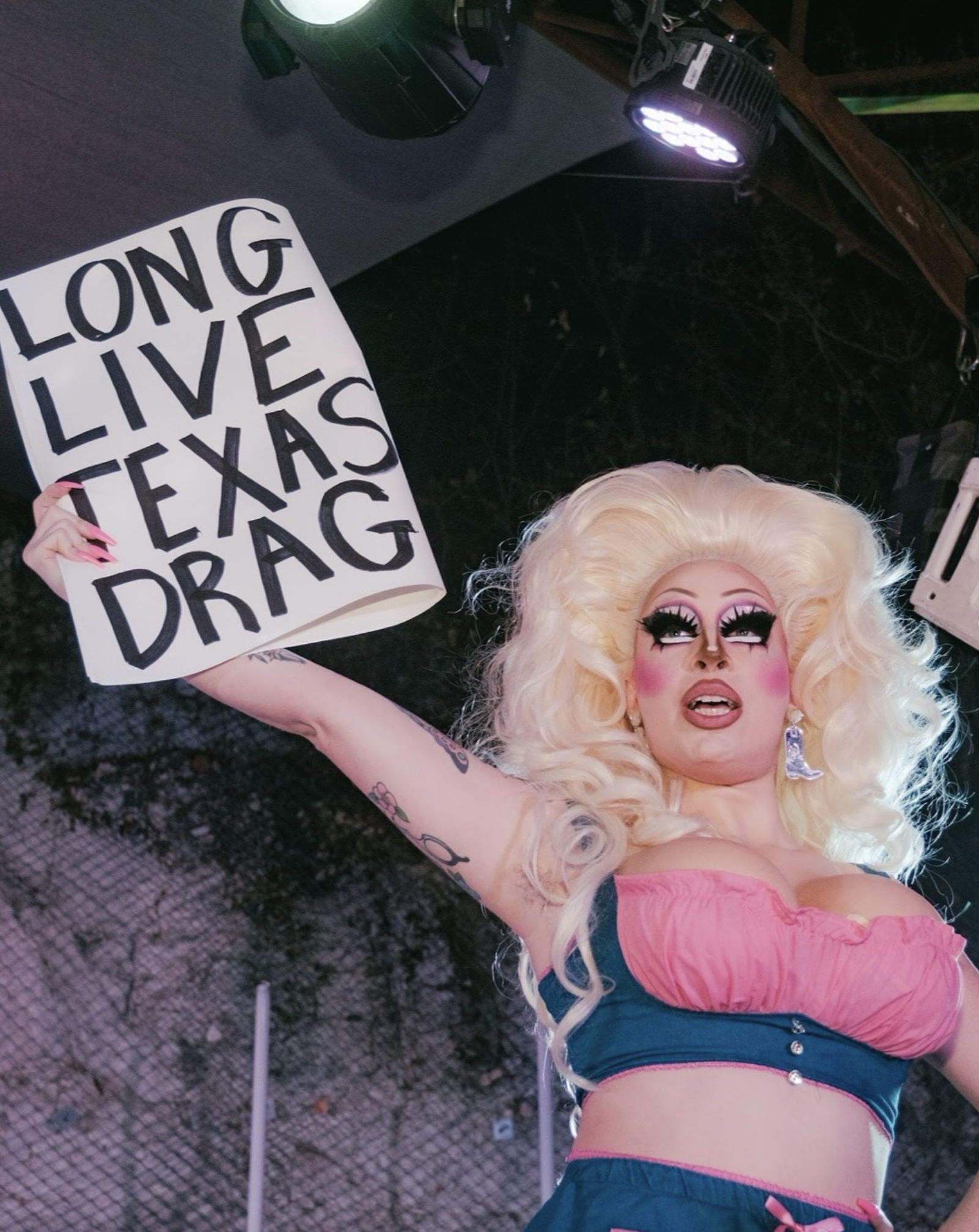
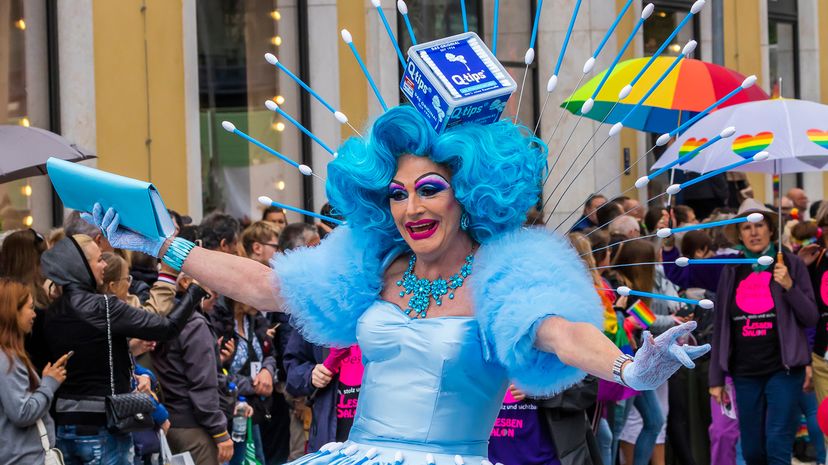
The Texas drag ban has been struck down once again, after a federal judge ruled that the controversial law targeting drag performances violates freedom of speech protections under the US Constitution. And his advice for anyone offended by drag? Essentially: don’t go, babes.
The controversial Texas drag ban has suffered another major legal defeat after a federal judge ruled that the state’s restrictions on drag performances are unconstitutional.
US District Judge David Hittner issued the ruling on 25 August, blocking Texas Attorney General Ken Paxton from enforcing Senate Bill 12 against the plaintiffs.
The decision is the latest chapter in a legal battle over drag rights in Texas that has been dragging on – excuse the very appropriate pun – since 2023.
For drag performers, LGBTQ+ organisations and freedom of expression campaigners, the ruling represents an important victory.
And for Texas lawmakers hoping the courts might eventually give their drag restrictions a legal glow-up, the answer appears to remain: not today, babes.
So, what exactly is Texas Senate Bill 12?
Senate Bill 12 was passed by Texas lawmakers in 2023 and restricts what it describes as “sexually oriented performances” on public property or in the presence of anyone under the age of 18.
Although the legislation does not explicitly say “drag show”, Republican politicians in Texas openly presented the measure as a way of restricting drag performances.
Businesses found to have hosted prohibited performances can face fines of up to $10,000, while performers themselves could face criminal penalties.
The problem?
Opponents argued from the beginning that the wording was so broad that it could potentially criminalise many forms of artistic expression protected by the First Amendment.
Judge Hittner agreed.
The judge’s solution? “Just don’t go”
In his latest ruling, Hittner found that the legislation imposes restrictions on constitutionally protected speech and is both overly broad and unconstitutionally vague.
The law’s definition of what could be considered erotic or sexually oriented could potentially stretch far beyond a queen in heels, a fabulous wig and enough rhinestones to be visible from space.
Performances involving dancing, theatre, cheerleading, cosplay and impersonations of famous entertainers could potentially fall within its scope.
In other words, once lawmakers start trying to legally define exactly what makes a performance “erotic”, things can get messy very quickly – and not the fun kind of messy.
Hittner pointed out that countless mainstream performances contain elements somebody, somewhere, could consider erotic, making it extremely difficult for artists and businesses to know exactly when they might be breaking the law.
And then came perhaps the most deliciously simple part of the ruling.
For people who object to the performances covered by the case, Hittner said the solution was “relatively simple”:
“Just don’t go.”
Honestly, your honour: no notes.
Texas has already lost this argument once
This isn’t the first time Hittner has ruled against Senate Bill 12.
He originally declared the legislation unconstitutional in September 2023, before it could come into force.
The legal battle continued, however, and the Fifth US Circuit Court of Appeals later allowed the legislation to take effect while sending the case back to Hittner for further consideration.
The law subsequently became enforceable in March 2026.
Now, after reconsidering the case, Hittner has essentially reached the same conclusion.
Senate Bill 12 violates the First Amendment.
Texas Attorney General Ken Paxton has already indicated that the state intends to appeal the decision.
So, sadly, don’t put the legal heels away just yet.
A victory for drag performers and LGBTQ+ Texans
The ruling has been welcomed by civil liberties organisations and LGBTQ+ campaigners.
Among those challenging the legislation was Texas drag performer Brigitte Bandit, alongside entertainment businesses and other organisations represented by the American Civil Liberties Union of Texas.
For campaigners, however, the case has never been solely about drag.
It is also about whether governments should be allowed to use broadly worded legislation to determine which forms of LGBTQ+ expression are acceptable in public spaces.
Drag has increasingly become a political target across parts of the United States, particularly as Republican-led states have introduced legislation dealing with LGBTQ+ visibility, transgender rights, education and public performances.
Texas has been one of the most prominent battlegrounds.
And while politicians may keep trying to turn drag queens into a culture-war villain, the courts keep having the awkward task of reminding them that disliking something does not automatically make it unconstitutional.
The fight isn’t necessarily over
Paxton’s promised appeal means the future of Senate Bill 12 could once again end up before a higher court.
So no, huns, this particular drama may not have reached its season finale just yet.
But the latest ruling sends an important message well beyond Texas.
Freedom of expression does not disappear simply because somebody finds that expression provocative, uncomfortable or – heaven forbid – a little bit fabulous.
Governments can regulate genuinely harmful conduct.
What they cannot do, according to Hittner’s ruling, is use vague definitions to restrict constitutionally protected expression simply because some people object to it.
And if somebody really cannot bear the thought of seeing a drag performance?
The federal court has now offered a remarkably straightforward solution.
To provide the best experiences, we use technologies like cookies to store and/or access device information. Consenting to these technologies will allow us to process data such as browsing behavior or unique IDs on this site. Not consenting or withdrawing consent, may adversely affect certain features and functions.
Functional
Always active
The technical storage or access is strictly necessary for the legitimate purpose of enabling the use of a specific service explicitly requested by the subscriber or user, or for the sole purpose of carrying out the transmission of a communication over an electronic communications network.
Preferences
The technical storage or access is necessary for the legitimate purpose of storing preferences that are not requested by the subscriber or user.
Statistics
The technical storage or access that is used exclusively for statistical purposes.The technical storage or access that is used exclusively for anonymous statistical purposes. Without a subpoena, voluntary compliance on the part of your Internet Service Provider, or additional records from a third party, information stored or retrieved for this purpose alone cannot usually be used to identify you.
Marketing
The technical storage or access is required to create user profiles to send advertising, or to track the user on a website or across several websites for similar marketing purposes.