 Skip to content


The BFI London Film Festival 2026 has revealed its full programme – and queer cinema is very much part of the party.
The BFI has revealed the full programme for the 70th London Film Festival, with 251 films, shorts, series and immersive works from 88 countries screening between 7 and 18 October 2026.
And LGBTQ+ cinema is very much part of the celebration.
From Andrew Scott portraying a gay actor during the AIDS crisis to transgender homecomings, queer love, ageing, nightlife and hidden LGBTQ+ history, the programme offers far more than a token rainbow moment.
Here are the LGBTQ films at London Film Festival 2026 that have caught TGM’s attention.
Elsinore: Andrew Scott leads one of the biggest LGBTQ films at London Film Festival
Let’s start with the film opening the entire festival.

Andrew Scott stars as Scottish actor Ian Charleson in Elsinore, directed by Simon Stone and written by Pride screenwriter Stephen Beresford.
The film follows Charleson as he prepares to play Hamlet at London’s National Theatre after Daniel Day-Lewis unexpectedly leaves the production.
At the same time, Charleson is living with AIDS and approaching the end of his life.
The BFI describes Elsinore as a story not simply about illness, but about creativity, friendship, resistance and community.
The supporting cast includes Olivia Colman, Billie Piper, Johnny Flynn, Luke Thompson and Joe Locke.
Charleson was openly gay and became one of the first major public figures in Britain to have AIDS named as the cause of his death at his own request.
That makes Elsinore much more than another biographical drama.
It places queer history, performance and the AIDS crisis at the centre of the festival’s opening night.
La Bola Negra: queer history meets Federico García Lorca
Spanish filmmakers Javier Ambrossi and Javier Calvo (Los Javis of Drag Race Spain)bring La Bola Negra to London as one of the festival’s major gala presentations.
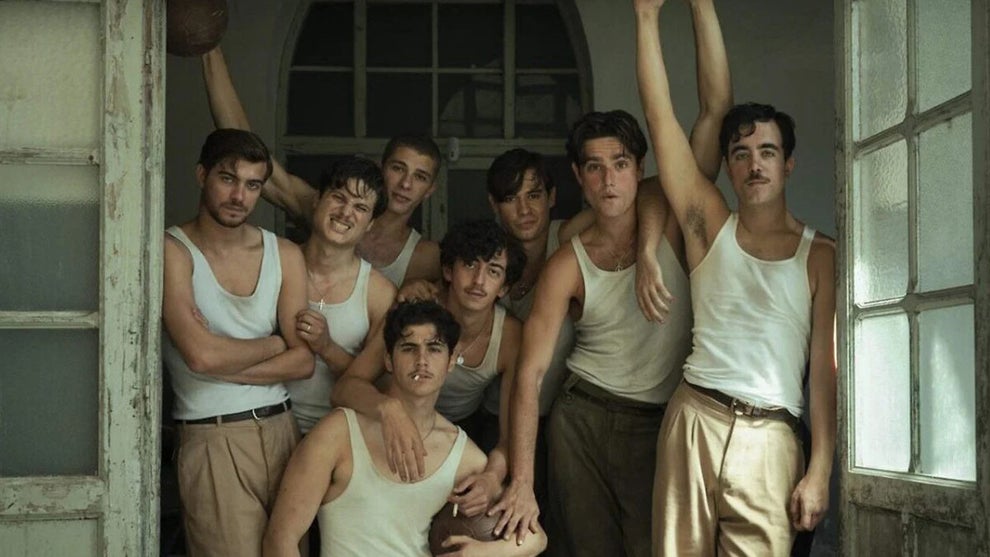
The BFI describes the film as a “genre-defying queer epic” inspired by the legacy of Spanish poet and playwright Federico García Lorca.
Lorca remains one of Spain’s most important literary figures, but his sexuality and murder during the Spanish Civil War have also made him an enduring symbol within queer cultural history.
Ambrossi and Calvo – widely known in Spain as “Los Javis” – have built careers bringing LGBTQ+ stories into mainstream Spanish culture.
That makes La Bola Negra one of the most intriguing queer films arriving in London this autumn.
Sweet Milk Lake brings a trans story to the festival
One of the festival’s most prominent transgender stories comes from writer, director and actor Harvey Zielinski.

Sweet Milk Lake follows a young trans man returning home, where he is mistaken for his cisgender twin brother.
That simple premise opens the door to bigger questions about identity, family and how others see us.
The film has also been chosen as the festival’s BFI Flare Special Presentation.
BFI Flare is one of the UK’s most important LGBTQ+ film festivals, so the selection gives Sweet Milk Lake a particularly significant place within the wider London Film Festival programme.
The Man I Love remembers queer New York and the AIDS crisis
Director Ira Sachs returns to queer storytelling with The Man I Love.
The film explores New York’s gay scene during the 1980s, placing intimacy and relationships against the backdrop of the emerging AIDS crisis.
The London Film Festival will also host The Man I Love: Remembering the AIDS Crisis, a separate event examining the continuing cultural and personal legacy of HIV and AIDS.
For audiences interested in queer history as much as cinema, this is likely to be one of the festival’s most important titles.
Stories about the AIDS crisis have often focused understandably on tragedy.
Contemporary queer cinema increasingly also looks at the friendships, relationships, activism, art and communities that existed alongside that loss.
Easter puts an older trans character centre stage
Another title worth watching is Easter, centred on Korean transgender burlesque performer Sekja.
The BFI describes the film as a celebration of life.
That may sound simple, but the representation matters.
Film and television still frequently focus on young trans people and transition stories.
Older trans characters – particularly those simply living full, complicated lives – remain much less visible on screen.
That gives Easter an angle that feels genuinely refreshing.
Queer Edward II revisits a radical moment in British LGBTQ+ culture
British queer history is also represented by Queer Edward II.
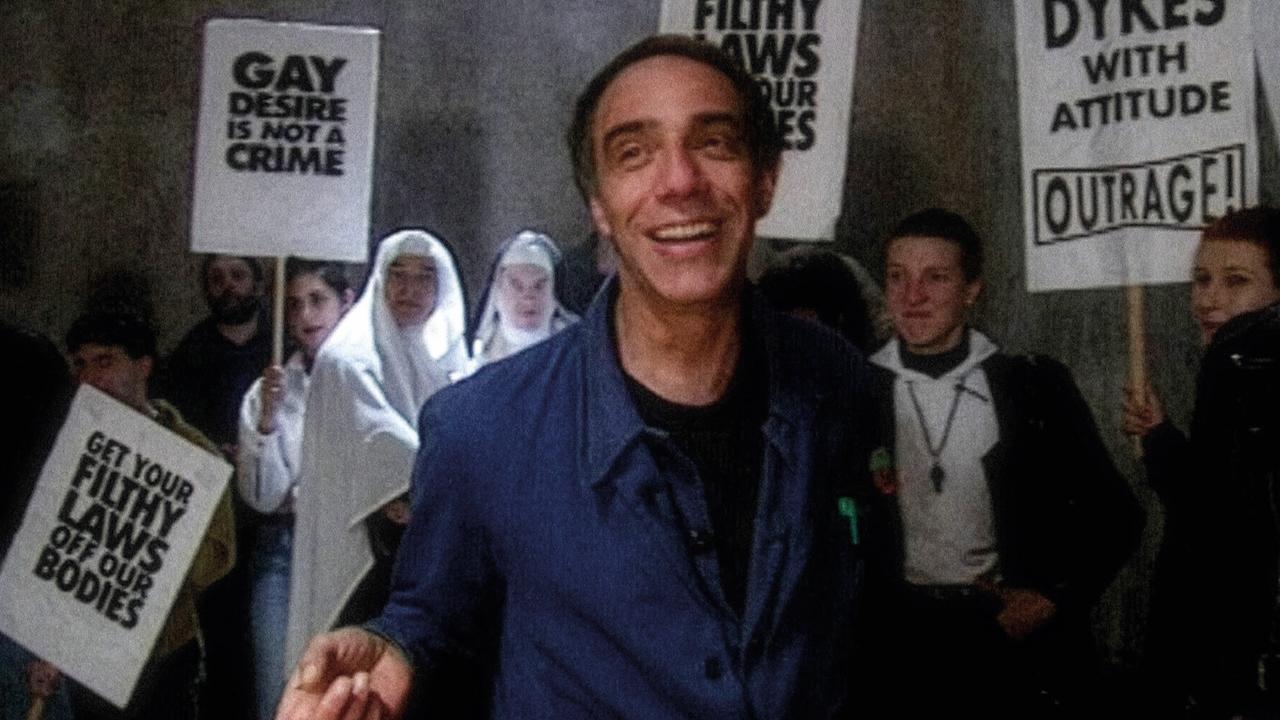
The archival documentary explores the making and legacy of Derek Jarman’s 1991 adaptation of Christopher Marlowe’s Edward II.
Jarman’s film arrived during a particularly hostile period for LGBTQ+ people in Britain.
Section 28 remained in force, the AIDS crisis was devastating communities and queer activists were becoming increasingly visible and politically organised.
The documentary looks at how Jarman transformed Marlowe’s story into something explicitly connected to the politics of his own time.
It is also competing for the festival’s Grierson Award for Best Documentary.
For anyone interested in how queer cinema and political protest have influenced one another, this could be one of the festival’s hidden gems.
Frank and Percy brings queer romance to later life
Not all LGBTQ+ stories need to centre on youth, trauma or coming out.

Frank and Percy, starring Ian McKellen and Roger Allam, explores connection and romance later in life.
Stories about older gay men remain surprisingly uncommon in mainstream cinema, particularly when ageing itself is not treated as something tragic.
The presence of McKellen alone will make the film a draw for many LGBTQ+ audiences, but its broader focus on companionship and the possibility of finding love later in life gives it something different from many queer romances.
More LGBTQ films London Film Festival audiences can discover
And these are only some of the queer titles appearing in the programme.
Fruit Gathering explores an intense friendship between two young Burmese women.
In a Whisper follows a queer woman returning to Tunisia after the death of her uncle.
Other titles including Masc, Coward, Club Kid and Iván & Hadoum expand the festival’s LGBTQ+ offering even further.
Taken together, they show just how broad queer cinema has become.
There is no single “LGBTQ film” anymore.
There are films about love, grief, history, family, sex, ageing, identity, politics and simply getting on with life.
That variety is exactly what representation should eventually look like.
When is London Film Festival 2026?
The 70th BFI London Film Festival runs from 7 to 18 October 2026.
Screenings and events will take place across London, with selected films also appearing at partner cinemas around the UK.
General ticket sales open on 17 September.
With Andrew Scott opening the festival, major trans stories on the programme and queer history appearing across fiction and documentary, the LGBTQ films London Film Festival has selected for 2026 deserve plenty of attention.
Our only problem?
Deciding which one to book first.


