 Skip to content


Over the space of just a few days, LGBTQ+ organisations, activists, HIV-support groups, journalists and businesses across Turkey have found themselves at the centre of a sweeping series of police raids, arrests, investigations and online restrictions.
Updated: 20 September 2026
The operation, called “My Family Is Safe”, is being presented by the Turkish government as an effort to protect children, public morality and what it describes as family values. Human-rights organisations, however, say the measures are targeting legitimate LGBTQ+ advocacy and fundamental freedoms including expression, association and peaceful assembly.
So what exactly is happening to LGBTQ+ people in Turkey, why is this happening now — and what is the international community actually doing about it?
What is happening to LGBTQ+ people in Turkey?
Between 12 and 14 September, coordinated police operations targeted seven organisations defending LGBTQ+ rights and two groups supporting people living with HIV, alongside bars and nightclubs in Istanbul, Ankara, Izmir, Aydın and Mersin.
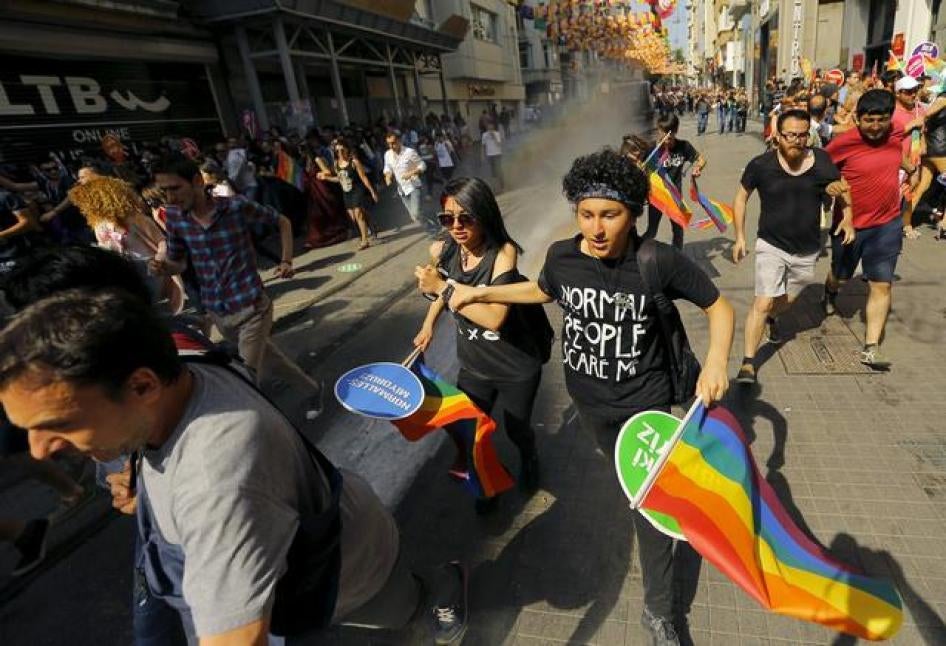
Human Rights Watch says police arrested at least 112 people, with 82 still being held under court order as of its 18 September update. Those detained are not all LGBTQ+ activists: some cases also involve allegations relating to sex work, drugs and obscenity. However, at least 24 of those detained were identified by HRW as LGBTQ+ activists, founders or executives of targeted organisations, while a journalist was also detained.
The scale of the wider investigation is even larger. Turkey’s Justice Minister Akın Gürlek said proceedings involved 162 suspects, nine associations and 13 businesses across 15 provinces. Authorities say potential offences include obscenity, prostitution, drug-related crimes and breaches of regulations governing associations.
Among the organisations affected is Kaos GL, one of Turkey’s most established LGBTQ+ rights groups. Police questioned members about issues including the organisation’s funding, social-media content and internal activities. Other organisations affected include Lambda Istanbul, Hevi LGBTİ, SPoD and Pozitif-İz, which works with people living with HIV.
[EMBED TGM INSTAGRAM CAROUSEL #1 HERE]
Our first Instagram explainer looked at how the crackdown began and why LGBTQ+ organisations were being targeted.
Protesting the crackdown has brought more arrests
The response inside Turkey has also been met with police action.
On 15 September, more than 100 people gathered outside Istanbul’s Çağlayan courthouse to protest the arrests and raids. Police surrounded the demonstration and detained participants before releasing them after more than 24 hours. Two people had also been arrested at an earlier protest in Izmir.
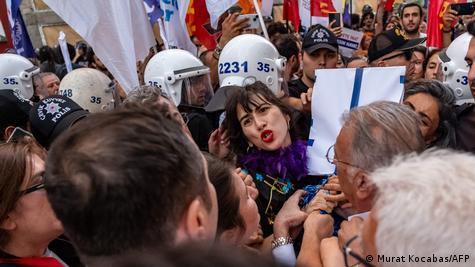
The United Nations Human Rights Office subsequently said it was concerned by reports of the mass arrest and detention of more than 150 LGBTQ+ people and human-rights defenders, as well as allegations of ill-treatment in detention. UN High Commissioner for Human Rights Volker Türk urged Turkish authorities to respect human rights without discrimination on the basis of sexual orientation or gender identity and to release people arbitrarily detained.
These figures should not all be added together: some refer to the original raids while others include people subsequently detained during demonstrations.
That distinction matters when trying to understand the true scale of what is happening.
LGBTQ+ voices are also being restricted online
The crackdown has not remained offline.
Amnesty International reported that by 15 September more than 180 social-media accounts belonging to LGBTQ+ organisations, activists, journalists, media outlets and others had been blocked or restricted, alongside a number of websites.
Remarkably, one of those accounts belonged to Amnesty International Turkey itself. Its X account was blocked inside Turkey following a decision communicated by the country’s Cyber Security Presidency, although it remained visible outside the country.
Human Rights Watch says further court orders were issued between 12 and 16 September targeting social-media accounts and websites belonging not only to LGBTQ+ organisations but also to other human-rights and media groups.
That expansion is particularly important. The story is increasingly about more than individual arrests: it also concerns how much space remains for LGBTQ+ organisations, journalists and civil society to speak publicly about LGBTQ+ rights in Turkey.
[EMBED TGM INSTAGRAM UPDATE HERE]
As the situation developed, The Gayly Mirror published a second update looking at the arrests, online restrictions and growing international response.
Why is this happening now?
The raids have taken place within a broader government campaign emphasising traditional family structures.
On 14 September, Turkey’s Justice Minister issued a circular to prosecutors across the country titled “Protecting the Family, Young People and Society from Violations of General Morality and Negative Content and Entities.”
According to Human Rights Watch, prosecutors were encouraged to investigate activities authorities believe encourage the “erasure of gender distinctions” among young people, gather digital evidence and seek the removal or blocking of online content where considered necessary.
The government says these measures are designed to protect children and families. Rights organisations reject that justification.
Amnesty International has described the latest actions as a “full-scale assault on LGBTI rights”, while Human Rights Watch argues that the use of family-values rhetoric is contributing to the criminalisation and marginalisation of LGBTQ+ people and their organisations. Those are the organisations’ assessments rather than findings of a court.
The latest crackdown also follows years of restrictions on LGBTQ+ visibility in Turkey. Istanbul Pride has repeatedly been prevented from taking place, and LGBTQ+ organisations have faced investigations, event restrictions and legal proceedings before the events of September 2026.
What is the international community doing?
The response outside Turkey has grown considerably during the past week.
The United Nations
The UN Human Rights Office has publicly intervened, expressing concern about mass detentions, alleged ill-treatment and the effect of the crackdown on civil society.
Volker Türk has called on Turkish authorities to protect people’s rights regardless of sexual orientation or gender identity and to release people who have been arbitrarily detained.
That does not mean the UN can simply order Turkish courts to release detainees. Its intervention instead increases diplomatic scrutiny and creates an international human-rights record of what is taking place.
Council of Europe
The Council of Europe Commissioner for Human Rights, Michael O’Flaherty, has also intervened.
He said he was concerned about arrests, raids and the blocking of websites and social-media accounts targeting LGBTQ+ civil society and human-rights defenders. He has called on Turkish authorities to release people detained for legitimate human-rights and civil-society activity and warned that appeals to “family values” should not be used to justify restrictions on fundamental rights.
That response matters because Turkey is bound by the European human-rights system and remains subject to scrutiny from Council of Europe institutions.
European Union
The European Commission has said it is concerned about the arrests of activists, legal action against organisations and businesses and restrictions on websites and social-media accounts.
The Commission told Reuters that it was closely following developments.
Amnesty International and global protests
Amnesty International has gone beyond issuing statements.
The organisation announced international solidarity demonstrations outside Turkish diplomatic missions in cities including London, Brussels, Paris, Oslo and Washington DC on 18 September. Protests subsequently took place in Washington and several European cities, bringing LGBTQ+ organisations and human-rights campaigners together.
In Washington, the demonstration involved Amnesty International USA, the Council for Global Equality, Outright International and Health GAP. Similar actions were reported elsewhere as international pressure increased.
Human Rights Watch and other LGBTQ+ organisations
Human Rights Watch has published detailed documentation of the raids, detentions and restrictions and is calling for people detained without credible evidence of criminal wrongdoing to be released.
ILGA-Europe and other organisations have also issued joint appeals calling for an end to what they describe as the criminalisation of LGBTQ+ civil society and for protection of freedom of association and assembly.
These organisations cannot directly overturn Turkish judicial decisions. What they can do is document cases, support local organisations, mobilise international attention, push governments and European institutions to respond and maintain scrutiny while individual cases move through the courts.
What happens next?
That is currently the biggest unanswered question.
Human Rights Watch has raised concerns that cases could eventually be brought seeking the closure of some organisations whose executives and members have been detained. Meanwhile, the nationwide circular sent to prosecutors means investigations and online restrictions may continue beyond the organisations already targeted.
At the same time, international scrutiny is now considerably greater than it was when the first raids began. The UN, Council of Europe, European Commission and major international human-rights organisations are all publicly monitoring or challenging aspects of the crackdown.
For LGBTQ+ people in Turkey, however, this is not merely an international political dispute. It concerns whether organisations providing community, advocacy and health support will be able to continue operating — and whether LGBTQ+ people can organise, protest and speak openly without fearing detention or censorship.
The Gayly Mirror will continue following the situation and updating this article as new information becomes available.


