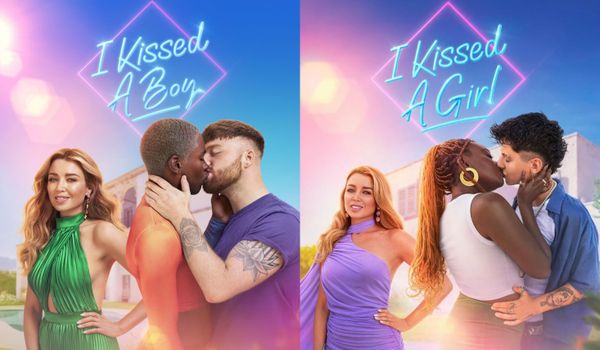
The BBC is shutting down BBC Three as a traditional television channel in 2027, just weeks after announcing Drag Race UK’s departure. With I Kissed A Boy and I Kissed A Girl also cancelled, is queer television losing one of its most important mainstream homes?
BBC Three is leaving our television screens. Again.
BBC Three is preparing to disappear from traditional television for a second time, and for LGBTQ+ audiences, the timing couldn’t feel more significant.
On 20 October 2026, the BBC confirmed that BBC Three will stop broadcasting as a linear television channel in spring 2027, alongside BBC Scotland and Radio 4 Extra.
The decision forms part of a major restructuring programme designed to address financial pressures and deliver approximately £500 million in savings by 2028.
But before anyone starts planning a farewell party, there is an important distinction: BBC Three isn’t disappearing entirely.
Its programmes and future commissions will continue online, principally through BBC iPlayer and platforms including YouTube.
Nevertheless, the announcement comes at a particularly difficult moment for the BBC’s LGBTQ+ programming, following the broadcaster’s decision to part ways with RuPaul’s Drag Race UK and cancel its groundbreaking queer dating shows.
And darling, we have questions.
Why is BBC Three closing in 2027?
The BBC has been facing significant financial challenges, alongside changing viewing habits and growing competition from streaming platforms.
According to the corporation, moving BBC Three and BBC Scotland away from traditional broadcast channels will help reduce costs while focusing investment on digital audiences.
The broadcaster’s director-general, Matt Brittin, has acknowledged the difficult choices involved in restructuring the organisation and adapting to how people now consume television.
For BBC Three, the transition reflects the corporation’s belief that younger viewers are increasingly choosing on-demand services over scheduled television.
However, that argument will sound rather familiar to anyone who remembers what happened a decade ago.
Haven’t we been here before?
Oh, absolutely.
BBC Three originally launched in 2003, building a reputation for bold comedy, youth-focused entertainment, original drama and programmes aimed at audiences often underserved by traditional broadcasters.
The channel introduced or supported major British television successes, including Gavin & Stacey, Fleabag and This Country.
In 2016, the BBC moved BBC Three online, arguing that younger viewers were abandoning traditional television.
Six years later, in February 2022, the corporation reversed that decision and relaunched BBC Three as a linear channel.
Now, less than five years after its television comeback, the channel is preparing to move online once again.
It is a rather extraordinary broadcasting journey.
First the BBC tells younger audiences to go online. Then it invites them back to television. And now, apparently, we’re all packing our bags for iPlayer again.
What happens to RuPaul’s Drag Race UK?
The news arrives only weeks after the BBC confirmed that RuPaul’s Drag Race UK would leave the broadcaster following its eighth series.
The announcement in September revealed that the franchise would move to WOW Presents Plus, the streaming platform operated by World of Wonder.
A new RuPaul’s Drag Race UK: All Stars series is expected to premiere internationally on the service in autumn 2027.
The current eighth series, which began in September 2026, continues as planned on BBC Three and BBC iPlayer.
Previous episodes and seasons are also expected to remain available on iPlayer under the arrangements announced at the time of the move.
Importantly, the departure of Drag Race UK was announced before the closure of BBC Three’s linear channel.
The two developments form part of a wider period of financial and programming changes, but the channel closure should not be presented as the direct cause of the show’s move.
For British drag fans, however, the wider picture is difficult to ignore.
One of the country’s most recognisable queer entertainment franchises is leaving a free-to-access public-service platform for a specialist subscription streaming service.
That transition raises important questions about accessibility, particularly for younger viewers and audiences who may not be able or willing to pay for additional subscriptions.
And what about I Kissed A Boy and I Kissed A Girl?
The future of queer dating television on the BBC has also become increasingly uncertain.
Earlier in 2026, the corporation confirmed that it had no plans to commission further series of I Kissed A Boy or I Kissed A Girl, the LGBTQ+ dating programmes hosted by Dannii Minogue.
Both shows brought same-sex relationships into a television genre traditionally dominated by heterosexual couples.
Beyond the romance and reality television drama, their importance lay in offering ordinary LGBTQ+ people the opportunity to see their relationships represented in a mainstream dating format.
The cancellation disappointed viewers and former contestants, with supporters arguing that these programmes offered visibility rarely found elsewhere on British television.
The BBC cited funding challenges when explaining its decision.
Taken together with the departure of Drag Race UK, these changes represent a noticeable reduction in some of the broadcaster’s most recognisable LGBTQ+-focused entertainment formats.
That does not mean the BBC has abandoned queer programming entirely.
But it does make the question of what comes next increasingly important.
Could the BBC be planning something new for queer audiences?
There may be one encouraging development.
Reports published on 20 October suggest that a new BBC dating format is being developed for young adults aged between 18 and 26.
According to casting information reported by the press, the programme would welcome participants of all genders and sexual orientations.
The project is reportedly being developed for YouTube rather than a traditional television channel.
However, it has not been confirmed as a direct replacement for I Kissed A Boy or I Kissed A Girl, and full commissioning and broadcast details remain unclear.
An inclusive dating format could offer something different, particularly if it allows LGBTQ+ participants to appear naturally alongside other contestants.
But a programme open to everyone is not necessarily equivalent to one created specifically to centre queer lives and relationships.
Both forms of representation can have value.
Why queer representation on public television still matters
Moving BBC Three online does not automatically mean LGBTQ+ representation will disappear.
Streaming platforms have created important opportunities for queer storytelling, sometimes allowing programmes to reach international audiences far beyond traditional broadcast schedules.
But public-service television also has a distinctive role.
It can introduce LGBTQ+ characters, performers and relationships to viewers who might never actively search for queer programming.
A programme on BBC Three can reach audiences browsing television channels, including people who may not already follow LGBTQ+ entertainment.
For younger viewers exploring their identities, encountering queer stories in mainstream media can be especially meaningful.
Accessibility also matters. Moving a programme from the BBC to a paid subscription platform changes the financial circumstances under which people can watch it.
The challenge is not simply whether queer content continues to exist.
It is whether that content remains visible, accessible and sufficiently supported within Britain’s changing media landscape.
The Gayly Mirror’s take: don’t make queer TV disappear behind a paywall
BBC Three has never been a perfect channel.
But it has helped bring some extraordinary LGBTQ+ performers, relationships and stories into mainstream British entertainment.
From drag queens taking over Thursday evenings to queer couples sharing their first kisses on national television, these programmes have created cultural moments that extend far beyond their viewing figures.
The transition to digital broadcasting may make financial and practical sense for the BBC.
But it should not become an excuse to retreat from ambitious, accessible LGBTQ+ storytelling.
Queer audiences deserve more than occasional representation and programmes that disappear whenever budgets become difficult.
We deserve stories that are funny, romantic, complicated, dramatic and sometimes gloriously ridiculous.
And we deserve to see them without having to subscribe to another half-dozen streaming services.
Because darling, if the BBC can bring BBC Three back from the dead once, surely it can find a way to keep queer television alive.
To provide the best experiences, we use technologies like cookies to store and/or access device information. Consenting to these technologies will allow us to process data such as browsing behavior or unique IDs on this site. Not consenting or withdrawing consent, may adversely affect certain features and functions.
Functional
Always active
The technical storage or access is strictly necessary for the legitimate purpose of enabling the use of a specific service explicitly requested by the subscriber or user, or for the sole purpose of carrying out the transmission of a communication over an electronic communications network.
Preferences
The technical storage or access is necessary for the legitimate purpose of storing preferences that are not requested by the subscriber or user.
Statistics
The technical storage or access that is used exclusively for statistical purposes.The technical storage or access that is used exclusively for anonymous statistical purposes. Without a subpoena, voluntary compliance on the part of your Internet Service Provider, or additional records from a third party, information stored or retrieved for this purpose alone cannot usually be used to identify you.
Marketing
The technical storage or access is required to create user profiles to send advertising, or to track the user on a website or across several websites for similar marketing purposes.
 Skip to content