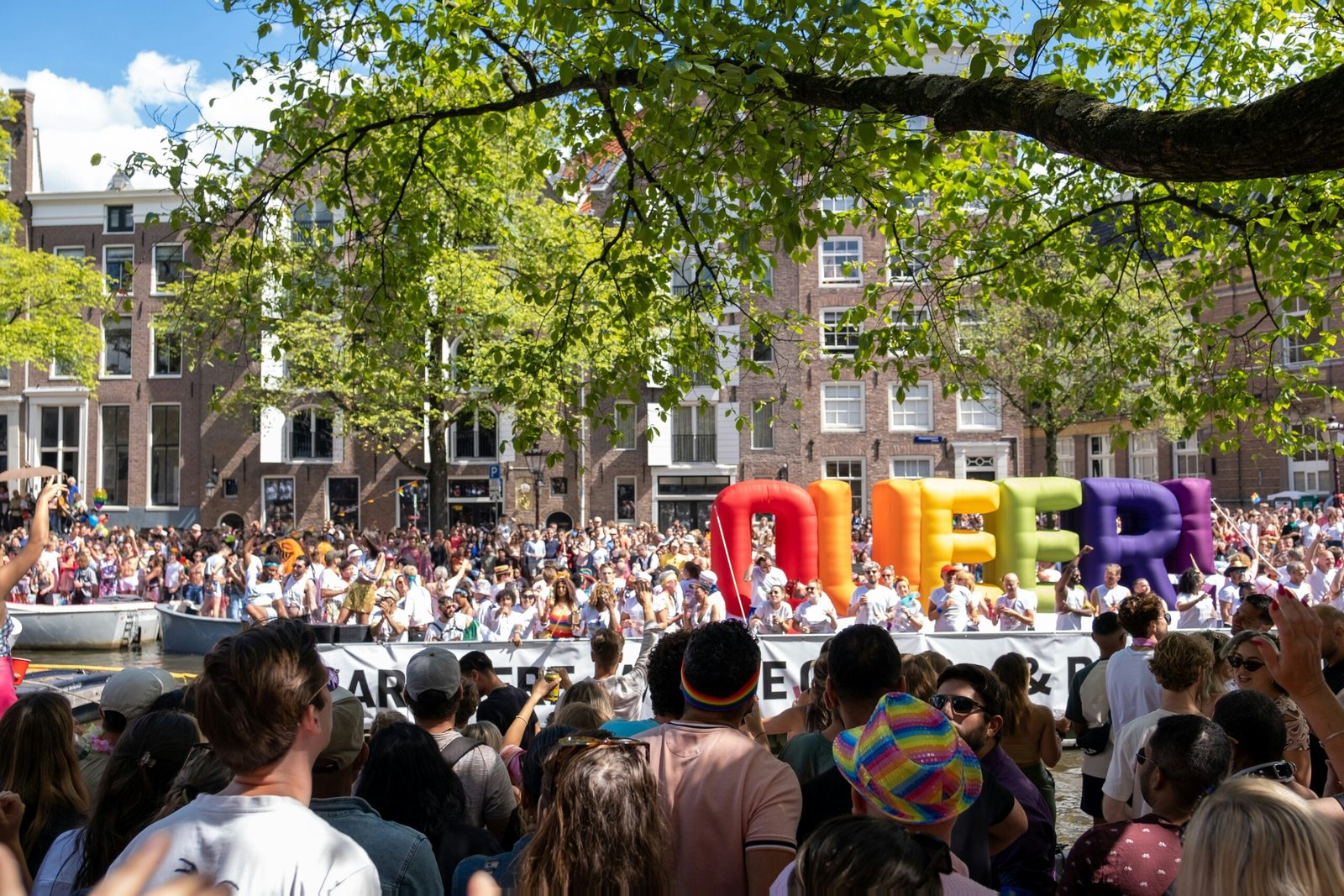
EuroPride 2029 will take place in Dresden, Germany, marking a historic return of Europe’s major LGBTQ+ Pride celebration to the country after 25 years.
The European Pride Organisers Association (EPOA) selected Dresden during its annual general meeting in Magdeburg on 10 October 2026, with the official announcement published on 14 October.
The event will be organised by CSD Dresden under the motto Turn Walls into Bridges, a message inspired by the city’s history and the continuing struggle for LGBTQ+ equality.
But this is about far more than an enormous Pride parade, fabulous outfits and a sea of rainbow flags.
Bringing EuroPride to eastern Germany sends a powerful message about visibility, solidarity and the importance of defending queer rights in communities where progress can never be taken for granted.
Why EuroPride 2029 in Dresden Is a Historic Decision
Germany last hosted EuroPride in 2004, when the event took place in Hamburg.
From Europride Hamburg 2004
Its return in 2029 will therefore mark a quarter of a century since the country last welcomed the pan-European celebration.
Dresden’s successful bid was selected by Pride organisations from across Europe, bringing one of the continent’s most prominent LGBTQ+ events to Saxony for the first time.
The organisers have described the project as an opportunity to connect communities, strengthen LGBTQ+ civil society and create a legacy that continues beyond the celebrations themselves.
CSD Dresden has received support from local and regional political figures, including Dresden’s mayor Dirk Hilbert and Saxony’s deputy minister-president Petra Köpping.
The involvement of institutions and community organisations will be central to delivering an event that combines celebration with meaningful engagement on human rights.
‘Turn Walls into Bridges’: The Powerful Meaning Behind Dresden Pride
In 2029, the world will mark 60 years since the Stonewall uprising in New York, a defining moment in the modern LGBTQ+ rights movement.
The year will also mark the 40th anniversary of the Peaceful Revolution of 1989, the wave of pro-democracy demonstrations in East Germany that helped bring about the fall of the Berlin Wall.
For the organisers, these anniversaries represent the power of people challenging exclusion and demanding freedom.
The symbolism is especially meaningful in Dresden, a city whose modern history is closely connected to the transformations that followed German reunification.
Rather than treating Pride simply as a celebration, the event aims to explore how communities can overcome social and political divisions.
The message is that walls, whether physical, political or cultural, do not have to define the future.
Why Eastern Germany Matters for LGBTQ+ Visibility
The decision to host EuroPride in Saxony carries an important political and cultural dimension.
Europride parade 2026 in Amsterdam
Across Europe, LGBTQ+ organisations have increasingly warned about the spread of anti-LGBTQ+ rhetoric, political polarisation and attempts to restrict queer visibility.
Eastern Germany has also been the focus of debates about far-right political influence and the experiences of minority communities.
That does not mean Dresden should be reduced to a stereotype of intolerance. The city is home to active LGBTQ+ organisations and campaigners who have worked for years to create spaces for visibility, celebration and solidarity.
Indeed, the successful EuroPride bid is itself evidence of the strength and ambition of those communities.
For organisers, the event is an opportunity to highlight their work while inviting people from across Europe to build new connections.
It is also a reminder that LGBTQ+ people exist in every region, not only in the cities traditionally associated with queer nightlife and progressive politics.
What Can Visitors Expect From EuroPride Dresden 2029?
Detailed dates, the full programme and visitor arrangements have not yet been announced.
However, the organisers have outlined an ambitious vision focused on cultural exchange, human rights, community participation and international solidarity.
Alongside the celebratory elements traditionally associated with Pride, the event is expected to create opportunities for discussion and cooperation between LGBTQ+ organisations from different countries.
The organisers also want EuroPride to leave a lasting legacy by strengthening local advocacy and creating new relationships between communities.
That long-term ambition matters.
A successful Pride should not be measured only by the size of its parade or the number of visitors arriving for a weekend. Its impact should also be felt by the people who live in the host city after the international spotlight has moved elsewhere.
Pride Was Never Just a Party
EuroPride’s arrival in Dresden offers an opportunity to reflect on what the LGBTQ+ rights movement has achieved and the challenges it continues to face.
Pride Parade in Jerusalem – a march for peace, love and rights.
Stonewall remains a powerful symbol of resistance, while the events of 1989 demonstrate how determined communities can challenge seemingly permanent systems.
These histories are different, but both speak to the importance of collective action and the pursuit of freedom.
For LGBTQ+ people across Europe, Dresden 2029 could become a celebration of progress and a reminder that rights require continued protection.
There will undoubtedly be music, dancing, rainbow flags and plenty of fabulous moments. And yes, we fully intend to appreciate every single glitter-covered second.
But the most meaningful part of EuroPride 2029 may be its invitation to build something that lasts longer than a celebration.
Because Pride was never only about being seen for one weekend. It was about creating a world where nobody has to hide for the rest of the year.
Dresden, Europe is coming. And this time, we’re building bridges.
To provide the best experiences, we use technologies like cookies to store and/or access device information. Consenting to these technologies will allow us to process data such as browsing behavior or unique IDs on this site. Not consenting or withdrawing consent, may adversely affect certain features and functions.
Functional
Always active
The technical storage or access is strictly necessary for the legitimate purpose of enabling the use of a specific service explicitly requested by the subscriber or user, or for the sole purpose of carrying out the transmission of a communication over an electronic communications network.
Preferences
The technical storage or access is necessary for the legitimate purpose of storing preferences that are not requested by the subscriber or user.
Statistics
The technical storage or access that is used exclusively for statistical purposes.The technical storage or access that is used exclusively for anonymous statistical purposes. Without a subpoena, voluntary compliance on the part of your Internet Service Provider, or additional records from a third party, information stored or retrieved for this purpose alone cannot usually be used to identify you.
Marketing
The technical storage or access is required to create user profiles to send advertising, or to track the user on a website or across several websites for similar marketing purposes.
 Skip to content