Grindr has launched a $120-a-month AI subscription promising smarter matches, better conversations and less wasted time. But when finding a date becomes a luxury experience, are we paying for connection or simply a more expensive way to be ignored?
The Gay Dating Upgrade Nobody Asked Their Bank Account For
Darling, apparently being single wasn’t expensive enough.
Grindr has officially launched Edge, its new AI-powered premium subscription, worldwide on 17 November 2026. The introductory US price? A rather fabulous $120 per month, or $70 if you fancy paying for a single week of technologically enhanced romantic optimism.
For that sort of money, we’d expect a handsome man delivered to our door, emotionally available, freshly showered and preferably capable of holding a conversation beyond “pics?”
Instead, we’re getting artificial intelligence.
According to Grindr’s official announcement, Edge promises to make connections easier, faster and more personalised. And while technology improving people’s dating lives is hardly a bad thing, there’s something deliciously absurd about spending a small fortune to optimise the experience of being left on read.
What Does Grindr Edge Actually Offer?
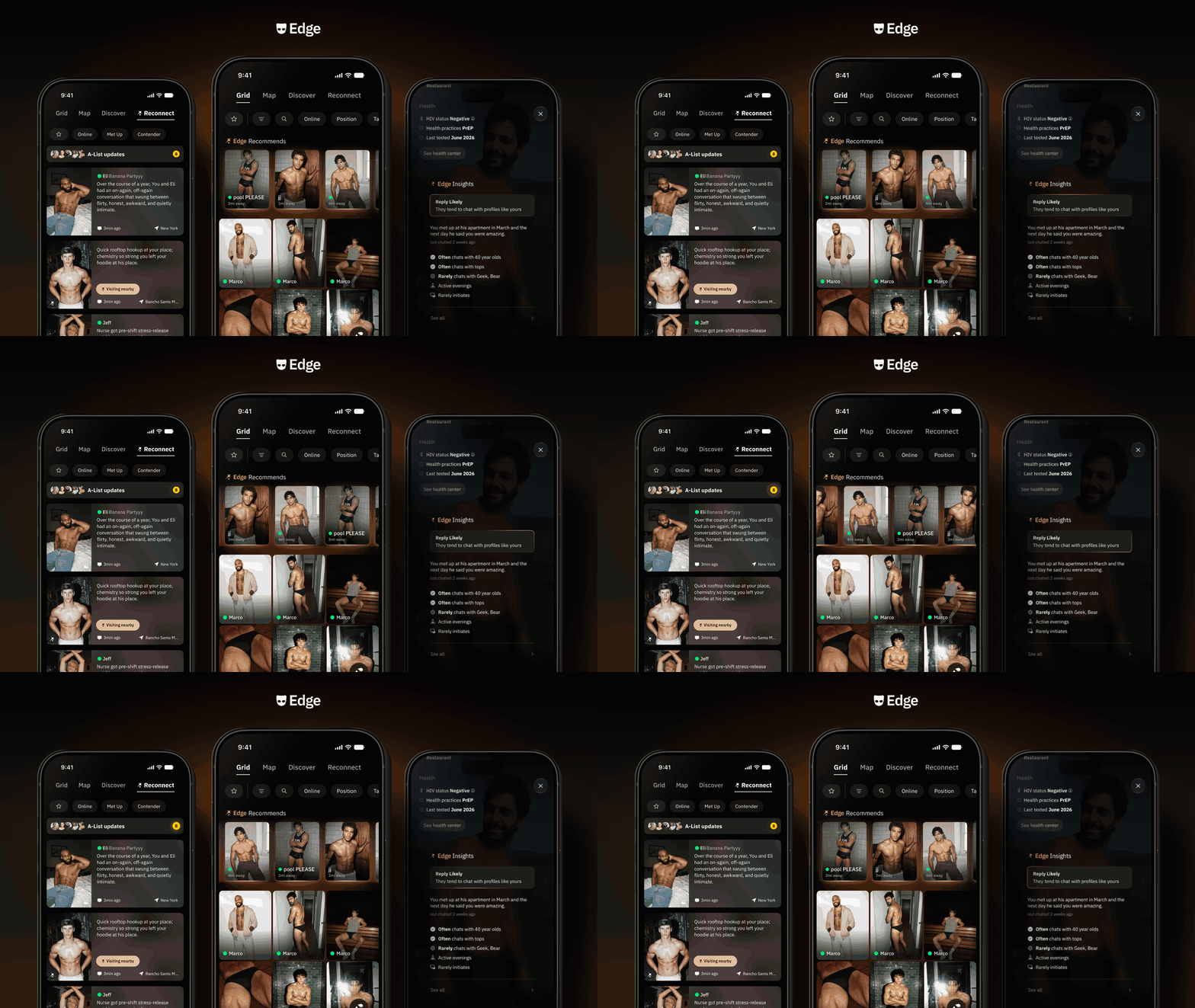
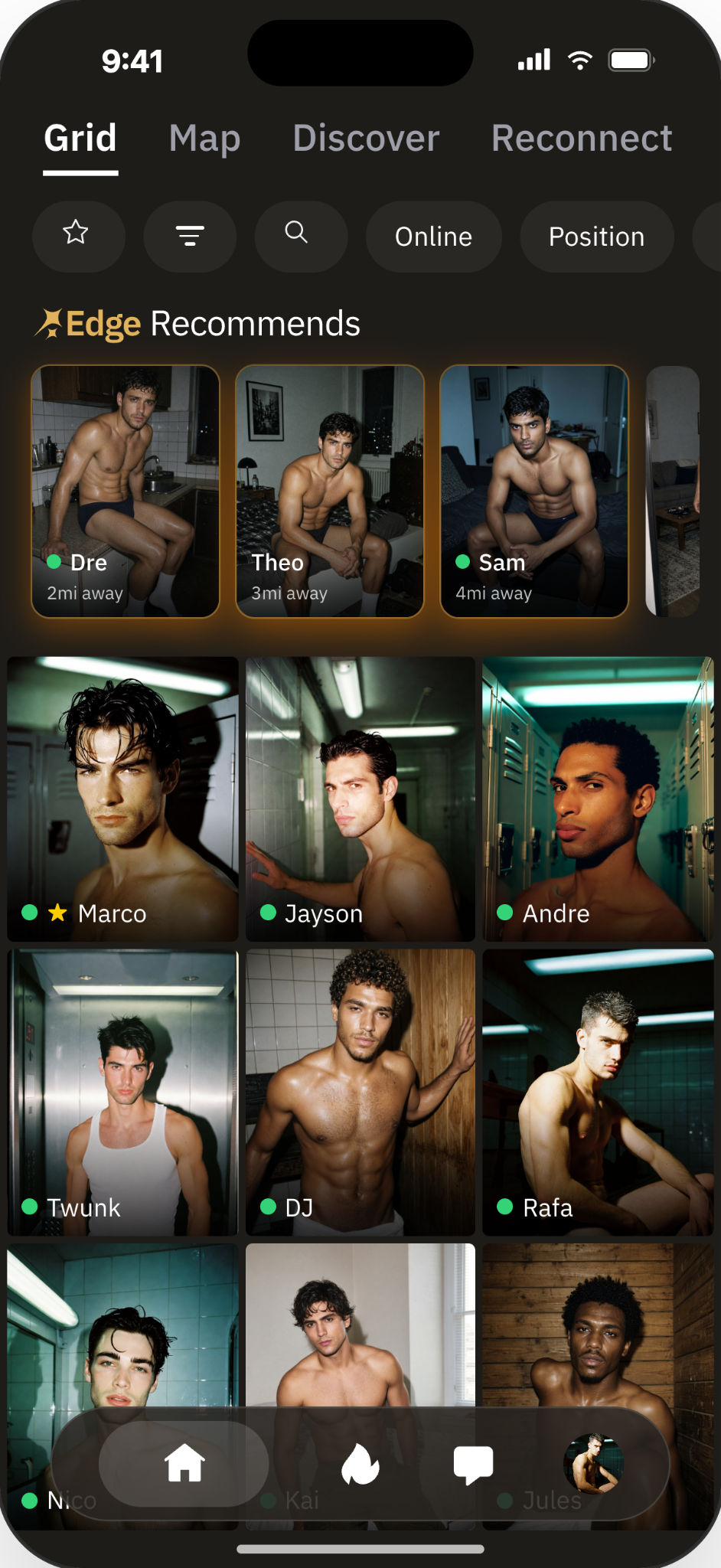
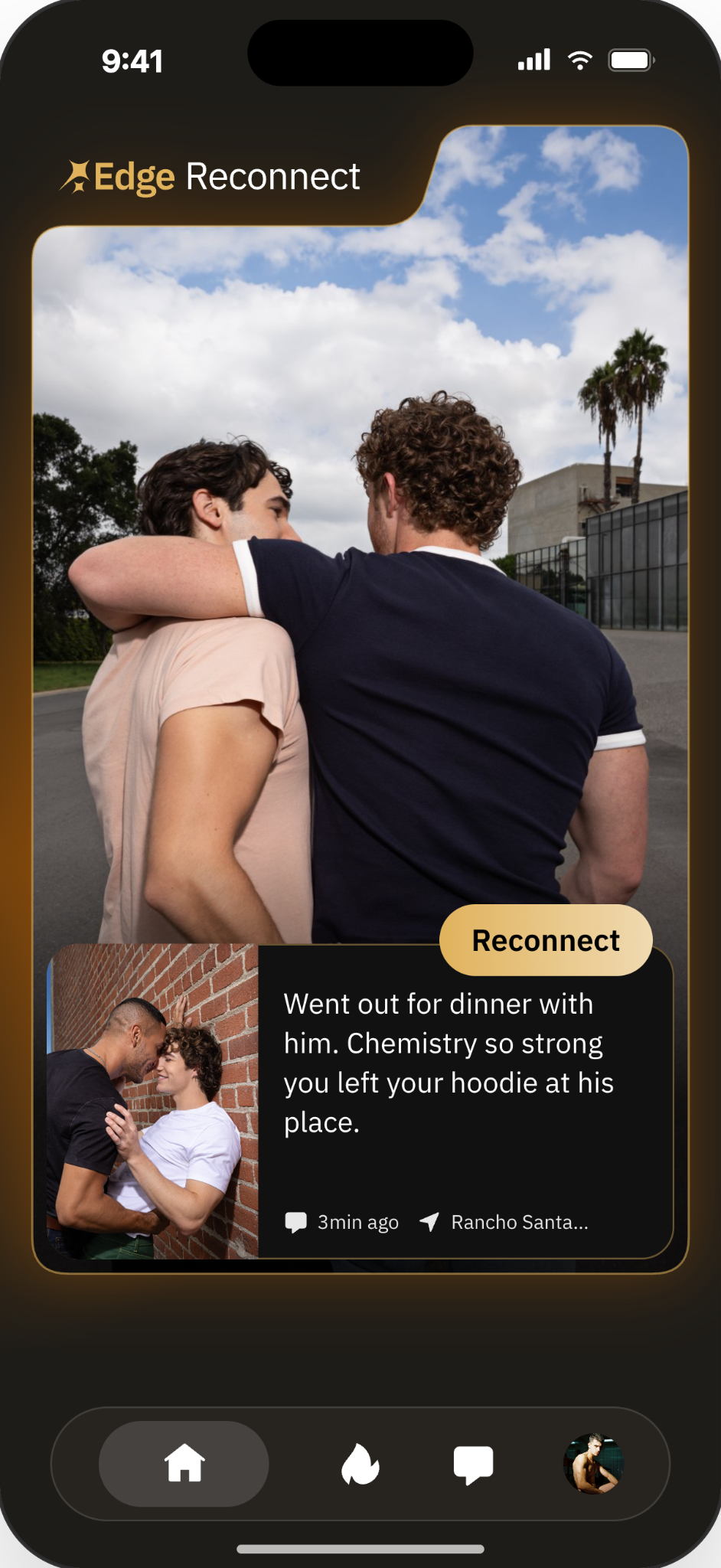
The subscription introduces three AI-powered features. Discover recommends up to five personalised profiles daily, Reconnect helps users revisit previous conversations with AI-generated summaries, and Insights analyses patterns in someone’s interactions to suggest potential compatibility.
In other words, Grindr wants artificial intelligence to work out whether that ridiculously handsome bloke three streets away might actually fancy you.
The technology sounds interesting. It could reduce endless scrolling and help users reconnect with people they’ve genuinely enjoyed talking to. Nobody is suggesting that technological innovation should stop at the bedroom door.
But AI can identify patterns, not guarantee chemistry, emotional maturity or basic manners. And no algorithm has yet discovered how to make a man who says “looking for dates” actually agree to one.
Welcome to the VIP Section of the Gaybourhood
Here’s where things become particularly interesting.
In its November shareholder letter, Grindr explained that Edge is designed for a select premium audience, with subscriptions capped at 1% of its global monthly active users.
Yes, you read that correctly. Exclusivity is part of the business strategy.
It’s giving VIP nightclub, except instead of skipping the queue for a glass of champagne, you’re paying to discover that someone called “Masc4Masc” still hasn’t worked through his internalised homophobia.
And beneath the jokes lies a more uncomfortable question: is queer connection becoming another product divided by spending power?
As we explored in our TGM Original on why gay spaces still matter, queer communities need places where connection isn’t determined solely by commercial interests. Dating apps are businesses, of course, but their influence on contemporary gay social life makes their decisions culturally significant.
And What About Privacy?
Perhaps the most important issue isn’t even the price.
Grindr explains that its AI can use profile information, activity and chat content, subject to users’ privacy choices. Some AI-generated Insights about a person may be visible to Edge subscribers even when that person doesn’t pay for the service.
The company says users can manage these settings, review their Insights and remove information they don’t want displayed. It also says HIV status, testing information and certain other health-related data are excluded from AI features and training.
Those safeguards matter. But so does understanding exactly what information a dating platform can infer from our behaviour, and who gets to see it.
We’ve already questioned the labels and expectations imposed on gay men in our investigation into bottom shaming and masculinity. Now algorithms could add another layer of categorisation to an already complicated dating culture.
Love Isn’t a Premium Feature
Grindr is perfectly entitled to sell premium services. People are equally entitled to decide whether they’re worth the money.
But there’s an important difference between making dating easier and turning perceived desirability into a luxury marketplace.
If Edge genuinely helps people build better connections, wonderful. If it simply makes existing frustrations more expensive, that’s a rather different proposition.
Because the truth is that no amount of artificial intelligence can manufacture attraction, respect or emotional availability.
And darling, if we’re paying $120 a month for love, the very least we deserve is a man who replies before next Thursday.
To provide the best experiences, we use technologies like cookies to store and/or access device information. Consenting to these technologies will allow us to process data such as browsing behavior or unique IDs on this site. Not consenting or withdrawing consent, may adversely affect certain features and functions.
Functional
Always active
The technical storage or access is strictly necessary for the legitimate purpose of enabling the use of a specific service explicitly requested by the subscriber or user, or for the sole purpose of carrying out the transmission of a communication over an electronic communications network.
Preferences
The technical storage or access is necessary for the legitimate purpose of storing preferences that are not requested by the subscriber or user.
Statistics
The technical storage or access that is used exclusively for statistical purposes.The technical storage or access that is used exclusively for anonymous statistical purposes. Without a subpoena, voluntary compliance on the part of your Internet Service Provider, or additional records from a third party, information stored or retrieved for this purpose alone cannot usually be used to identify you.
Marketing
The technical storage or access is required to create user profiles to send advertising, or to track the user on a website or across several websites for similar marketing purposes.
 Skip to content