


Trans pupils in England are now affected by new statutory school guidance covering social transition, parental involvement, toilets, changing rooms, boarding accommodation and sport.
The 2026 edition of Keeping Children Safe in Education (KCSIE) officially came into force on 1 September 2026, replacing the previous version of the safeguarding guidance followed by schools and colleges across England.
The changes have been presented by the government as a way to give schools greater clarity in a deeply contested area.
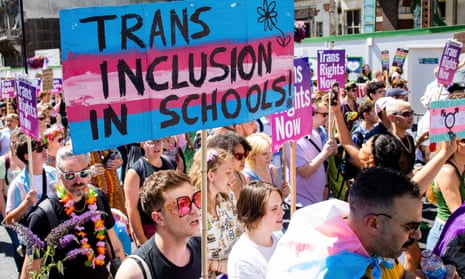
LGBTQ+ and trans-rights organisations strongly disagree, warning that parts of the guidance could leave trans, non-binary and intersex pupils feeling less safe and less able to seek support.
So what do the new rules actually say?
Trans pupils in England: what has changed?
The biggest change is that questions around gender and social transition are now explicitly incorporated into KCSIE, the statutory safeguarding framework schools already use.

Previously, the government had considered publishing separate guidance for gender-questioning children.
It ultimately decided against doing so.
Instead, the Department for Education incorporated the issue directly into KCSIE, arguing that questions around gender should be considered alongside schools’ wider responsibilities for children’s welfare and safeguarding.
That matters because KCSIE is not simply optional advice.
Schools and colleges are expected to have regard to the statutory guidance when carrying out their safeguarding duties.
What happens when a pupil asks to socially transition?
The government tells schools to adopt a careful, individual approach when a pupil asks for some form of social transition.
That could include requests to change a name, pronouns or elements of uniform, or to be treated differently at school.
There should not be a blanket response.
Instead, schools are expected to consider the individual child, their wellbeing, any wider vulnerabilities and what is in their best interests.
The Department for Education says the approach reflects recommendations following the Cass Review, including caution around social transition and the involvement of parents wherever possible.
Importantly, questioning gender does not automatically mean a child will socially transition.
Schools are being asked to distinguish between a young person talking about their feelings and a specific request for changes in how they are treated.
What role do parents have?
Parental involvement is one of the most controversial parts of the new framework.
The government says parents should normally be involved in decisions affecting a child and that schools should work with families wherever possible.
The guidance nevertheless recognises safeguarding exceptions.
Where involving parents could create a significant risk of harm, schools must consider their safeguarding responsibilities rather than automatically disclosing information.
This is particularly important because one of the biggest concerns raised during consultation was how schools should balance parental involvement with the needs of individual pupils.
The previous 2025 KCSIE guidance had already acknowledged exceptionally rare circumstances in which involving parents could create a significant risk of harm.
What are the new rules on toilets?
The rules on single-sex facilities are much clearer.
Schools are required to maintain separate toilet facilities for boys and girls aged eight and over, except in certain circumstances involving fully enclosed individual toilets.
Under the new approach, pupils should not be allowed to use toilets designated exclusively for the opposite biological sex.
If a student does not feel comfortable using the facilities corresponding to their biological sex, schools are encouraged to consider suitable alternative arrangements.
Those alternatives should not remove or compromise the provision of single-sex facilities for other pupils.
What about changing rooms and overnight accommodation?
Similar principles apply to changing rooms.
For pupils aged 11 and above, schools must provide appropriate changing facilities and should not allow children to undress alongside pupils of the opposite biological sex.
Boarding and overnight accommodation – including shared rooms and other sleeping arrangements – should also remain separated by sex.
Where a gender-questioning pupil requests another arrangement, schools should consider alternatives while protecting the privacy, dignity and safety of everyone involved.
This is one of the areas LGBTQ+ organisations have criticised most strongly.
Can trans pupils take part in school sport?
Sport is treated slightly differently because the guidance recognises that different activities involve different considerations.
Where a sport needs to be divided by sex for safety reasons, the government says schools should not make exceptions.
Where safety does not require sex separation, schools can consider requests individually and should weigh different factors, including fairness and opportunities for participation.
The government argues this gives schools a framework rather than a universal ban covering every sporting activity.
What about names and pronouns?
Requests involving names and pronouns fall within the broader social-transition framework.
Schools are expected to consider what is in the best interests of each child rather than treating every request identically.
The consultation process showed just how difficult schools already find this area.
According to the Department for Education, 74% of consultation respondents wanted more detail about responding to requests and engaging parents, while 73% wanted more information about pronouns.
Those figures help explain why the government has moved the issue into statutory safeguarding guidance rather than leaving schools to develop policies with little national direction.
Why are LGBTQ+ organisations opposing the guidance?
The new rules have attracted substantial criticism from LGBTQ+ and trans-rights organisations.
A coalition including ILGA-Europe, TGEU, IGLYO, TransActual, OII Europe, The Kite Trust and the Trans+ Solidarity Alliance raised serious concerns after the final guidance was published in July.
They argue that placing gender-questioning children within this safeguarding framework risks treating transgender identity itself as a potential problem.
Campaigners are also concerned about restrictions involving single-sex facilities, the emphasis on biological sex and the potential effect parental-involvement policies could have on pupils who are not safe being open about their identity at home.
The groups argue that trans, non-binary and intersex pupils should be able to access school life without being treated as inherently risky or problematic.
What does the government say?
The Department for Education sees the changes very differently.
It argues that the new approach puts children’s wellbeing and safeguarding at the centre of every decision, reflects the available evidence and makes schools’ legal responsibilities clearer.
The government has repeatedly emphasised that schools should not use a “one size fits all” response to children questioning their gender.
It also stresses that schools continue to have responsibilities to protect all children from bullying and harm.
In other words, the official position is that greater caution does not mean withdrawing support.
Critics question whether that distinction will work in practice.
What happens now for trans pupils in England?
The most important change is that the debate has moved from consultation documents to classrooms.
KCSIE 2026 has been in force since 1 September, and schools and colleges are now expected to operate under the updated framework.
Exactly how different institutions interpret those responsibilities may become the next major question.
Legal challenges are also possible in an area where the government itself acknowledges there is little consensus.
For trans pupils in England, the effect of the new rules may therefore depend not only on what KCSIE says on paper, but on how teachers, safeguarding leads and school leaders apply it to individual children.
And that is why this story is unlikely to end with the start of the new school year.


