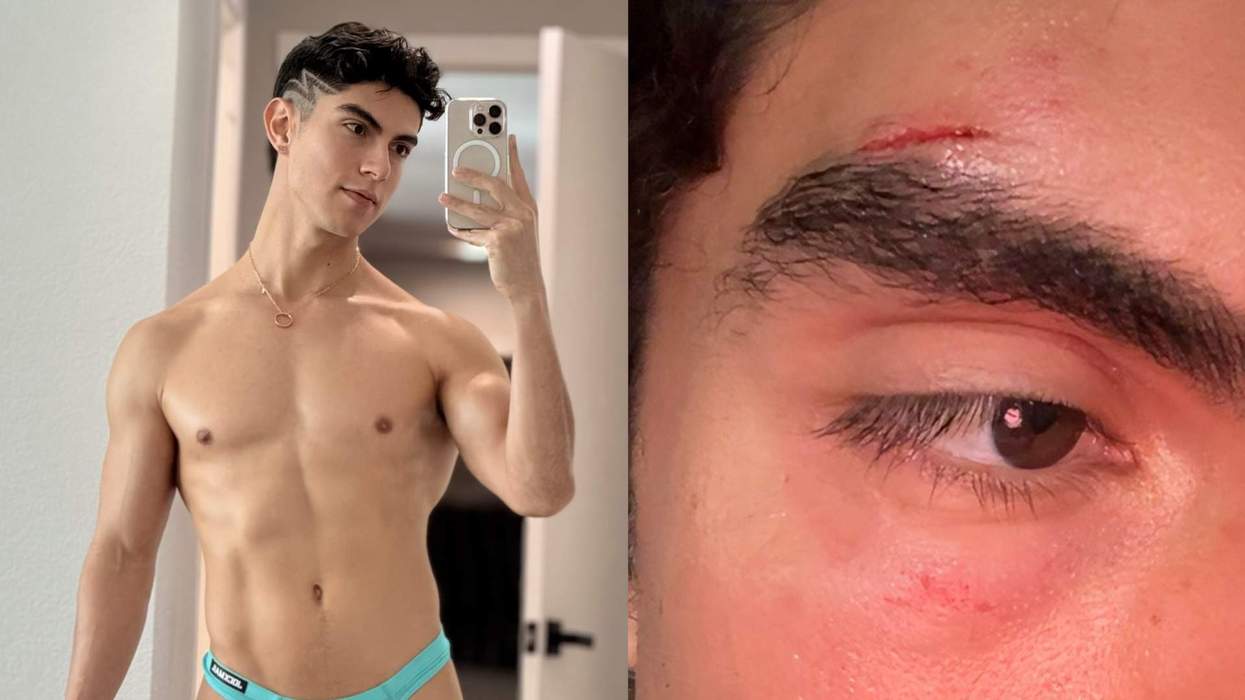
An alleged attack on adult performer Alfonso Osnaya raises an uncomfortable question for the gay community: how can we consume adult content so freely while still judging the people who make it?
There is an uncomfortable contradiction in gay culture that we don’t talk about enough.
Gay porn actors can accumulate enormous online followings, become instantly recognisable within queer spaces and exist somewhere between adult performer, influencer and minor celebrity. Their work is consumed, discussed and shared — and yet the person behind it can still be treated as though their profession somehow makes them less worthy of respect.
A recent incident involving adult performer Alfonso Osnaya makes that contradiction considerably harder to ignore.
What happened to Alfonso Osnaya?
Osnaya told Out that he was attacked outside Beaux, an LGBTQ+ bar in San Francisco’s Castro district, on 17 September after a group of men allegedly mocked him because of his work in the adult industry.
Importantly, this is Osnaya’s account of what happened. The status of any police investigation was still unclear when Metro Weekly reported on the incident on 27 September.
But regardless of what an investigation ultimately establishes about that particular confrontation, the discussion it has triggered is worth having.
Gay porn actors are celebrated until they aren’t
There is something rather bizarre about placing adult performers on digital pedestals and then clutching our pearls when we encounter those same people away from a screen.
Rhyheim Shabazz — Cade Maddox — Malik Delgaty
Many gay adult performers now occupy a space that barely existed a generation ago. Subscription platforms and social media have blurred the line between porn performer, content creator and influencer. Audiences don’t simply watch their work; they follow their holidays, gym sessions, relationships, pets and Sunday lunches.
They’re visible as people. And yet sex-work stigma hasn’t magically disappeared because the Wi-Fi got faster.
Research involving 180 male sex workers who met clients through dating and hookup platforms found that most considered sex work highly stigmatised in wider society. Interestingly, many also felt it was more accepted — sometimes even normalised — within gay communities, while still describing the emotional effects of stigma and strategies used to manage it.
That distinction matters.
Acceptance isn’t the same thing as respect.
Would you watch him, but not date him?
Here’s where things become uncomfortable.
Someone can happily consume content made by a gay porn actor and then decide that the same man’s profession makes him inappropriate boyfriend material. Someone can recognise a performer in a gay club and then use his job as the punchline. Someone can champion sexual liberation in theory while quietly maintaining a hierarchy of which kinds of queer sexuality are considered respectable.
We should probably ask ourselves why.
Nobody is required to date anyone. Attraction and compatibility are personal. Nor does supporting sex workers mean pretending the adult industry has no problems, inequalities or difficult conversations of its own.
But dehumanising someone because they make adult content is something different entirely.
A large 2025 US study involving 471 sex workers found that experiences of stigma varied according to intersecting identities, with participants reporting stigma across areas including wider community interactions and law enforcement. Men with same-gender sexual experience reported particularly elevated stigma in the law-enforcement domain compared with women with same-gender experience.
More recent research has similarly described sex-work stigma as something that can affect health, safety, access to services and access to justice rather than merely causing awkward social encounters.
In other words, shame has consequences.
Queer liberation cannot stop where respectability begins
Perhaps this is the part worth examining most closely.
LGBTQ+ people know perfectly well what it feels like when society creates an arbitrary boundary between the sexuality it considers respectable and the sexuality it considers shameful.
Historically, those boundaries have been used against us.
Yet queer communities are not magically immune from recreating smaller versions of the same hierarchy internally: masculine enough, feminine enough, monogamous enough, sexually restrained enough, successful enough — or respectable enough.
Adult performers frequently end up somewhere near the bottom of that imaginary ladder.
It’s an odd contradiction for a community that has spent generations demanding the right to exist without being reduced to what happens in our bedrooms.
You don’t have to love porn. You do have to remember there’s a person in it.
This isn’t an argument that everybody should watch pornography. It isn’t even an argument that everybody should like the adult industry.
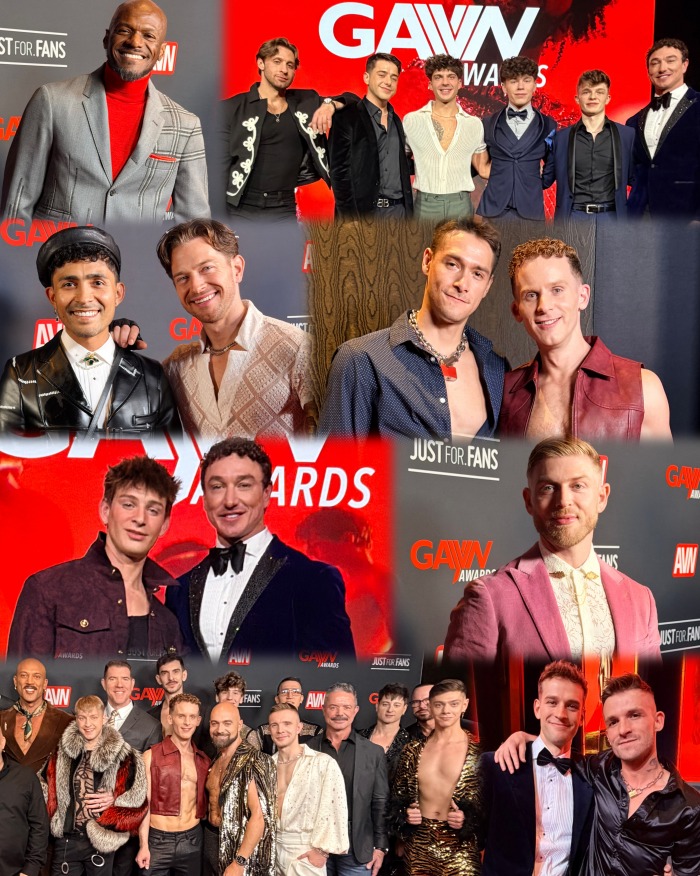
Gay Porn Stars At 2026 GayVN Awards Red Carpet
There are legitimate conversations to have about working conditions, consent, economics, platform power and exploitation. Those conversations matter.
But none of them require treating performers as less human.
And perhaps that’s the distinction we occasionally forget.
A screen can make a person feel like a product. A subscription can make intimacy feel transactional. Social media can make a performer appear perpetually available for public comment.
They’re still a person when the browser closes.
So yes, let’s talk about gay porn. Let’s talk about the industry. Let’s question it, criticise it and demand better from it where necessary.
But if we’re going to consume the work while shaming the people who create it, perhaps the thing that needs examining isn’t the performer.
To provide the best experiences, we use technologies like cookies to store and/or access device information. Consenting to these technologies will allow us to process data such as browsing behavior or unique IDs on this site. Not consenting or withdrawing consent, may adversely affect certain features and functions.
Functional
Always active
The technical storage or access is strictly necessary for the legitimate purpose of enabling the use of a specific service explicitly requested by the subscriber or user, or for the sole purpose of carrying out the transmission of a communication over an electronic communications network.
Preferences
The technical storage or access is necessary for the legitimate purpose of storing preferences that are not requested by the subscriber or user.
Statistics
The technical storage or access that is used exclusively for statistical purposes.The technical storage or access that is used exclusively for anonymous statistical purposes. Without a subpoena, voluntary compliance on the part of your Internet Service Provider, or additional records from a third party, information stored or retrieved for this purpose alone cannot usually be used to identify you.
Marketing
The technical storage or access is required to create user profiles to send advertising, or to track the user on a website or across several websites for similar marketing purposes.
 Skip to content