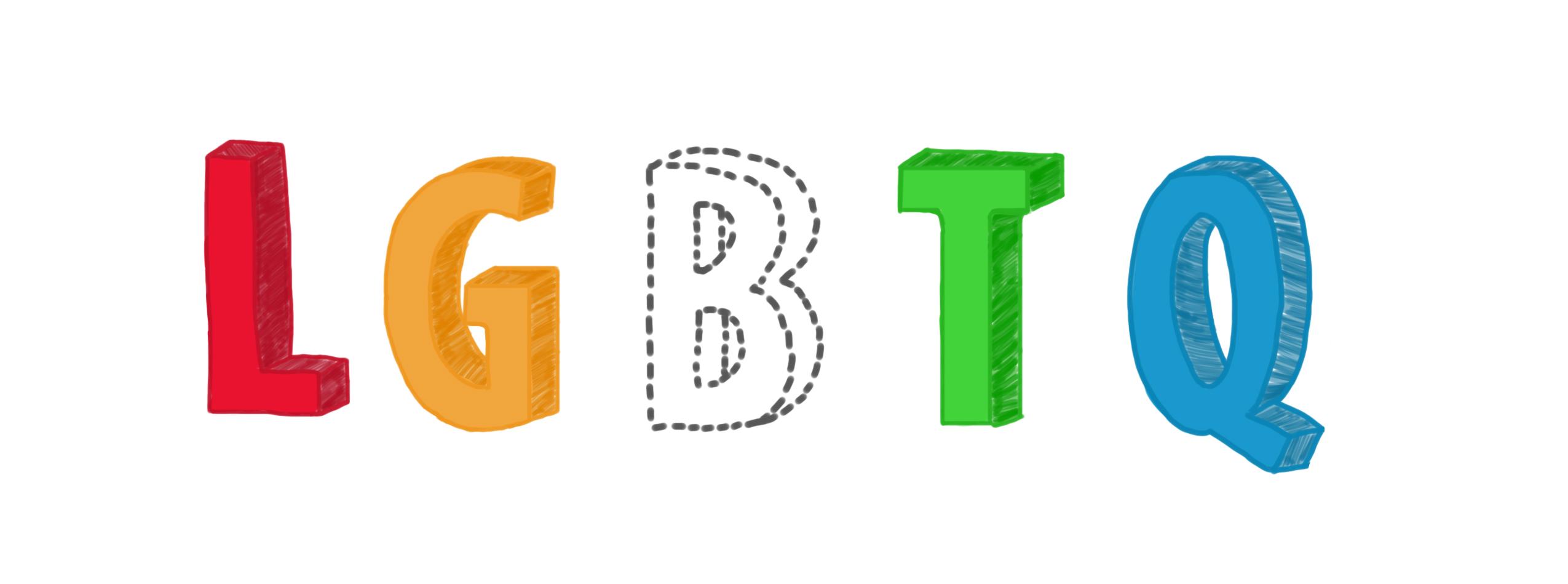
There is a strange little trick society sometimes performs with bisexual people.
Put a bi woman in a relationship with a man and — poof — suddenly everyone assumes she is straight. Put the same woman in a relationship with another woman and now she must be a lesbian.
Apparently sexuality updates itself every time somebody changes relationship status.
Except, obviously, it does not.
This is one of the simplest examples of bi erasure: the tendency to ignore, minimise, question or reinterpret bisexual identities, sometimes deliberately and sometimes through assumptions so normalised that people barely notice they are making them.
And yes, somehow we still need to talk about it in 2026.
What is bi erasure?
Bi erasure happens when bisexual identities are treated as temporary, confused or somehow less real than being gay or straight.
Sometimes it is painfully obvious: “You’ll eventually pick a side.” “You’re just experimenting.” “You’re basically straight now.” “You’re actually gay but haven’t admitted it yet.”
Other times it is quieter. Media coverage labels somebody gay or straight based entirely on their current relationship. A bisexual colleague talks about a different-gender partner and everyone assumes they are heterosexual. A bi person enters an LGBTQ+ space with that partner and suddenly wonders whether they are expected to justify why they belong there.
Stonewall has specifically highlighted assumptions based on the gender of a bisexual person’s current partner as one of the ways bi identities can be erased or ignored.
Bisexual people are not a tiny minority
Official UK statistics make that rather clear.
The Office for National Statistics estimates that 855,000 UK adults identified as bisexual in 2024, representing 1.6% of the adult household population. That proportion has risen from 1.1% in 2019, and bisexual identification is especially common among younger adults.
Among people aged 16 to 24, 5.1% identified as bisexual in 2024. Among young women in that age group, the figure reached 6.7%.
So when bisexuality disappears from conversations about LGBTQ+ life, we are not overlooking a handful of people. We are talking about hundreds of thousands of people in Britain alone.
The “pick a side” nonsense really needs to retire
Perhaps the most persistent stereotype surrounding bisexuality is the idea that attraction to more than one gender represents indecision.
It does not.
A bisexual person can prefer one gender. They can have dated mostly one gender. They can be monogamous. They can marry. They can be single for ten years and spend most of that time watching Netflix with a cat.
None of these things require them to submit an identity update form.
A person’s partner tells you who they are dating. It does not automatically tell you their sexuality.
Bi erasure can happen inside LGBTQ+ spaces too
This is perhaps the part queer communities need to be most willing to discuss.
Bi erasure does not only come from heterosexual society. Stonewall’s research has documented the particular barriers bisexual people can experience around being open about their identity. In research published in 2020, only 20% of bisexual respondents said they were out to all their family, while 42% reported hiding or disguising their sexual orientation at work because they feared discrimination.
Queer spaces should ideally be the places where people need to explain themselves least. Yet some bisexual people still encounter assumptions that they are “not queer enough”, especially when they are in different-gender relationships.
That rather defeats the point of creating inclusive spaces in the first place.
Visibility should not mean demanding proof
There is one final distinction worth making.
Calling for bisexual visibility does not mean expecting every bisexual person to come out. Nobody owes the world an announcement about their sexuality. Safety, family, culture, employment and personal comfort all matter.
The responsibility should not be placed entirely on bi people to become more visible. The rest of us can also become better at not making assumptions.
If somebody tells you they are bisexual, believe them. Do not ask them to prove it through their dating history. Do not treat their current partner as evidence against their identity.
And perhaps retire “pick a side” permanently.
There are plenty of actual problems in the world. A person being attracted to more than one gender really does not need to be one of them.
To provide the best experiences, we use technologies like cookies to store and/or access device information. Consenting to these technologies will allow us to process data such as browsing behavior or unique IDs on this site. Not consenting or withdrawing consent, may adversely affect certain features and functions.
Functional
Always active
The technical storage or access is strictly necessary for the legitimate purpose of enabling the use of a specific service explicitly requested by the subscriber or user, or for the sole purpose of carrying out the transmission of a communication over an electronic communications network.
Preferences
The technical storage or access is necessary for the legitimate purpose of storing preferences that are not requested by the subscriber or user.
Statistics
The technical storage or access that is used exclusively for statistical purposes.The technical storage or access that is used exclusively for anonymous statistical purposes. Without a subpoena, voluntary compliance on the part of your Internet Service Provider, or additional records from a third party, information stored or retrieved for this purpose alone cannot usually be used to identify you.
Marketing
The technical storage or access is required to create user profiles to send advertising, or to track the user on a website or across several websites for similar marketing purposes.
 Skip to content