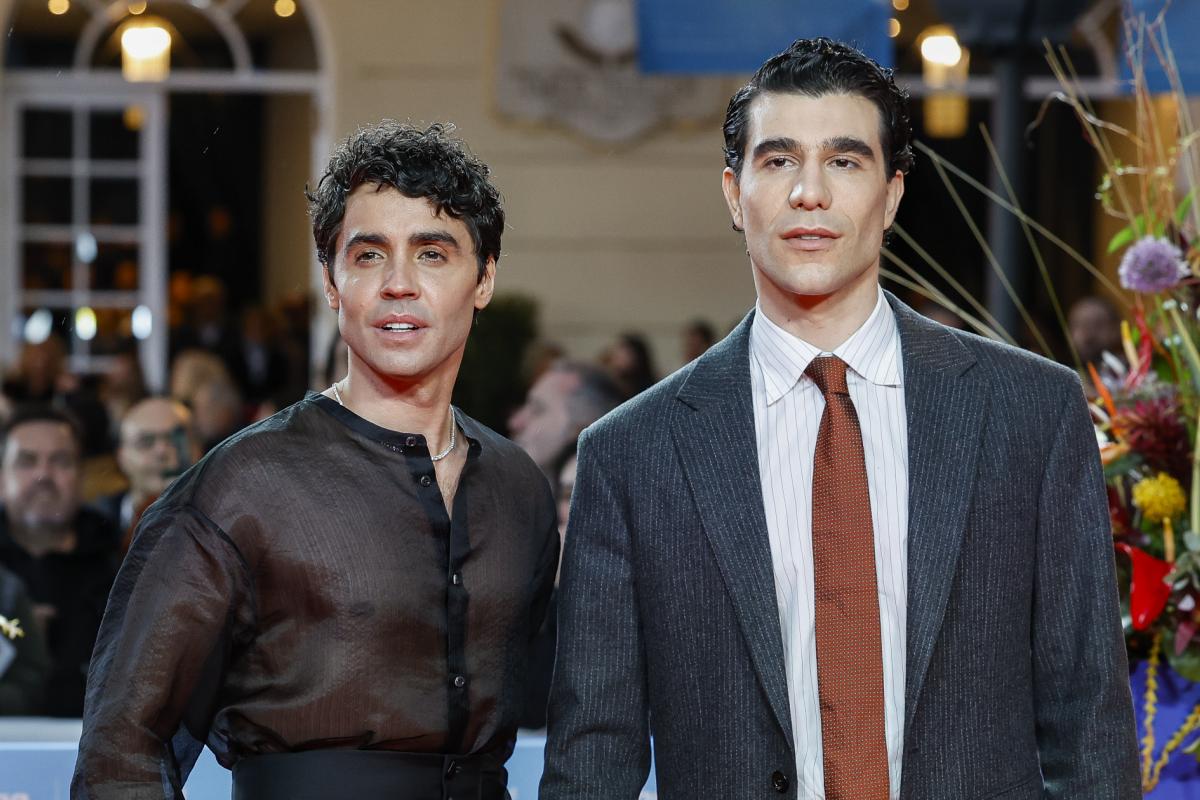
The Spanish filmmaker behind La Bola Negra and Veneno has weighed in on one of cinema’s most persistent debates. And his answer is more nuanced than you might expect.
Javier Ambrossi reignites the debate over gay roles
Should straight actors play gay roles? It’s a question that has divided Hollywood, sparked endless social media arguments and generated enough heated opinions to fill several seasons of RuPaul’s Drag Race.
Now, Spanish filmmaker Javier Ambrossi has shared his perspective on the debate, explaining why he and creative partner Javier Calvo made a deliberate casting decision for their latest film, La Bola Negra.
Speaking to Netflix Tudum in an interview published on 16 October 2026, Ambrossi acknowledged that he understands why heterosexual actors might want to portray gay characters.
But understanding that artistic ambition doesn’t necessarily mean following the same approach.
For their new film, the directors, collectively known as Los Javis, chose to prioritise performers who could connect personally with the identities, experiences and sexualities of their characters.
And in an industry where queer actors have historically faced barriers to major roles, that distinction matters.
What did Javier Ambrossi say about straight actors?
Javier Ambrossi
Ambrossi’s position is not that heterosexual actors should be banned from playing gay characters.
Rather, he recognises acting as an art form that allows performers to explore experiences different from their own, while making clear that he and Calvo wanted something else for La Bola Negra.
The directors sought actors with personal connections to the lives portrayed on screen, hoping that those experiences would bring an additional layer of emotional authenticity to the performances.
For Calvo, the decision also reflects his own professional history.
The director began his career as an actor and has spoken about the challenges he encountered after becoming known as a gay performer on Spanish television.
His experience contributed to the pair’s determination to create opportunities for queer talent rather than simply using LGBTQ+ stories as material for established heterosexual stars.
It’s an approach that places representation at the centre of the creative process instead of treating it as a marketing exercise.
La Bola Negra tells an ambitious story of queer love and survival
La Bola Negra – film
The casting conversation arrives as La Bola Negra, the latest film from Los Javis, receives international attention following its festival success and theatrical release.
Inspired by the unfinished work of Spanish poet and playwright Federico García Lorca, the film follows three interconnected generations of gay men across different periods of Spanish history.
The story moves between 1932, 1937 and 2017, exploring desire, repression, identity and the ways historical trauma continues to influence subsequent generations.
Against the backdrop of Spain’s turbulent twentieth century, the film examines what happens when queer lives and relationships are silenced, hidden or deliberately erased.
The cast includes Spanish singer-songwriter Guitarricadelafuente, Miguel Bernardeau, Carlos González and Milo Quifes, alongside international stars Penélope Cruz and Glenn Close.
The film has also attracted considerable recognition, including awards at major international festivals and a theatrical release in the United States beginning on 16 October.
Its combination of historical drama, queer storytelling and high-profile talent has helped place it among the year’s most discussed LGBTQ+ films.
Why representation is about more than casting
The debate surrounding heterosexual actors portraying gay characters is rarely as simple as deciding who is allowed to play whom.
Acting involves imagination, interpretation and the ability to inhabit experiences beyond one’s own.
Some filmmakers therefore argue that sexual orientation should not determine which roles an actor can pursue.
Others point out that openly LGBTQ+ performers have historically faced discrimination, typecasting and reduced access to leading roles.
That creates an uncomfortable imbalance when major queer characters are repeatedly portrayed by heterosexual stars while openly gay actors struggle to secure comparable opportunities.
The question, then, is not simply whether an individual performance is convincing.
It’s also about who gets access to auditions, leading roles, career development and the financial rewards that come with success.
Ambrossi and Calvo’s approach suggests that meaningful representation can involve both artistic freedom and a conscious decision to give LGBTQ+ performers opportunities that have too often been denied.
Los Javis have already changed queer television
Los Javis
For viewers familiar with Spanish LGBTQ+ television, the directors’ approach should come as little surprise.
Their acclaimed series Veneno, inspired by the life of transgender performer Cristina Ortiz Rodríguez, became an important moment for transgender representation on screen.
Rather than building the project around cisgender actors portraying trans women, the production featured transgender performers in central roles.
The series received international attention for its portrayal of Cristina’s life and the experiences of different generations of trans women.
Beyond Veneno, Los Javis have built a reputation for combining emotionally ambitious storytelling with characters who challenge conventional expectations of identity, sexuality and belonging.
With La Bola Negra, that commitment expands into an epic historical film intended for international audiences.
And perhaps that is the most interesting element of Ambrossi’s comments: he’s not arguing that one group of actors should be prohibited from portraying another. He’s demonstrating that filmmakers can make different, intentional choices about whose voices they bring into a production.
Can queer films succeed without straight stars in gay roles?
One argument frequently heard in the entertainment industry is that casting established mainstream actors makes LGBTQ+ films easier to finance and distribute.
Yet that approach can also reinforce the assumption that audiences will only embrace queer stories when they are presented through familiar heterosexual performers.
The success and international visibility of La Bola Negra offer an opportunity to question that belief.
The film demonstrates how a production led by queer filmmakers and featuring performers chosen partly for their personal connections to the material can attract substantial attention.
That does not mean every project must follow the same formula.
But it does suggest that authenticity and commercial ambition do not have to be mutually exclusive.
Queer stories can be expansive, cinematic and international without losing the perspectives that make them distinctive.
The Gayly Mirror’s take: queer stories deserve queer opportunities
Javier Ambrossi has made an important distinction in a debate that too often becomes unnecessarily polarised.
A heterosexual actor portraying a gay character is not automatically a problem. An openly gay actor should not be restricted to playing gay characters either.
But an industry cannot celebrate LGBTQ+ storytelling while continuing to overlook the people whose lives inspire those stories.
Representation matters in front of the camera, behind the camera and throughout the decisions that determine which artists get to work.
If Hollywood wants to tell our stories, fabulous. But it also needs to recognise the talent within our communities.
Because queer representation should be about opportunity, not just applause.
And darling, if our stories are good enough to win awards, our actors deserve a fair shot at winning them too.
What do you think? Should queer actors be prioritised for LGBTQ+ roles, or should every part remain open to everyone?
To provide the best experiences, we use technologies like cookies to store and/or access device information. Consenting to these technologies will allow us to process data such as browsing behavior or unique IDs on this site. Not consenting or withdrawing consent, may adversely affect certain features and functions.
Functional
Always active
The technical storage or access is strictly necessary for the legitimate purpose of enabling the use of a specific service explicitly requested by the subscriber or user, or for the sole purpose of carrying out the transmission of a communication over an electronic communications network.
Preferences
The technical storage or access is necessary for the legitimate purpose of storing preferences that are not requested by the subscriber or user.
Statistics
The technical storage or access that is used exclusively for statistical purposes.The technical storage or access that is used exclusively for anonymous statistical purposes. Without a subpoena, voluntary compliance on the part of your Internet Service Provider, or additional records from a third party, information stored or retrieved for this purpose alone cannot usually be used to identify you.
Marketing
The technical storage or access is required to create user profiles to send advertising, or to track the user on a website or across several websites for similar marketing purposes.
 Skip to content