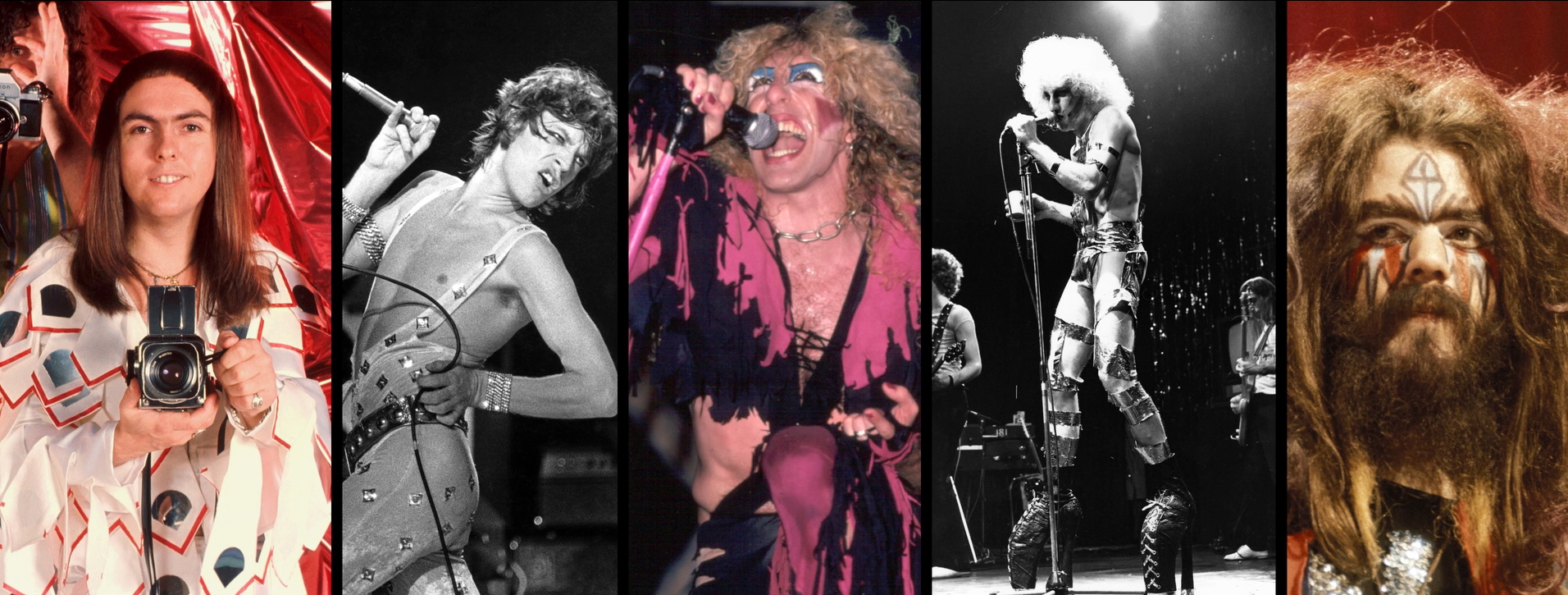
Rock has always loved rebellion. Sex. Leather. Outsiders. Breaking rules. Making conservative parents deeply uncomfortable.
You know — extremely heterosexual things … except, of course, queer people were there all along, babes!
A new four-part documentary series, Rock Out, created by Oscar-winning screenwriter Dustin Lance Black, is digging into the LGBTQ+ people who helped shape rock, punk and metal — including some whose contributions have been celebrated while their queerness was minimised, ignored or completely written out of the story.
And the project began with a much more personal question.
Rock Out began with Dustin Lance Black’s brother
Black says the inspiration came from his late brother Marcus, who was queer and deeply connected to punk music.
Dustin Lance Black – (also Tom Daley’s husband)
Marcus struggled to see people like himself represented in the genre he loved.
That contradiction stayed with Black: how could a musical culture built around rebellion, outsiders and refusing conformity make queer people feel as though they didn’t belong?
Rock Out became his attempt to look for the answer.
And, perhaps unsurprisingly, once you start looking, queer history is everywhere.
Queer rock history didn’t begin with Freddie Mercury
Freddie Mercury and Elton John are obvious examples of LGBTQ+ artists whose place in music history is undeniable.
But Rock Out goes further.
It examines people including Little Richard, Jobriath and Jayne County, alongside influential behind-the-scenes figures such as Brian Epstein, the Beatles’ manager, and British music manager Larry Parnes.
That’s important because LGBTQ+ history in music is often reduced to the stars whose sexuality eventually became impossible to ignore.
But queer people weren’t simply standing under the spotlight.
They were managing artists, building scenes, creating aesthetics, challenging gender expectations and helping decide what popular music would become.
Rock was queer long before the history books admitted it
Think about rock culture for a moment.
Androgyny. Glam. Leather. Makeup. Camp. Reinvention. Sexual ambiguity. Men performing masculinity so extravagantly that it sometimes loops all the way back around into drag.
Queer influence isn’t exactly difficult to spot.
And yet mainstream music history has often treated LGBTQ+ people as colourful exceptions appearing occasionally inside an otherwise straight story.
Rock Out challenges that framing.
Instead of asking where the queer people in rock were, it asks why so many of them became harder to see once the history was written down.
Why queer history needs to be remembered properly
Representation isn’t only about seeing queer people in whatever Netflix series drops next week.
It also means understanding that we were already there.
That matters particularly for younger LGBTQ+ people entering music scenes that may still feel overwhelmingly straight or masculine.
Finding someone like yourself in the past changes the way you imagine your place in the present.
Black’s brother was looking for that lineage.
Perhaps he simply wasn’t being shown enough of it.
And that’s what makes Rock Out more than another documentary about famous musicians.
It’s a reminder that queer people didn’t suddenly arrive in popular culture when corporations discovered rainbow logos.
To provide the best experiences, we use technologies like cookies to store and/or access device information. Consenting to these technologies will allow us to process data such as browsing behavior or unique IDs on this site. Not consenting or withdrawing consent, may adversely affect certain features and functions.
Functional
Always active
The technical storage or access is strictly necessary for the legitimate purpose of enabling the use of a specific service explicitly requested by the subscriber or user, or for the sole purpose of carrying out the transmission of a communication over an electronic communications network.
Preferences
The technical storage or access is necessary for the legitimate purpose of storing preferences that are not requested by the subscriber or user.
Statistics
The technical storage or access that is used exclusively for statistical purposes.The technical storage or access that is used exclusively for anonymous statistical purposes. Without a subpoena, voluntary compliance on the part of your Internet Service Provider, or additional records from a third party, information stored or retrieved for this purpose alone cannot usually be used to identify you.
Marketing
The technical storage or access is required to create user profiles to send advertising, or to track the user on a website or across several websites for similar marketing purposes.
 Skip to content