 Skip to content


Nearly 12,000 school book bans were recorded across the United States during the 2025-26 school year, according to new data from PEN America, with books featuring LGBTQ+ people and themes continuing to be disproportionately targeted.
The free-expression organisation recorded 11,982 instances of book bans, affecting 7,370 unique titles across public schools.
That is not 11,982 different books. It is 11,982 individual instances in which access to a book was restricted or removed under PEN America’s methodology.
Even so, 7,370 separate titles represents the highest number recorded by the organisation in a single school year.
And for queer readers, there is a familiar pattern inside those numbers.
LGBTQ+ books remain among the most common targets
PEN America says its analysis of thousands of banned books over the past five years consistently shows that censorship disproportionately affects books dealing with LGBTQ+ people or characters, race and racism, people of colour and sexual content.
That distinction matters.
A debate about whether individual books are appropriate for individual age groups is not unusual. Schools have always made decisions about what belongs in primary classrooms, secondary libraries and reading lists.
What concerns free-expression organisations is the scale and systematic nature of removals, particularly when entire categories of identity become recurring targets.
A queer teenager discovering themselves in a novel is not the same thing as a school teaching that novel as compulsory curriculum.
Removing it from the library removes the choice altogether.
7,370 titles disappeared somewhere in the system
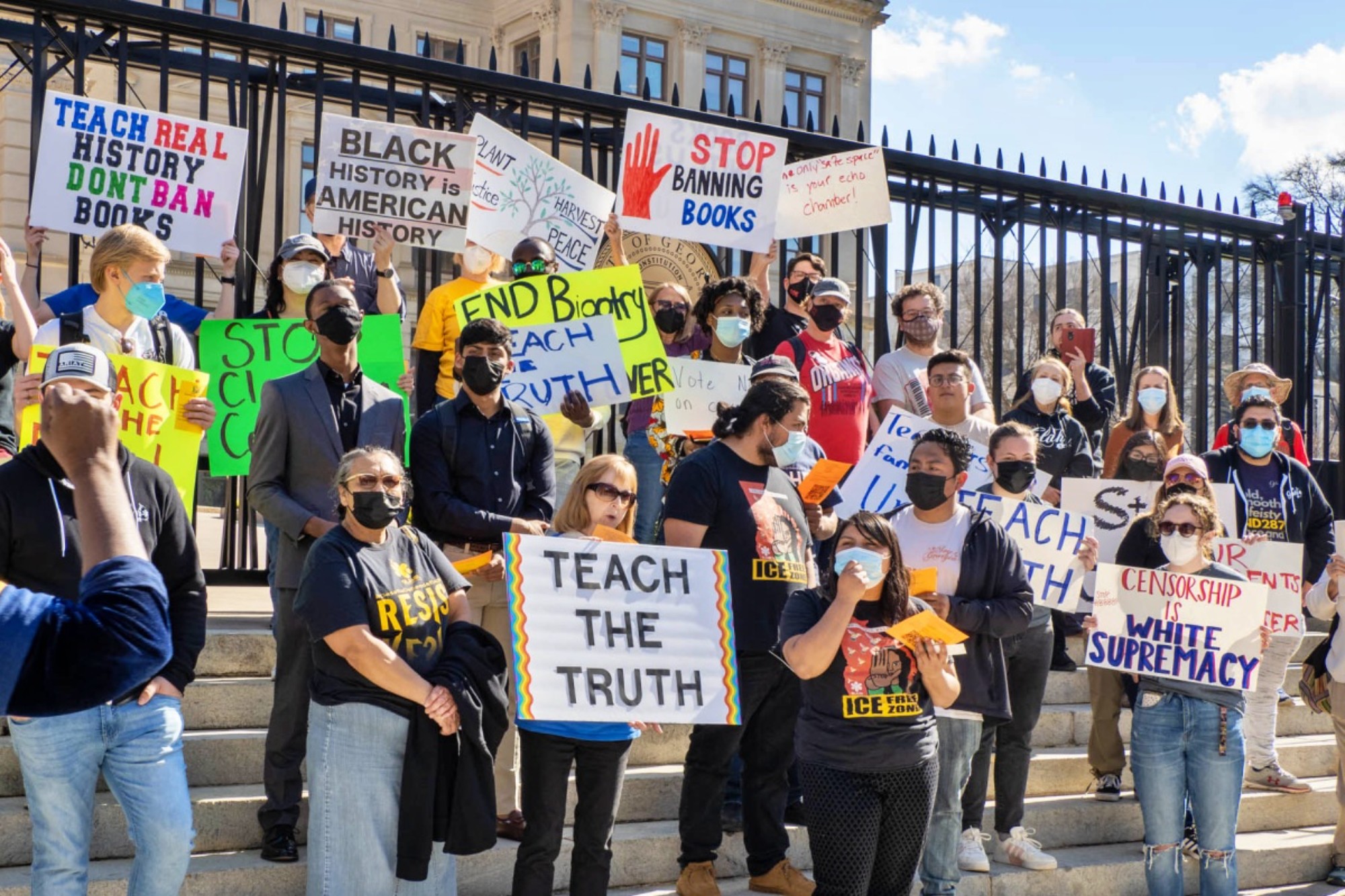
The new PEN America report says 7,370 unique titles were affected during the 2025-26 school year, with more than 4,500 of them appearing in its banned-book database for the first time.
More than 4,000 authors, illustrators and translators were affected.
The number of school districts recording bans also reached a new high, at 114.
PEN says its figures remain an undercount because many removals are difficult to track and some forms of what it calls “quiet censorship”, including decisions not to purchase certain titles, may never produce a formal record.
So even these enormous figures do not necessarily tell the entire story.
Texas and Florida dominate the numbers
The geography of the new data is striking.
Texas recorded more than 8,100 bans, overtaking Florida, which recorded more than 3,200.
PEN America attributes much of the increase to new state laws and policies that influence what schools can keep on shelves, particularly Texas Senate Bill 13.
Those figures should also be read with some caution because PEN notes that Texas and Florida had particularly comprehensive data available through public-records requests.
Still, the concentration is extraordinary.
Two states account for the overwhelming majority of the bans identified in the report.
Now AI is helping decide which books disappear
And because apparently this story needed another dystopian subplot, artificial intelligence is now becoming part of the book-removal process.
PEN says public records show school administrators increasingly using generative AI and automated tools to evaluate books as districts attempt to comply with broad or unclear state rules.
The organisation argues that AI systems can recommend removing titles simply because those titles have already appeared on banned-book lists elsewhere, creating a snowball effect with little consideration of context.
In other words, a book can be challenged somewhere, appear on enough lists, get absorbed into an AI-generated recommendation, and suddenly find itself treated as suspicious somewhere else.
Very efficient.
Whether efficiency is what literary censorship desperately needed is another question.
Even manga has entered the censorship fight
Another notable trend is the growing removal of manga and graphic novels.
PEN says titles including Attack on Titan, Inuyasha, Ranma ½, Fire Force and Assassination Classroom have been affected, sometimes because entire series are removed rather than individual volumes.
Graphic novels have also historically been important for LGBTQ+ storytelling because visual formats can offer young readers accessible ways of encountering identities and experiences outside their own.
Queer author Alice Oseman, whose work includes Heartstopper, appears among writers whose back catalogues PEN says have repeatedly been affected by bans.
This is bigger than any single book
Supporters of restrictions often frame them as questions of parental control, age appropriateness and keeping sexually explicit material away from children.
Those are legitimate subjects for schools and parents to discuss.
But the broader pattern matters too.
When books involving LGBTQ+ characters repeatedly disappear alongside books about race, gender identity and other marginalised experiences, the debate becomes about more than one controversial title.
It becomes about which lives young people are allowed to encounter in a library.
A straight teenager does not become gay because there is a queer book on the shelf.
A queer teenager, however, may discover for the first time that they are not alone.
And that is exactly why representation in books matters.


