 Skip to content


The Glee reboot has a script, Ryan Murphy has spoken to around ten members of the original cast and Lea Michele has already indicated that she would be interested.
There is just one rather noticeable complication.
Chris Colfer apparently knew almost nothing about it.
The actor who played Kurt Hummel has now responded to talk of a potential Glee revival, revealing that nobody had approached him when he was interviewed and saying that returning to the show would be emotionally difficult, particularly following the death of Naya Rivera.
And suddenly a question that initially sounded like easy millennial nostalgia becomes rather more complicated.
Because what exactly would Glee be without Santana Lopez?
Or Kurt Hummel?
Or the strange, groundbreaking, infuriating queer chaos that made the original show matter in the first place?
What do we actually know about the Glee reboot?
First, technically, we should probably stop calling it a confirmed reboot.
:max_bytes(150000):strip_icc():focal(999x0:1001x2)/ryan-murphy-1-be81dfa74e674d17b0e05744616c8e14.jpg)
There is a script for a potential new incarnation of Glee, but no new series has formally been ordered.
Ryan Murphy revealed in September that he had completed a script with fellow original creators Brad Falchuk and Ian Brennan. He also said he had spoken privately with around ten original cast members about the idea and described their responses as enthusiastic.
Murphy said he wanted to write several episodes before deciding whether to move forward.
Nobody had even read the completed script when he made those comments.
So, babes, McKinley High is not reopening next Tuesday.
But something is clearly being developed.
Chris Colfer says nobody has contacted him
That makes Chris Colfer’s latest comments particularly interesting.
:max_bytes(150000):strip_icc():focal(999x0:1001x2)/chris-colfer-061424-864ddfca5bc34db393e2baa04f7c2ba4.jpg)
Asked whether he might return as Kurt, Colfer said he knew nothing about the proposed revival and had heard “absolutely nothing” about it.
He also admitted that returning would be difficult because of the people the cast has lost since Glee began.
Naya Rivera, who played Santana Lopez, died in 2020. Cory Monteith, who played Finn Hudson, died in 2013. Mark Salling died in 2018.
For Colfer, Rivera’s absence appears particularly significant.
He said it would be difficult to return now that she is gone, although he joked that fans might chase him with “pitchforks and jazz hands” if he refused.
That is not a no.
But it is very definitely not the enthusiastic reunion announcement some Gleeks may have been expecting.
Glee was messy queer representation, but representation nonetheless
This is where a Glee reboot becomes especially interesting for an LGBTQ+ publication.
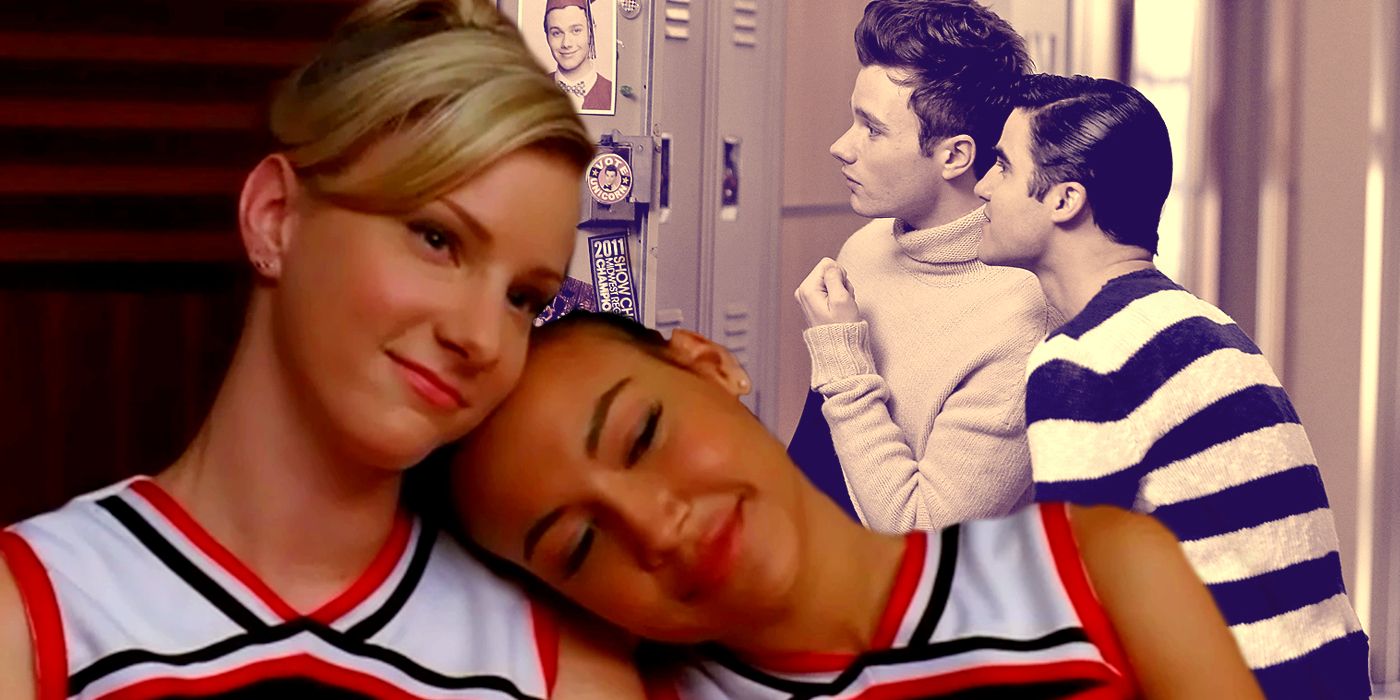
Glee premiered in 2009, at a time when queer teenagers were considerably less visible on mainstream American television than they are today.
Kurt Hummel was openly gay, feminine, bullied and unapologetically himself.
Later came Blaine Anderson, Santana Lopez, Brittany Pierce and other queer storylines that gave a generation of young viewers something they had rarely seen in glossy prime-time television.
Was that representation always handled perfectly?
Absolutely not.
This was Glee. Consistency occasionally seemed like something the writers had heard about but decided not to try.
Santana’s sexuality could be treated sensitively in one episode and clumsily in another. Bisexuality was sometimes handled questionably. Kurt and Blaine’s relationship inspired enormous affection but also endless debate. Some queer characters received extraordinary emotional moments and then appeared to live inside completely different television shows the following week.
And yet, it mattered.
Glee won GLAAD Media Awards for Outstanding Comedy Series in both 2010 and 2011, and Colfer himself now says part of the programme’s longevity comes from viewers seeing themselves represented on television for the first time.
Could a new Glee still have the same purpose?
That may be the biggest creative problem facing Murphy.
Television in 2026 is not television in 2009.
A closeted gay teenager being allowed to sing Beyoncé on network television no longer carries exactly the same cultural shock value.
Queer representation has expanded dramatically, even if the political environment surrounding LGBTQ+ people has in many ways become more hostile again.
So a new Glee cannot simply repeat the old formula and expect representation itself to feel revolutionary.
If the programme returns, what does it want to say about queer teenagers now?
About trans students?
About non-binary identities?
About social media?
About the increasingly politicised arguments surrounding LGBTQ+ education and school life?
About a generation that has much more vocabulary for queerness than Kurt Hummel ever did, but is growing up amid very different pressures?
That could actually make a revival worthwhile.
But only if the show has something to say.
And then there is Naya Rivera
There is also no easy way around Santana.

Naya Rivera transformed what began as a relatively minor cheerleader character into one of the most recognisable lesbian characters of her television generation.
Santana could be cruel, hilarious, insecure, loving and absolutely lethal with a one-liner.
More importantly, her coming-out storyline meant something to queer women who had spent years watching gay male characters receive far more mainstream attention than lesbian ones.
A revival would inevitably have to decide how to acknowledge Rivera’s absence without turning Santana into either a footnote or a grief storyline.
Colfer’s hesitation makes sense in that context.
The original cast is not simply older.
It has lived through genuine loss.
Nostalgia cannot undo that.
So, do we need the Glee reboot?
Maybe that is the wrong question.
Television rarely exists because anybody needs it.
The better question is whether a Glee reboot has something new to contribute.
If the answer is simply “remember Don’t Stop Believin’?”, then Netflix already has playlists and the internet has clips.
If, however, Murphy, Falchuk and Brennan can examine what it means to be a queer, bullied, ambitious, confused teenager in 2026, there may actually be a reason to return to McKinley.
Chris Colfer has not said no.
Ryan Murphy has a script.
Several original actors apparently want to talk.
And somewhere, presumably, Sue Sylvester is already preparing a completely inappropriate PowerPoint about Generation Alpha.
Fine.
We are listening.
But please, Ryan, give us a reason to come back beyond nostalgia.


