 Skip to content


Ghana’s Parliament has reversed its earlier approval of a controversial anti-LGBTQ+ bill, reopening legislation that could criminalise LGBTQ+ identities and severely restrict advocacy. But before anyone celebrates, there is an important catch: the decision is about legal drafting errors, not a change of heart on LGBTQ+ rights.
Ghana’s controversial anti-LGBTQ+ legislation has encountered another parliamentary obstacle after lawmakers voted on Tuesday, 10 November 2026, to rescind their earlier approval of the Human Sexual Rights and Family Values Bill.
The decision reverses the bill’s passage at its third reading on 29 May, returning the proposed legislation to Parliament for further consideration before it can be sent to President John Dramani Mahama.
For LGBTQ+ Ghanaians and human-rights organisations, the development creates another moment of uncertainty in a legislative battle that has already stretched across several years.
But it would be dangerously misleading to describe the reversal as a victory for equality.
Parliament has not rejected the proposed restrictions. Instead, lawmakers are correcting inconsistencies between the decisions made during parliamentary debates and the final drafted text, including problems involving criminal penalties.
The bill remains very much alive.
Why Has Ghana’s Parliament Reversed the Anti-LGBTQ+ Bill?
According to MyJoyOnline’s report published on 10 November, Speaker of Parliament Alban Bagbin announced that the Legislation Drafting Department had identified discrepancies after the bill’s third reading.
Those discrepancies could not simply be corrected by parliamentary drafting officials because they concerned decisions formally adopted by MPs.
The Speaker therefore asked Parliament to rescind its earlier approval, allowing lawmakers to reconsider the affected provisions and align the text with the decisions taken during debate.
The House agreed.
The resulting procedural reversal means the bill must undergo further consideration and another successful final reading before it can proceed towards presidential assent.
Among the problems identified were errors involving the calculation of penalty units, which determine financial sanctions under Ghanaian law.
Majority Leader James Agalga had already indicated that these issues needed to be corrected to prevent difficulties when courts eventually apply the legislation.
However, he also suggested that the substance of the proposed restrictions would remain largely unchanged.
That is the crucial detail.
The parliamentary decision has interrupted the legislative process, but it does not represent a rejection of the bill’s underlying objectives.
What Would Ghana’s Anti-LGBTQ+ Bill Actually Do?
The Human Sexual Rights and Family Values Bill has attracted widespread criticism because its provisions extend far beyond criminalising sexual activity between people of the same sex.
The legislation seeks to impose additional restrictions affecting LGBTQ+ identity, advocacy, organisations and public expression.
In a detailed legal memorandum submitted in March 2026, Human Rights Watch warned that the proposed legislation could expose people to criminal punishment simply for identifying as LGBTQ+.
The organisation also expressed serious concerns about restrictions on advocacy, funding and the operation of LGBTQ+ organisations.
Under the provisions assessed by Human Rights Watch, individuals could face imprisonment for consensual same-sex sexual activity, while certain forms of LGBTQ+ advocacy and organisational support could attract substantial criminal penalties.
The memorandum raised further concerns about privacy, freedom of association, access to healthcare and the potential consequences for families and professionals supporting LGBTQ+ people.
The bill passed in May included amendments affecting the position of certain professionals, including journalists, lawyers and healthcare workers acting within their professional responsibilities.
Those details remain important as Parliament reconsiders the legislation. The precise final version must be assessed once the further parliamentary process is complete.
Supporters of the bill argue that it protects Ghanaian family values, cultural traditions and children from what they characterise as the promotion of homosexuality.
Human-rights organisations, however, argue that protecting cultural or religious beliefs cannot justify criminalising people for their identities or restricting fundamental freedoms.
The disagreement is therefore not simply about sexual conduct. It concerns the limits of state power over identity, expression and the private lives of citizens.
Homosexuality Is Already Criminalised in Ghana
One particularly important detail risks disappearing beneath the headlines: Ghana does not currently provide full legal protection for consensual same-sex relationships.
Section 104 of the country’s Criminal Offences Act 1960 criminalises certain sexual activity described in the legislation as unnatural carnal knowledge. The provision has historically been applied to sexual activity between men.
According to the Human Dignity Trust’s country profile, the existing law carries a maximum sentence of three years’ imprisonment.
The proposed anti-LGBTQ+ bill would expand the existing framework, introducing further offences and penalties affecting LGBTQ+ people and those who support them.
This means that even if the present bill were eventually abandoned, Ghana’s LGBTQ+ community would not suddenly enjoy decriminalisation or comprehensive equality protections.
The wider struggle would continue.
Human-rights organisations have also documented discrimination, harassment and violence against LGBTQ+ Ghanaians, demonstrating that the consequences of criminalisation extend well beyond the number of people formally prosecuted.
When a person’s identity or intimate relationships are associated with criminal wrongdoing, seeking protection from authorities can become particularly difficult.
Fear of exposure may discourage victims from reporting violence, accessing healthcare or contacting organisations that could otherwise provide support.
That is one reason legal criminalisation and social discrimination cannot be treated as entirely separate issues.
A Legislative Battle That Began Years Ago
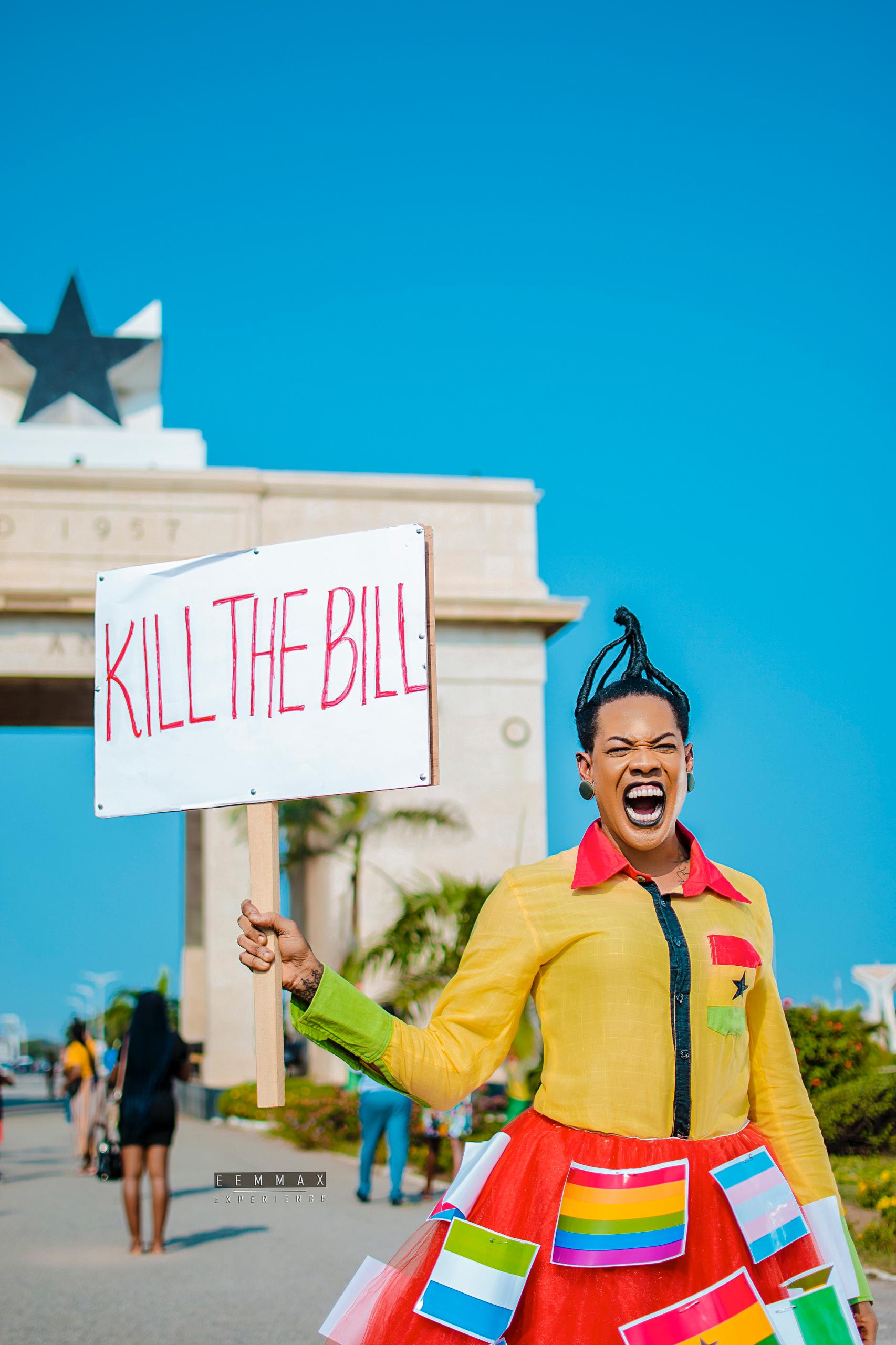
The current controversy is the latest chapter in a legislative process that began in 2021.
An earlier version of the bill was approved by Parliament in February 2024 but did not become law after then-President Nana Akufo-Addo withheld assent amid legal challenges.
That proposal subsequently lapsed when the parliamentary term ended.
The legislation was reintroduced in February 2026 and approved again by lawmakers on 29 May.
President Mahama, who returned to office in January 2025, has previously signalled support for the legislation. However, the present bill has not completed the steps necessary to become law.
The decision on 10 November therefore sends the proposal back for further parliamentary work rather than ending the legislative process.
According to 3News’ reporting on the parliamentary timetable, government representatives have indicated that they hope to send a corrected bill to the President before the end of November.
Whether that timetable will be achieved remains uncertain.
Ghana’s LGBTQ+ Community Deserves More Than a Procedural Delay
The situation in Ghana is part of a wider and deeply concerning pattern of pressure on LGBTQ+ communities in parts of Africa.
Earlier this year, The Gayly Mirror reported on Senegal’s crackdown on LGBTQ+ people, including mass arrests, allegations of forced HIV testing and new criminal penalties.
Different countries have different political and legal circumstances, and those distinctions matter. Nevertheless, the use of criminal law to restrict LGBTQ+ identities, relationships and advocacy raises common questions about privacy, dignity and basic human rights.
There is also a striking contrast with the legal progress being achieved elsewhere.
In Guatemala, seven former police officers were recently convicted over the deaths of a gay couple, demonstrating how sustained legal action can sometimes produce accountability for serious abuses.
In Ghana, however, Parliament is still debating whether LGBTQ+ people and those defending them should face additional criminal sanctions.
That contrast illustrates how uneven the global struggle for equality remains.
What Happens Next for Ghana’s Anti-LGBTQ+ Bill?
The legislation will return to Parliament for further consideration, particularly of the provisions whose final wording does not accurately reflect MPs’ previous decisions.
If lawmakers approve a corrected version, it can proceed through the remaining legislative steps towards the President.
For LGBTQ+ organisations and human-rights defenders, the next crucial developments will be whether Parliament changes any substantive restrictions, whether the bill passes again and whether presidential assent is eventually granted.
Until then, the legal situation remains uncertain.
But one thing is clear: a procedural delay must not be confused with an improvement in the rights of LGBTQ+ Ghanaians.
The parliamentary vote has created an opportunity to reconsider legislation that international human-rights organisations regard as profoundly discriminatory. Whether lawmakers use that opportunity to address the underlying human-rights concerns is another question entirely.
Ghana’s anti-LGBTQ+ bill has been sent back for corrections. The country’s LGBTQ+ community is still waiting for something far more important: laws that protect their dignity instead of threatening their freedom.


