 Skip to content


Two men were detained by police in Guatemala in 2024. Neither came home alive. More than two years later, seven former officers have been convicted, and the court has ordered reparations for their families.
A landmark ruling in Guatemala has brought a measure of justice for Eldin Leonel Choc Xi and Milton Nelson Santamaría, a gay couple killed after being detained by police in April 2024.
On 21 October 2026, Guatemala’s High-Risk Court B convicted seven former National Civil Police officers of offences connected to their deaths.
Two former officers received 60-year prison sentences, while five others were convicted of offences including extrajudicial execution, discrimination, abuse of authority and obstruction of justice.
But the case has also exposed a disturbing reality: the people responsible for protecting the couple were the very people involved in their deaths.
Who Were Eldin Choc and Milton Santamaría?

Eldin was a Guatemalan man from the Q’eqchi’ Maya community, while Milton was a Canadian citizen.
They were partners building a future together.
According to reporting by Guatemalan journalists, the couple hoped to settle in Guatemala and develop a project involving land and agriculture.
On 18 April 2024, they were detained in San Andrés Itzapa, in the department of Chimaltenango.
What happened next was horrific.
Investigators established that both men were violently assaulted after their detention.
Milton died from severe internal injuries, while Eldin was later found dead after being strangled.
Reports from the investigation also described homophobic insults directed at the couple.
The case became a symbol of the danger LGBTQ+ people can face when discrimination and abuse of institutional power intersect.
What Did the Court Decide?
After more than two years of campaigning by the families and human-rights organisations, the court delivered its verdict on 21 October.
The sentences included:
- Edy Vásquez Rabanales and Fredy Velásquez Pérez: 60 years in prison each for the extrajudicial executions of both men.
- Mauricio Contreras Salán: 30 years for the extrajudicial execution of Milton Santamaría.
- Four other former officers: sentences ranging from eight to eleven years for offences including discrimination, unlawful detention, abuse of authority and obstruction of justice.
Importantly, the court did not convict all seven officers of exactly the same offences.
The local investigative outlet Ruda documented the verdict, including the role of homophobia in the violence and the long campaign for justice.
The Court Has Also Ordered Reparations and a Public Apology
The legal developments did not end with the prison sentences.
At a further hearing on 23 October, the court ordered financial reparations for the victims’ families.
It also instructed Guatemala’s National Civil Police to make a public apology and ordered the installation of a commemorative plaque at the police academy.
According to Guatemalan newspaper La Hora, the measures were intended both to recognise the suffering of the families and to help prevent similar abuses.
A plaque cannot bring Eldin and Milton back.
Neither can money.
But the acknowledgement that state officials were responsible for their deaths matters enormously.
Why This Case Matters for LGBTQ+ Rights
The verdict represents an important achievement for the families, activists and organisations that refused to let the case disappear.
However, Guatemala still lacks specific hate-crime legislation comprehensively recognising violence motivated by sexual orientation or gender identity.
That means acknowledging homophobic prejudice within a criminal investigation is not necessarily the same as having a dedicated legal framework for prosecuting anti-LGBTQ+ hate crimes.
The case also raises questions about institutional accountability.
As The Gayly Mirror previously explored in its coverage of police raids against LGBTQ+ organisations in Turkey, the relationship between LGBTQ+ communities and state authorities can become deeply troubling when those institutions are accused of abusing their power.
Different countries, different circumstances, but the same essential principle: state institutions must protect human rights, not violate them.
Flowers, Candles and Two Lives That Must Be Remembered
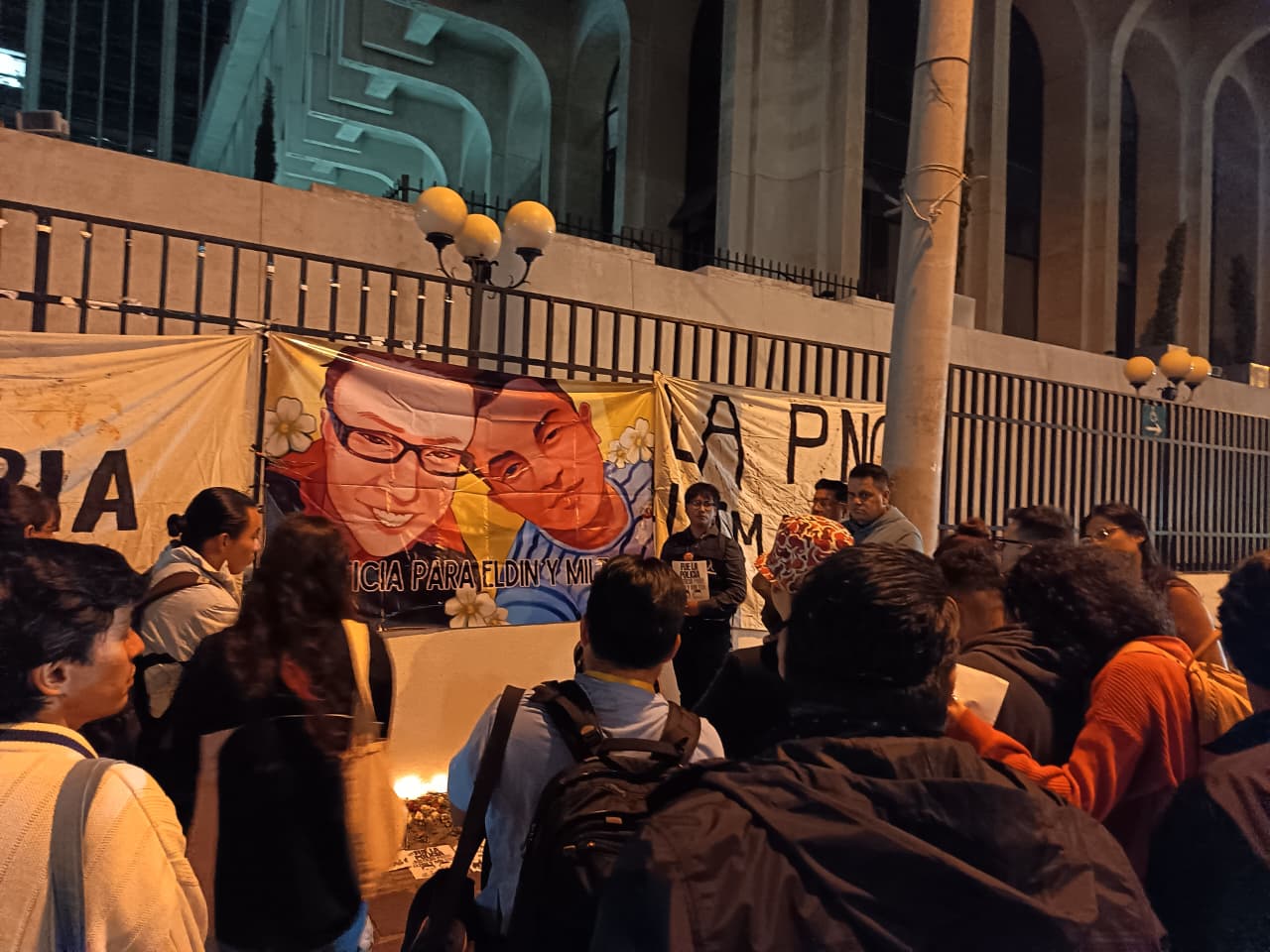
Outside the courthouse, family members, campaigners and supporters gathered with flowers, candles and messages demanding justice.
Their determination helped keep Eldin and Milton’s names visible throughout the legal proceedings.
This was not simply a story about two men murdered by police officers.
It was also about a couple whose plans, dreams and future together were violently taken away.
Their families now have a court judgment, financial reparations ordered and an official commitment to public recognition.
But the wider fight against homophobic violence remains.
Justice for Eldin and Milton cannot restore the lives they should have lived. It can, however, make it impossible for the authorities to pretend those lives did not matter.


