Lula has secured another presidential term, while Brazil’s newly elected Congress includes a record number of openly LGBTQ+ politicians. But the political battle for equality is far from over.
Brazil has delivered one of the most significant political results of 2026.
Lula da Silva has won re-election.
He defeated Flávio Bolsonaro in a tight runoff on Sunday, 25 October, shaping Lula Brazil election LGBTQ rights discourse.
According to the electoral authorities, Lula secured approximately 51.79% of valid votes against Bolsonaro’s 48.21%.
The result gives Lula a historic fourth presidential term.
Moreover, just weeks later, LGBTQ candidates achieved unprecedented electoral success, highlighting Lula Brazil election LGBTQ rights.
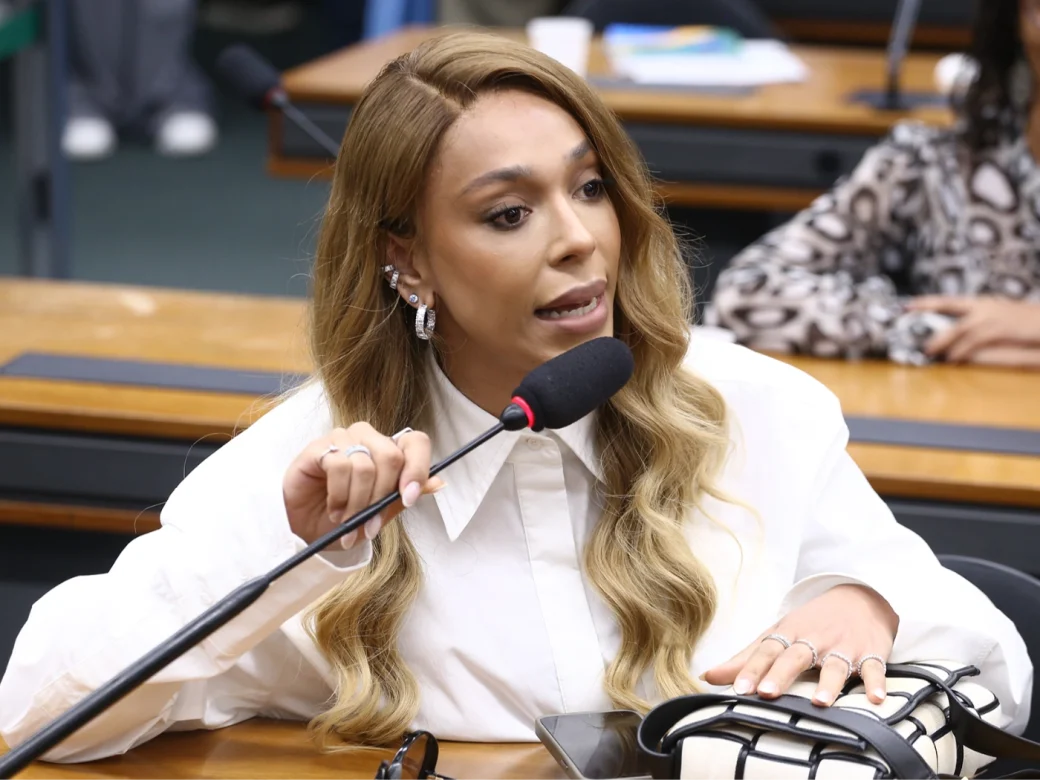
Moreover, among those celebrating was Erika Hilton, the transgender congresswoman who made Brazilian political history.
It reflects Lula Brazil election LGBTQ rights debates in Brazil’s political landscape.
And together, these developments tell a remarkable story about the changing face of Brazilian politics.
Lula Wins, but Flávio Bolsonaro Refuses to Concede
Lula’s victory followed a dramatic campaign in which he trailed Bolsonaro after the first round of voting.
The incumbent president recovered through an intensive final campaign and stronger voter turnout.
However, Flávio Bolsonaro, son of former president Jair Bolsonaro, refused to concede and said he would challenge the result after a court decision extended voting hours on election day.
The electoral authorities nevertheless declared Lula the winner.
However, according to Reuters’ election coverage, the result came despite the country electing a considerably more conservative Congress.
Consequently, that creates a major challenge for Lula’s next administration.
Erika Hilton Has Become One of Brazil’s Most Powerful LGBTQ+ Voices
For LGBTQ+ Brazilians, another important election result came on 4 October.
Erika Hilton, a Black transgender politician representing São Paulo, was re-elected to the Chamber of Deputies with 1,596,472 votes.
That made her the most-voted woman in the history of Brazil’s lower house.
Her work includes labour rights, social equality and proposals to reform Brazil’s working week.
During Lula’s election-night celebrations in São Paulo, Hilton praised the president and joined supporters welcoming the result.
Brazil Has Elected a Record Number of LGBTQ+ Politicians
According to research by VoteLGBT and Instituto Plena Cidadania, 35 openly LGBTQ+ candidates won legislative seats in Brazil’s October elections, compared with 18 in 2022.
The new representation includes:
13 federal deputies.
One senator.
21 state or district legislators.
The successful candidates received approximately 10.7 million votes collectively.
Among them are transgender politicians Erika Hilton, Duda Salabert and Thabatta Pimenta.
Pimenta’s election is particularly significant because she becomes the first transgender woman from Brazil’s north-east to enter the National Congress.
Meanwhile, Samanda de Lula, an openly lesbian politician from Lula’s Workers’ Party, won a Senate seat.
The figures, published by Brazilian news outlet UOL, demonstrate that LGBTQ+ political representation is growing even as the wider political landscape becomes more conservative.
Does Lula’s Victory Mean LGBTQ+ Rights Are Safe?
Not necessarily.
Brazil has recognised same-sex marriage nationwide since 2013, while its Supreme Court ruled in 2019 that homophobia and transphobia should be punished under existing anti-racism legislation.
But legal recognition does not automatically guarantee safety.
Brazil continues to face serious problems involving violence against transgender people, discrimination and political hostility.
And despite Lula’s victory, the new Congress will contain substantial conservative representation.
This means the president could face significant resistance to proposals involving LGBTQ+ equality, social policy and other rights.
The election is therefore not evidence that discrimination has disappeared or that every future LGBTQ+ proposal will succeed.
A Victory for Visibility, but Not the End of the Fight
There is something undeniably powerful about the contrast emerging from Brazil’s elections.
A country where transgender people still face significant discrimination has just given almost 1.6 million votes to Erika Hilton. Moreover, this relates to Lula Brazil election LGBTQ rights.
A country experiencing intense political polarisation has also elected a record number of openly LGBTQ+ politicians.
And a president associated with defending existing LGBTQ+ protections has secured another term, even as conservative parties strengthen their presence in Congress.
These developments do not point to a simple political transformation.
Instead, they reveal a democracy in which LGBTQ+ people are becoming increasingly visible and influential while still facing serious opposition.
For Erika Hilton and Brazil’s growing LGBTQ+ political representation, the achievement is no longer simply being allowed a seat at the table. It is having the electoral power to influence what happens there.
To provide the best experiences, we use technologies like cookies to store and/or access device information. Consenting to these technologies will allow us to process data such as browsing behavior or unique IDs on this site. Not consenting or withdrawing consent, may adversely affect certain features and functions.
Functional
Always active
The technical storage or access is strictly necessary for the legitimate purpose of enabling the use of a specific service explicitly requested by the subscriber or user, or for the sole purpose of carrying out the transmission of a communication over an electronic communications network.
Preferences
The technical storage or access is necessary for the legitimate purpose of storing preferences that are not requested by the subscriber or user.
Statistics
The technical storage or access that is used exclusively for statistical purposes.The technical storage or access that is used exclusively for anonymous statistical purposes. Without a subpoena, voluntary compliance on the part of your Internet Service Provider, or additional records from a third party, information stored or retrieved for this purpose alone cannot usually be used to identify you.
Marketing
The technical storage or access is required to create user profiles to send advertising, or to track the user on a website or across several websites for similar marketing purposes.
 Skip to content