From Leigh Bowery and Keith Haring to Sylvester and Robert Mapplethorpe, Australian artistic duo The Huxleys are celebrating queer creativity, remembrance and the extraordinary cultural legacy of artists lost to HIV/AIDS.
Queer history, but make it fabulous
Queer history is filled with extraordinary artists whose creativity transformed music, fashion, photography and performance. Some became international icons, while others were taken far too soon during the HIV/AIDS epidemic, leaving behind artistic legacies that continue to influence generations.
Presented as part of the city’s Melt Festival, the exhibition combines photography, video, costume and performance to celebrate LGBTQ+ artists whose lives and creative careers were affected by HIV/AIDS.
Running until 8 November, the presentation explores the relationship between queer identity, artistic expression, collective memory and the importance of preserving cultural histories that have too often been overlooked.
Rather than approaching remembrance through sadness alone, The Huxleys embrace colour, theatricality and unapologetic extravagance.
Because remembering queer history doesn’t always have to mean turning down the volume, darling.
Who are The Huxleys?
The Huxleys, Leigh, 2022, Giclée print on archival paper, 165 x 150cm, edition of 3 + 3 AP
Garrett and Will Huxley are an Australian artistic duo celebrated for their elaborate costumes, striking photography and surreal approach to queer performance art.
Their work moves between photography, fashion, performance and visual storytelling, frequently challenging conventional expectations surrounding gender, identity and beauty.
Drawing inspiration from drag, club culture and LGBTQ+ artistic traditions, they create fantastical visual worlds where excess becomes a form of creative expression.
Their distinctive aesthetic combines elaborate makeup, dramatic silhouettes, vibrant colours and a strong sense of humour.
But behind the glitter lies a deeper interest in queer history, particularly the artists and communities whose contributions helped shape contemporary LGBTQ+ culture.
For The Huxleys, Bloodlines is both a celebration of those influences and an attempt to ensure that their legacies remain visible to younger generations.
Bloodlines celebrates queer icons lost to HIV/AIDS
At the heart of Bloodlines is a tribute to artists who challenged cultural boundaries and helped redefine queer expression.
Among the figures whose influence informs the series are Keith Haring, Leigh Bowery, Robert Mapplethorpe and Sylvester.
Haring’s unmistakable visual language became closely associated with LGBTQ+ visibility and AIDS activism, while Bowery’s outrageous costumes and experimental performances transformed ideas about fashion, gender and the body.
Mapplethorpe’s photography challenged conventional attitudes towards sexuality and artistic expression, creating images that remain both influential and controversial.
Sylvester, meanwhile, brought an unapologetically queer presence to disco music, becoming an enduring symbol of self-expression and freedom.
Although their artistic approaches were very different, these figures shared an ability to challenge expectations and expand the possibilities of queer creativity.
Through Bloodlines, The Huxleys revisit those legacies using their own distinctive artistic language, creating new images and performances inspired by the people who came before them.
Remembering the AIDS crisis through creativity
The HIV/AIDS epidemic devastated LGBTQ+ communities across the world, claiming the lives of artists, performers, activists and countless others.
Its cultural impact extended far beyond the loss of individual lives.
Entire creative communities were disrupted, and generations of artists who might have continued shaping music, theatre, photography and fashion were lost.
The Huxleys approach that history through artistic remembrance rather than attempting to recreate the past exactly as it was.
The project celebrates the creative achievements of those who died while also recognising the grief, discrimination and stigma surrounding the epidemic.
It is a reminder that the people affected by HIV/AIDS were never simply statistics or victims of a public health crisis.
They were innovators, storytellers and cultural pioneers whose work continues to shape how LGBTQ+ people express themselves today.
Why queer artistic history still matters
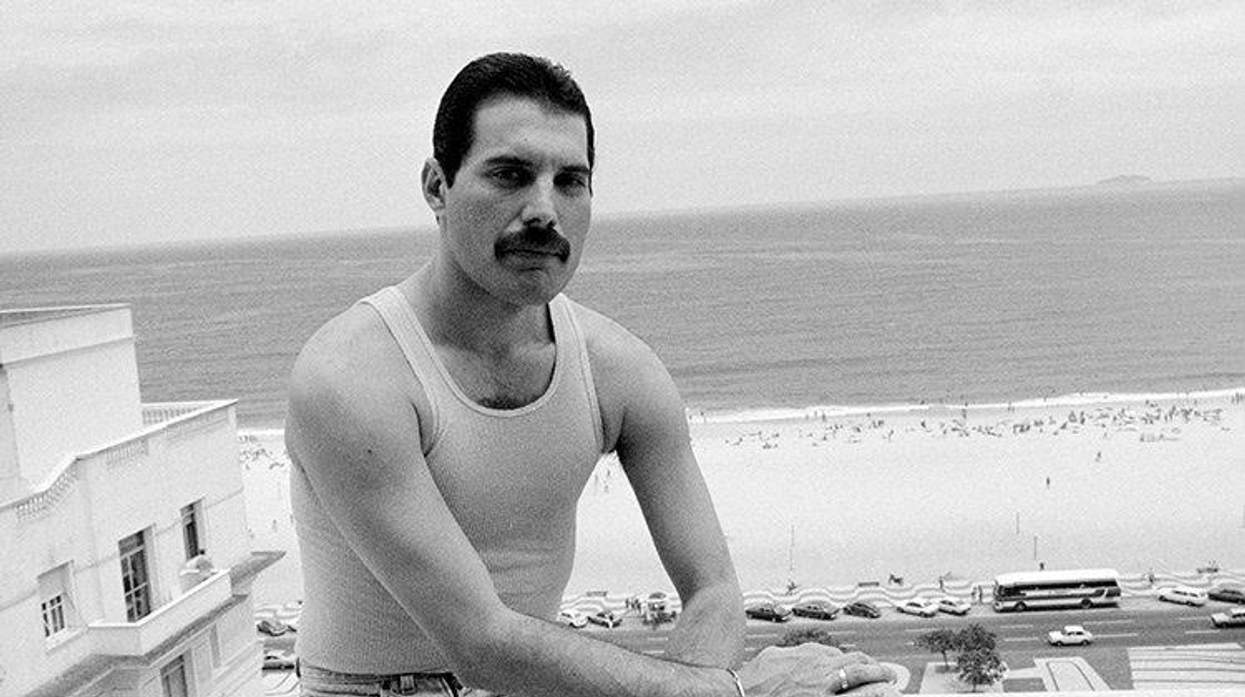
Freddie Mercury – example of queer icon with HIV/AIDS
For younger LGBTQ+ audiences, some of the names celebrated in Bloodlines may feel distant.
Yet their influence remains visible throughout contemporary queer culture.
The theatricality of modern drag, the provocative imagery of queer fashion campaigns and the relationship between LGBTQ+ identity and artistic rebellion all owe something to earlier generations.
The Huxleys’ work helps connect those histories with contemporary forms of creative expression.
It also challenges the idea that queer cultural memory must be defined entirely by suffering.
There was grief, discrimination and devastating loss, but there was also extraordinary creativity, solidarity, humour and resistance.
Preserving those stories matters because cultural history shapes how communities understand themselves and the possibilities available to future generations.
And in a world where LGBTQ+ history continues to face political and cultural challenges, ensuring those stories remain visible has particular significance.
When and where can you see The Huxleys’ Bloodlines exhibition?
Bloodlines will be presented at Brisbane Powerhouse in Australia from 21 October until 8 November 2026.
The exhibition forms part of Melt Festival, Brisbane’s major celebration of queer arts and culture.
Visitors can explore the presentation in the Fairfax Studio and Main Foyer, with daily opening hours listed as 9am to 5pm.
Admission is free, making the exhibition accessible to a broad audience interested in contemporary art, LGBTQ+ history and experimental performance.
The project was originally curated by Jacob Boehme, and The Huxleys are represented by MARS Gallery.
The Gayly Mirror’s take: queer history deserves to shine
Will and Garrett Huxley
There is something particularly powerful about remembering those who were lost through the very creativity that made their lives extraordinary.
The history of HIV/AIDS is inseparable from the LGBTQ+ communities devastated by the epidemic, but those communities should never be remembered only through tragedy.
They also gave the world extraordinary artists whose influence continues to shape music, performance, photography and fashion.
The Huxleys understand that preserving this history does not mean placing it behind glass and treating it as something distant.
It means allowing those influences to remain alive, visible and relevant.
With Bloodlines, they remind us that queer cultural memory can be celebratory, provocative, emotional and gloriously extravagant all at once.
Our icons may be gone, darling, but their brilliance refuses to fade.
To provide the best experiences, we use technologies like cookies to store and/or access device information. Consenting to these technologies will allow us to process data such as browsing behavior or unique IDs on this site. Not consenting or withdrawing consent, may adversely affect certain features and functions.
Functional
Always active
The technical storage or access is strictly necessary for the legitimate purpose of enabling the use of a specific service explicitly requested by the subscriber or user, or for the sole purpose of carrying out the transmission of a communication over an electronic communications network.
Preferences
The technical storage or access is necessary for the legitimate purpose of storing preferences that are not requested by the subscriber or user.
Statistics
The technical storage or access that is used exclusively for statistical purposes.The technical storage or access that is used exclusively for anonymous statistical purposes. Without a subpoena, voluntary compliance on the part of your Internet Service Provider, or additional records from a third party, information stored or retrieved for this purpose alone cannot usually be used to identify you.
Marketing
The technical storage or access is required to create user profiles to send advertising, or to track the user on a website or across several websites for similar marketing purposes.
 Skip to content