 Skip to content


Tom Byatt joined Married at First Sight UK hoping to prove that living with HIV doesn’t mean giving up on romance, intimacy or a fabulous life. Now, following Channel 4’s decision to cancel the series, his story will never reach television screens. But darling, this is one conversation that deserves to continue.
There are many reasons why people sign up for Married at First Sight UK. Some are looking for love, some are hoping to escape an endless cycle of dreadful dates, and others, let’s be perfectly frank, appear to have exceptionally complicated relationships with the concept of reality television.
But for Tom Byatt, the experience offered something more meaningful.
The gay contestant, who has been living with HIV for almost two years, joined the programme hoping to challenge misconceptions about HIV and demonstrate that a diagnosis does not prevent someone from finding love, enjoying intimacy or building a fulfilling life.
Now, those hopes have been disrupted.
Following serious concerns about participant welfare, Channel 4 confirmed on 5 November 2026 that Married at First Sight UK would not return. The most recently filmed series, including Tom’s journey, will never be broadcast.
In an exclusive interview with PinkNews published on 11 November, Tom discussed his disappointment, the personal growth he experienced during filming and why he refuses to let the show’s cancellation silence his message.
And honestly, it’s a message worth hearing.
Who Is Tom Byatt, the Gay MAFS UK Contestant Living With HIV?
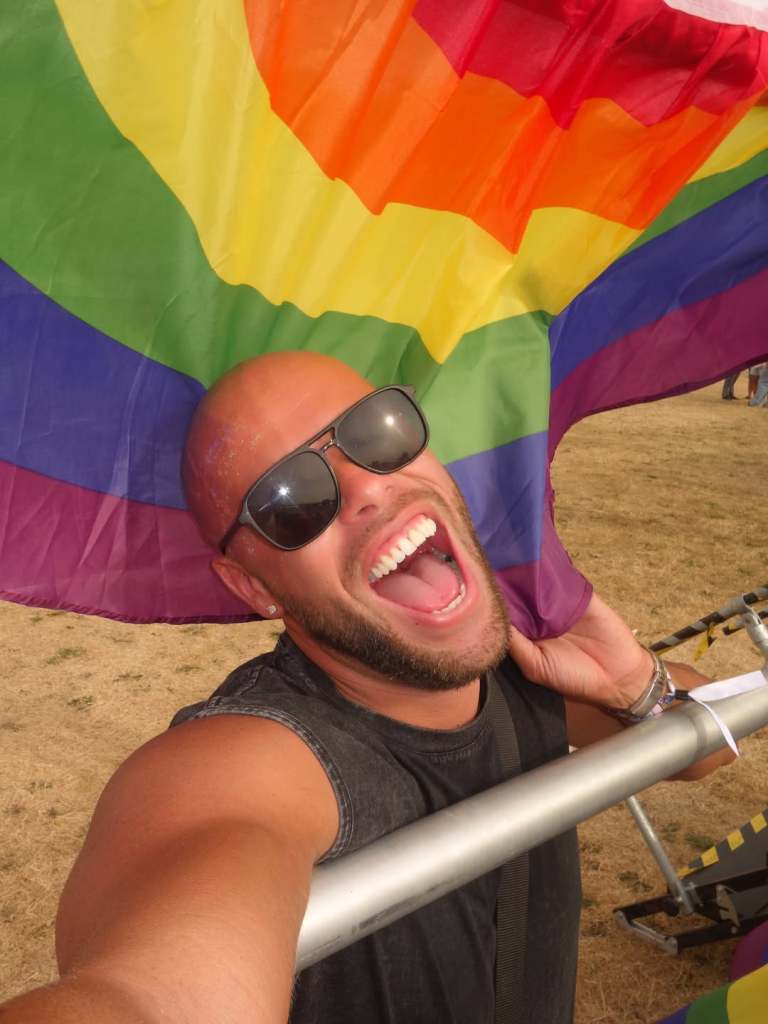
Tom Byatt was among the participants who filmed the now-cancelled edition of Married at First Sight UK.
He entered the experiment with an openness about his personality, relationships and HIV status, hoping to show audiences a side of life with HIV that remains surprisingly absent from mainstream British television.
In his PinkNews interview, Tom explained that receiving his diagnosis had initially been extremely difficult. Over time, however, the experience also encouraged him to reassess his relationship with himself, his confidence and what he wanted from a partner.
He described himself as happier and more self-assured today, although he acknowledged that dating and intimacy have not always been straightforward.
That is an important distinction.
Living with HIV does not automatically mean someone is unhappy, unwell or unable to form meaningful relationships. Equally, being confident about your status does not mean that stigma or rejection suddenly disappear.
Tom wanted viewers to see both sides of that reality.
His message, as he describes it, is about being positive about being positive, a wonderfully cheeky phrase that also carries a serious point.
HIV should not be treated as the defining feature of somebody’s romantic future.
And a gay man looking for love deserves to be seen as considerably more than a diagnosis.
Why Did Channel 4 Cancel Married at First Sight UK?
Before discussing what audiences have lost through the cancellation, it is essential to understand why Channel 4 made the decision.
On 5 November, the broadcaster announced that Married at First Sight UK would not return following an external review of contributor welfare.
The review was commissioned after Channel 4 learned of serious allegations involving a small number of participants from previous series. The individuals concerned have denied the allegations, which were not adjudicated by the external review.
The review examined existing welfare processes and recommended additional safeguards.
One part of the assessment concluded that the programme could continue with improvements. However, Channel 4’s chief executive, Priya Dogra, decided that implementing the recommended changes would fundamentally alter the show’s format and editorial approach.
As a result, the broadcaster ended the programme and confirmed that the filmed series would not be shown.
These circumstances should not be minimised.
Reality television has a responsibility to protect the people who participate in it, and concerns about safeguarding deserve serious attention.
Tom himself recognised that distinction.
In his interview, he expressed sympathy for people who had reported distressing experiences, while explaining that his own time with the production and welfare teams had been positive.
Both perspectives can exist without invalidating one another.
A participant can feel supported during filming while other people raise legitimate concerns about the programme’s wider welfare arrangements.
The HIV Story That British Television Will Never See

For Tom, the cancellation has an additional emotional consequence.
He had hoped the programme would show a national audience what dating, relationships and emotional vulnerability can look like for someone living with HIV.
The subject remains surrounded by misconceptions.
Despite extraordinary advances in modern treatment, people living with HIV can still encounter rejection, ignorance and assumptions about their health or sexual behaviour.
In gay dating culture, those prejudices can be especially painful because they sometimes come from within a community that has itself experienced decades of stigma.
People may be reduced to labels, questioned about their personal medical history or treated as though their diagnosis automatically makes them an unsuitable romantic partner.
And darling, if dating wasn’t complicated enough without having to deliver an impromptu lecture on medical science.
The reality is very different from the fear-based assumptions that continue to circulate.
As The Gayly Mirror explored in our TGM Original on masculinity and shame within gay relationships, stigma can shape how gay men approach intimacy, self-worth and the fear of rejection.
HIV-related stigma introduces another dimension to those pressures.
Tom’s participation could have helped make conversations about HIV feel less clinical and more human.
Not through a public-health campaign, but by allowing viewers to follow an ordinary man looking for love.
Let’s Talk About U=U, Because Some People Still Haven’t Got the Memo
One of the most important facts about HIV is also one that too many people remain unfamiliar with.
U=U stands for Undetectable = Untransmittable.
People living with HIV who take effective antiretroviral treatment and maintain an undetectable viral load have zero risk of transmitting HIV through sex.
This is not a slogan invented to make people feel better. It is an established scientific finding supported by extensive research.
The Centers for Disease Control and Prevention explicitly confirms that maintaining an undetectable viral load prevents sexual transmission.
Modern treatment also allows people living with HIV to enjoy healthy, fulfilling lives.
Of course, U=U applies when viral suppression is achieved and maintained. It should not be assumed that any particular person has an undetectable viral load simply because they have disclosed their HIV status.
The point is broader: an HIV diagnosis is not a reason to deny someone love, affection, intimacy or respect.
And television can play an important role in communicating that message.
When viewers encounter people living with HIV as fully developed human beings rather than medical case studies, misconceptions become harder to sustain.
What Did Tom Byatt Learn From His MAFS UK Experience?
Although the series will never air, Tom insists that the experience changed him.
He has described developing a greater understanding of his own emotions, recognising the effects of past experiences and becoming more comfortable with who he is.
It sounds like a rather expensive course in self-discovery, except that the tuition involved marrying a complete stranger on television.
Still, personal growth doesn’t always arrive in the form we expect.
Tom says that participating helped him understand that he deserves a relationship in which every aspect of his personality is accepted, including his emotional side, sense of humour and HIV status.
And despite the fact that his televised marriage will never be seen, he has made another thing clear: he is still single and looking for love.
Somewhere out there, somebody should probably take note.
But beyond the charming romantic optimism, there is a more important message.
Self-acceptance is not necessarily something that arrives immediately after a diagnosis, a coming-out experience or a difficult relationship.
It can take time to recognise that being loved should not require hiding parts of yourself.
That journey deserves recognition, regardless of whether television cameras were there to record it.
Why HIV Representation Still Matters on British Television
British television has made significant progress in telling LGBTQ+ stories, but representation of people living with HIV remains uneven.
Historical dramas have played an important role in confronting the devastation of the AIDS crisis and the discrimination experienced by earlier generations.
However, contemporary stories about living with HIV can offer something different.
They can show people working, dating, building families, navigating ordinary relationship problems and enjoying their lives without making their diagnosis the central tragedy of the narrative.
As TGM explored in our coverage of Ira Sachs’s queer drama The Man I Love, LGBTQ+ storytelling becomes richer when it makes room for intimacy, friendship, pleasure and emotional complexity alongside difficult experiences.
Tom’s story could have contributed to that wider conversation.
It also raises a question about reality television’s power to shape public understanding.
Watching someone fall in love, experience rejection or negotiate vulnerability can have a different impact from reading medical statistics.
Those moments allow audiences to connect with people rather than stereotypes.
And when the person in question is openly living with HIV, that visibility can challenge prejudices that still prevent others from speaking honestly about their experiences.
Tom Byatt’s Story Deserves a Life Beyond Married at First Sight UK
Channel 4’s decision to cancel Married at First Sight UK followed serious safeguarding concerns and must be understood in that context.
But the loss of the programme also means that stories like Tom’s will not reach the audience for which they were originally filmed.
That is disappointing, particularly when HIV stigma remains a genuine obstacle to relationships, confidence and social acceptance.
Thankfully, Tom has already made clear that his commitment to raising awareness will not end with the cancellation.
And perhaps that is the most encouraging part of this story.
His confidence, his experiences and his message do not belong to a television production company.
They belong to him.
At its heart, Tom’s story is about a gay man who wants the same things many of us want: connection, affection, honesty and somebody who can appreciate both his fabulous personality and his occasional dramatic moments.
An HIV diagnosis does not make those hopes unreasonable or out of reach.
The cameras may never show Tom Byatt’s journey, but his message deserves to be heard: living with HIV does not mean putting love, happiness or your future on hold.


