 Skip to content


The Supreme Court has refused to let the Trump administration immediately enforce restrictions on gender-affirming healthcare in federal prisons, preserving important protections while the legal battle continues.
US Supreme Court delivers temporary victory for transgender prisoners
The US Supreme Court has delivered a significant, although temporary, victory for transgender prisoners, refusing to allow President Donald Trump’s administration to immediately enforce restrictions on gender-affirming healthcare in federal prisons.
In a decision issued on Wednesday 21 October 2026, the justices rejected an emergency request from the Department of Justice to suspend a lower-court injunction blocking the Federal Bureau of Prisons from implementing the contested policy.
The decision means that protections for prescribed hormone therapy and certain gender-affirming accommodations remain in place while the legal proceedings continue.
Justices Clarence Thomas and Samuel Alito indicated that they would have granted the administration’s request. The Court did not provide a detailed explanation for its decision.
For transgender people receiving treatment in federal custody, the ruling offers an important measure of immediate protection.
However, the Supreme Court has not issued a final judgment on the legality of the administration’s policy, meaning the wider legal dispute remains unresolved.
What transgender healthcare restrictions was Trump seeking?
The controversy began shortly after Donald Trump returned to the White House in January 2025.
An executive order directed federal agencies to change how transgender people were treated in federal custody, including restrictions affecting gender-affirming medical treatment and certain accommodations.
The Federal Bureau of Prisons subsequently introduced policies intended to discontinue medical interventions provided for gender transition, including previously prescribed hormone treatment.
The changes also addressed access to clothing, personal items and other arrangements connected to gender identity.
A revised policy issued in February 2026 attempted to establish a new framework for prisoners diagnosed with gender dysphoria.
The administration argued that prison officials should have authority to determine medical and institutional policies, maintaining that its approach reflected considerations of treatment and prison management.
However, transgender prisoners and their lawyers challenged the restrictions, arguing that abruptly withdrawing treatment prescribed by medical professionals could expose patients to serious harm.
The dispute raises questions about medical necessity, institutional responsibility and the legal standards governing healthcare for people who cannot independently access treatment outside prison.
How did the case reach the Supreme Court?

The legal challenge, Kingdom v. Trump, was brought by three transgender people incarcerated in federal prisons, with representation from the American Civil Liberties Union and other legal advocates.
The lawsuit was filed as a class action on behalf of approximately 2,000 transgender people in federal custody.
The plaintiffs argued that the administration’s restrictions unlawfully interfered with medical treatment and violated federal legal protections.
In 2025, US District Judge Royce Lamberth issued an injunction preventing the Bureau of Prisons from implementing certain restrictions on hormone therapy and accommodations.
Following the introduction of a revised policy in February 2026, the court again considered whether the government had adequately justified changing established medical practices.
The judge concluded that the challengers had demonstrated a likelihood of success under the Administrative Procedure Act, which requires federal agencies to provide reasoned explanations for their decisions.
The administration sought to overturn or suspend the injunction, arguing that prison officials should receive substantial discretion in determining appropriate medical and security arrangements.
After failing to obtain the requested relief through the lower courts, the Justice Department submitted an emergency application to the Supreme Court.
What exactly did the Supreme Court decide?
On 21 October, the Supreme Court rejected the government’s request to suspend the existing injunction.
The decision preserves the lower court’s protections while the underlying lawsuit moves forward.
Importantly, it does not require federal prisons to provide every form of gender-affirming treatment, nor does it establish a new nationwide constitutional right to gender-affirming surgery.
The existing injunction concerns access to hormone therapy and certain accommodations rather than a blanket order requiring all forms of treatment.
The Court’s decision is therefore procedural, but its consequences are significant.
It prevents the administration from immediately enforcing restrictions that a lower court determined were insufficiently justified under the applicable legal standards.
For prisoners who depend on prescribed treatment, that means the government cannot implement the challenged policy in the manner it requested while the injunction remains in effect.
Why access to healthcare matters in federal prisons
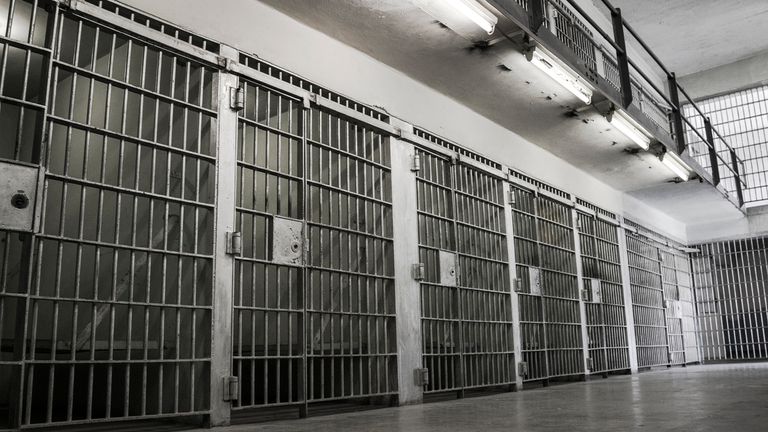
Unlike people living outside prison, incarcerated individuals cannot freely choose a different doctor or obtain medical treatment independently when services are withdrawn.
They depend on prison healthcare systems for access to medication, consultations and specialist care.
That dependence places particular responsibility on the institutions responsible for their custody.
The plaintiffs in Kingdom v. Trump argue that decisions about treatment should be based on individual medical assessments rather than a general policy that disregards care previously prescribed by healthcare professionals.
Their concerns include the consequences of suddenly discontinuing hormone therapy and the effect of withdrawing established treatment arrangements.
The government disputes the plaintiffs’ legal arguments and maintains that its policies fall within the authority of federal prison administrators.
The ongoing case will determine how those competing positions should be resolved.
For now, the lower court’s injunction continues to protect the affected treatment arrangements.
How does this compare with other transgender rights cases?
The decision comes during a period of extensive litigation over policies affecting transgender Americans.
The Supreme Court has previously allowed other administration measures to take effect while legal challenges continue, including restrictions concerning military service and sex markers on passports.
That makes the latest ruling notable, although it should not be interpreted as a definitive change in the Court’s broader approach to transgender rights.
Emergency applications are decided according to the legal and procedural circumstances of individual cases.
In this instance, the dispute includes questions about whether the Bureau of Prisons provided an adequate justification for changing established healthcare policies.
The Supreme Court’s refusal to suspend the injunction allows the existing protections to continue without resolving every legal issue raised by the case.
Further proceedings will be necessary before the underlying dispute reaches a final conclusion.
What happens next in Kingdom v. Trump?
The lawsuit will continue through the federal court system, where judges must consider the remaining legal arguments.
The proceedings may examine the medical evidence relied upon by the Bureau of Prisons, the reasons given for changing its policies and the legal obligations governing healthcare in federal custody.
Depending on the outcome, the case could produce further rulings affecting how prisons provide care for transgender people.
The administration may also pursue additional legal remedies as the litigation develops.
For now, the immediate consequence is clear: the existing injunction remains in place, and the government cannot enforce the contested restrictions as it had requested.
What remains at stake for transgender prisoners
The Supreme Court’s decision provides immediate protection, but the uncertainty surrounding transgender healthcare in federal prisons has not disappeared.
At the centre of the case are people who depend on government institutions for medical care and who have limited ability to seek alternatives when treatment is withdrawn.
The legal process must now determine whether the administration’s policy complies with the requirements of federal law and the protections available to incarcerated patients.
Whatever the eventual outcome, the case highlights an important principle: decisions affecting medical treatment need clear justification, appropriate evidence and meaningful legal scrutiny.
For the people whose healthcare is directly affected, those safeguards are not simply technicalities.
They can determine whether prescribed treatment continues or disappears.
Human dignity does not end at the prison gates, and access to healthcare should never be treated as an afterthought.


