 Skip to content


The WNBA transgender debate has become one of the most divisive conversations in American women’s basketball, despite there being no openly transgender players currently competing in the league.
Now, a new analysis suggests that much of the online noise surrounding the issue has been amplified by a relatively small number of influential social media accounts, raising questions about how outrage, algorithms and the pursuit of engagement are shaping public debate.
Research by social media analytics company GUDEA, reported by Rolling Stone on 11 October, examined nearly 189,000 posts discussing transgender athletes and the WNBA.
The results suggest that what looks like a massive grassroots controversy online may, in part, reflect the influence of accounts particularly effective at generating attention.
What Does the New WNBA Transgender Debate Report Reveal?
GUDEA analysed 188,631 social media posts published between 20 July and 12 August 2026. Approximately 99% of the sampled activity took place on X, formerly Twitter.
The study found that just 3.57% of the accounts examined were classified as ‘non-typical’ users, including high-profile influencers, commentators and aggregation accounts.
Despite representing such a small proportion of participants, those accounts generated 16.75% of the posts in the dataset.
The researchers also identified a pattern in which a handful of highly visible posts attracted substantial attention, with later discussions frequently repeating, resharing or intensifying the original messages.
The findings do not mean that these accounts were necessarily bots, or that every disagreement about transgender eligibility is artificial. They do, however, illustrate how a comparatively small group can exert disproportionate influence on a much wider conversation.
Why Are Transgender Athletes Such a Political Flashpoint?
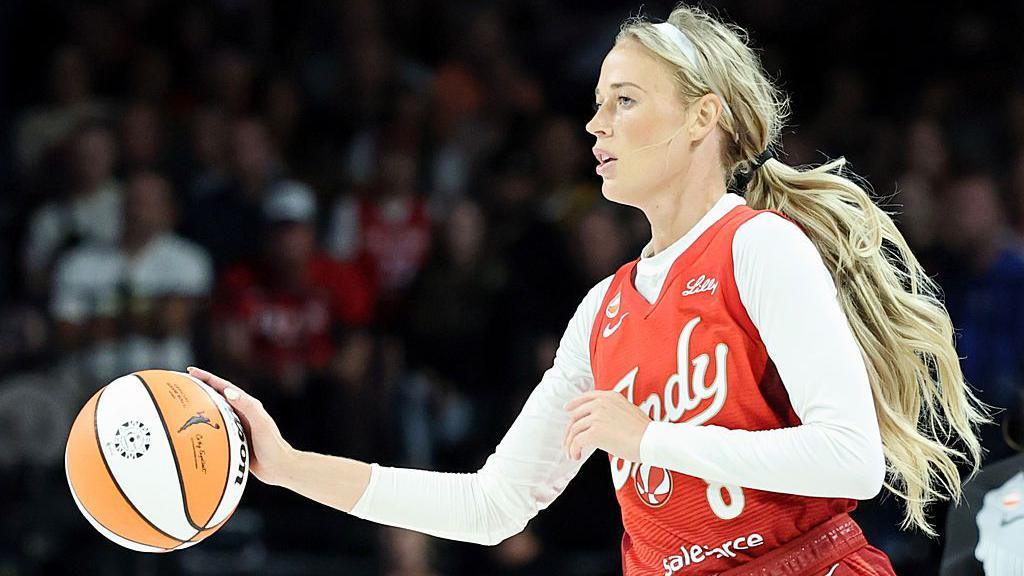
The debate intensified after Indiana Fever player Sophie Cunningham made comments in July opposing transgender women competing in women’s professional basketball.
Her remarks attracted criticism and support, becoming part of a wider American political debate involving sports organisations, politicians and LGBTQ+ campaigners.
But there is a rather awkward detail in this particular controversy: there are no openly transgender players in the WNBA.
This does not mean that eligibility rules are irrelevant or should never be discussed. Sporting bodies routinely establish policies concerning participation, competitive fairness and inclusion.
However, it raises a legitimate question about why this specific issue has come to occupy so much space in conversations about a league with no openly transgender players.
When political arguments dominate coverage more than actual sporting achievements, the athletes themselves can become secondary characters in someone else’s culture war.
How Social Media Turns Division Into Engagement
GUDEA’s researchers argue that the online amplification of the debate reflects the incentives built into modern social media platforms.
Provocative posts can attract responses from both supporters and opponents, while reposts and arguments help keep the original material visible. On platforms where prominent accounts may be eligible to earn revenue linked to engagement, controversial subjects can become particularly attractive.
Importantly, GUDEA did not establish that every account involved was operating dishonestly, nor did its analysis prove a centrally coordinated campaign or document the precise earnings generated by individual posts.
What the findings suggest is a pattern of amplification in which contentious narratives can appear more widespread than the underlying participation would indicate.
And in the attention economy, making people angry can be remarkably effective.
Are Women’s Basketball Players Being Lost in the Noise?
The WNBA has experienced considerable growth in visibility, attendance and commercial interest, with players attracting increasingly diverse audiences.
Yet debates about race, gender identity and political ideology have frequently threatened to overshadow discussions about what happens on the basketball court.
There is room for serious, evidence-based conversations about sports eligibility policies. But those conversations should be grounded in actual circumstances, rather than shaped primarily by inflammatory social media content.
For transgender people, repeated public arguments about their legitimacy can have consequences well beyond sport. For the WNBA, the distraction risks reducing a professional league to a convenient backdrop for political conflict.
The research offers an important reminder that social media visibility does not necessarily equal public consensus.
Perhaps the biggest winners in this particular debate aren’t the basketball players at all. They’re the accounts collecting the clicks.


