 Skip to content


Scotland’s Parliament is examining how new equality guidance is affecting transgender people and public services. LGBTQ+ organisations and the UK’s equality watchdog will give evidence on 19 November, as the debate over single-sex spaces and legal protections continues.
Scotland Puts Trans Rights Back Under Parliamentary Scrutiny
Scotland’s debate over transgender rights is returning to Holyrood, and this time the focus is on what happens when legal interpretations become everyday rules.
On Thursday, 19 November 2026, the Scottish Parliament’s Equalities, Human Rights and Civil Justice Committee is scheduled to hear evidence from LGBTQ+ organisations and the Equality and Human Rights Commission (EHRC) about the implementation of its revised Code of Practice.
The hearing, beginning at 9.30 am, brings together representatives from Scottish Trans, Equality Network and LGBT Youth Scotland, alongside senior officials from the EHRC.
According to the Scottish Parliament’s official agenda, the committee is examining how organisations are putting the updated guidance into practice.
No new legislation is being voted on at this hearing. Instead, MSPs are examining the consequences of rules already in force.
And those consequences could matter enormously to the people navigating them.
Why Is Scotland Reviewing the EHRC Guidance?
The controversy dates back to April 2025, when the UK Supreme Court ruled that the terms “sex”, “man” and “woman” in the Equality Act 2010 refer to biological sex for the purposes of that legislation.
The ruling prompted the EHRC to revise its statutory Code of Practice for services, public functions and associations. The updated Code came into force on 5 August 2026.
As The Gayly Mirror explained in our comprehensive UK trans rights guide, the judgment did not remove legal protection from transgender people.
Gender reassignment remains a protected characteristic under the Equality Act, and protections against unlawful discrimination and harassment continue to apply.
However, the interpretation of sex-based provisions has changed how organisations approach certain single-sex services and facilities.
That is precisely why practical implementation matters.
LGBTQ+ Organisations and the EHRC Give Evidence
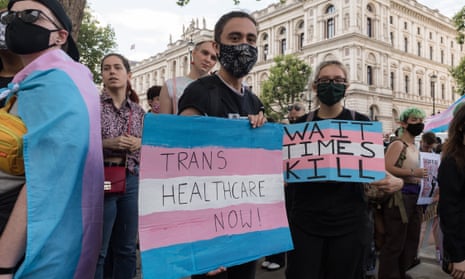
The committee’s first panel includes Dr Mhairi Crawford of LGBT Youth Scotland, Florence Oulds of Scottish Trans and Vic Valentine of Equality Network.
The second panel will hear from EHRC chair Dr Mary-Ann Stephenson, deputy chief executive Penny Hobman and Jennifer Laughland, the commission’s head of Scotland legal.
The discussion follows an earlier evidence session on 12 November involving Police Scotland, NHS Scotland, the Scottish Prison Service and organisations campaigning for sex-based protections.
Supporters of the revised interpretation argue that clearer guidance is necessary to maintain lawful single-sex services and protect privacy and dignity.
LGBTQ+ advocates have raised concerns that implementation could leave transgender people struggling to access appropriate facilities, facing unwanted scrutiny or experiencing exclusion from everyday services.
These are not abstract questions. They can affect activities as ordinary as visiting a leisure centre, using a changing room or accessing a public service.
What Has Actually Changed for Transgender People?
One of the most important distinctions is that the EHRC Code explains how existing equality legislation should be applied. It does not itself create a new Act of Parliament.
The Code also specifically addresses services, public functions and associations, rather than providing the complete legal framework for employment.
As The Gayly Mirror previously reported, disagreements over the guidance have extended into British party politics, with the Liberal Democrats calling for changes to the current approach.
The Scottish Government’s official guidance states that service providers remain responsible for ensuring that their decisions are lawful, proportionate and appropriate to their circumstances.
In other words, applying equality law requires more than repeating a headline about who may use which facilities.
The Real Test Is What Happens Outside Parliament
The 19 November session forms part of a wider parliamentary inquiry, with further evidence scheduled from the Scottish Government on 26 November.
The hearing itself will not overturn the Supreme Court’s judgment or immediately change the EHRC Code.
What it can do is bring practical concerns into the parliamentary record and examine whether organisations have the clarity they need to comply with the law while treating people fairly.
For transgender people, the central question is not simply how legal terminology is interpreted, but how those interpretations affect their ability to participate in everyday life with dignity.
And for the authorities responsible for applying the guidance, the challenge is ensuring that legal compliance does not become an excuse for harassment or humiliation.
The law may be written in Westminster and interpreted by the courts, but its consequences are experienced by real people, every single day.


