 Skip to content


The Liberal Democrats have formally rejected controversial new guidance on transgender people in the UK, becoming the first major British political party to call for the Equality and Human Rights Commission’s approach to be reconsidered.
Members overwhelmingly backed an emergency motion at the party’s conference in Brighton describing the EHRC guidance as “discriminatory and unworkable”. The guidance follows the UK Supreme Court’s 2025 ruling on the meaning of “woman” and “sex” under the Equality Act 2010 and addresses how organisations should apply single-sex provisions in practice.

The Liberal Democrat motion argues that the current approach could leave transgender people effectively excluded from some public facilities where gender-neutral alternatives are unavailable. It calls for revised guidance, greater parliamentary scrutiny and a cross-party committee to examine how the law is affecting trans people in everyday life. Party leader Ed Davey has also said the EHRC guidance is not “fit for purpose”.
The issue remains deeply contested. Supporters of the guidance argue that clearer rules are needed to preserve lawful single-sex services and spaces, while opponents say its practical application could result in transgender people being excluded from facilities altogether. The Supreme Court ruling itself did not remove transgender people from the protection of the Equality Act: gender reassignment remains a protected characteristic.
Trans people remain protected by the Equality Act
One point frequently lost in the increasingly polarised debate is that the Supreme Court judgment did not simply remove transgender people from the Equality Act.
Gender reassignment remains a protected characteristic under UK equality legislation, meaning transgender people continue to have legal protections against discrimination in a range of circumstances.
The disagreement is instead increasingly focused on how those protections interact with sex-based rights and exemptions, particularly when it comes to toilets, changing rooms and other single-sex services.
Why this matters beyond Westminster
For LGBTQ+ people, the significance of the vote goes beyond one political party. The legal landscape surrounding trans rights in Britain has changed considerably since the Supreme Court judgment, and the practical consequences are still being debated by politicians, businesses, public bodies and LGBTQ+ organisations.
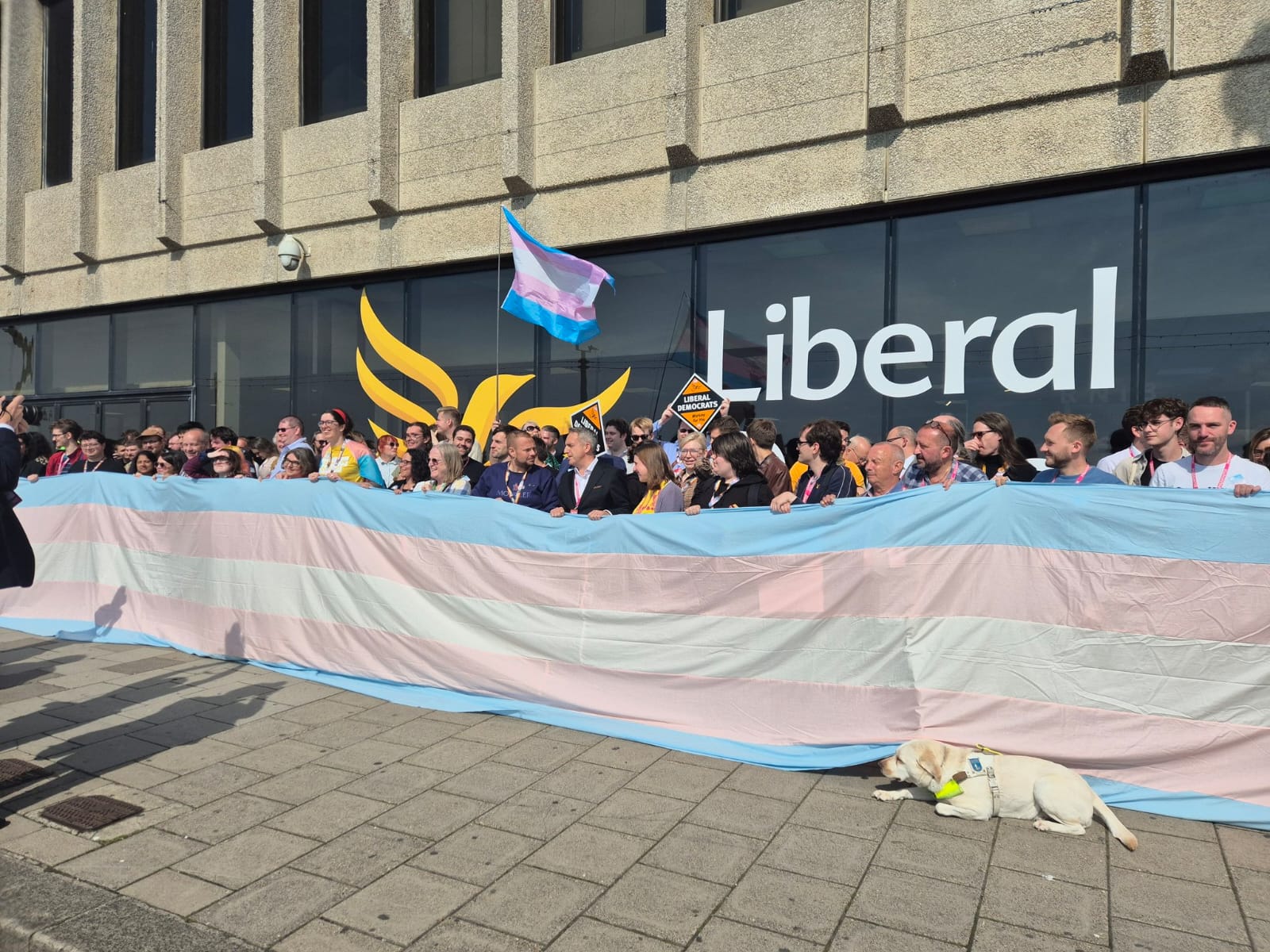
The Liberal Democrat vote now puts that debate directly into party politics. Rather than treating the current interpretation as the end of the conversation, the party is calling for Parliament to examine how the rules work in practice and whether existing protections are sufficient.
For trans people, however, this debate is not simply theoretical. Decisions made in Westminster and by regulators can ultimately determine something much more ordinary: which changing room someone can enter, which toilet they can use and whether they feel able to participate in public life without fear of confrontation.
The legal arguments will continue. So will the political ones. But behind both are real people who still have to navigate Britain every day.


